Rocks - Mini Worlds
When I look at rocks I can't help getting on my hands and knees to explore their mini worlds. And, I think of them in relation to our planet, Earth, and how it has been nicknamed the third rock from the sun... how Earth supports all life, and I ask myself about the rock that I am on my knees to get to know, What life is this rock supporting?
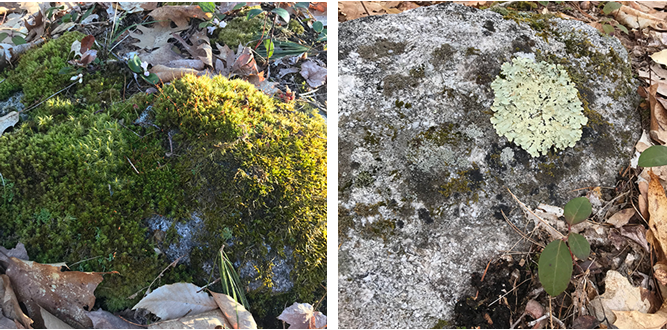
Rock on left is so covered in life it almost looks like a moss mound. Rock on right is home to a large foliose lichen, mosses and other life.
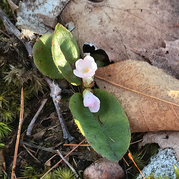
Trailing arbutus, in bloom now in southern Maine, is often found growing on or near moss covered rocks in the forest. It is one of many plants and animals that are part of the mini world of rocks. This mini world includes what may use the ground beneath the rock as a shelter... the rock being the roof of the home. And, just like you would not want the roof ripped off of your home, be careful not to disturb those that live under rocks. Only peek under rocks that you can easily and very gently roll on their side to take a careful look under, and then roll it back very gently in place. Be sure to leave most rocks undisturbed...creatures may depart, and plants may have to reset their roots no matter how gentle you are.
|
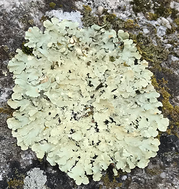
Many forms of lichen grow on rocks as well as tree bark. The light green lichen in the close-up shot is a foliose lichen on a rock. Lichen is actually an algae and a fungi living in a mutually beneficial relationship, called a symbiotic relationship - the algae makes the food while the fungi provides the shelter. Look for these and the two other forms of lichen, crustose and fruticose, on rocks. Here is a lichen link with photos and diagrams by the National Park Service.
|
Activities for Children and the young at Heart
1. Go on a get-to-know-a-rock hike. Sit by it quietly and observe all that happens on or near your selected rock. Draw, photograph or jot down what you observe. Ask yourself - who depends on this rock for survival? Make a list. Watch your selected rock through the seasons. Does its role change with each season?
2. Explore the world of lichen and their relationship to rocks and tree bark at this National Park Service lichen page.
3. Learn about larger rock outcrop - the Open Headlands of Maine - and the unique community of life they support through this Maine Natural Areas Program about the Open Headland Community.
4. Show your appreciation of rocks by writing a poem. The Children's Poetry Archive can help you get started. You'll find poems to read, to listen to, and advice about how to get started writing a poem.
5. Earth Day is this Friday, April 22. Find out what is going on in your community on Earth Day or over the Earth Day weekend. There may be coastal clean-ups, recycling seminars, and other fun events. Here is a listing of events to get you started that was put together by the Maine Department of Environmental Protection.
Share Nature Note with your friends, family, teachers, scouts, and anyone you think might be interested. Here is how they can sign up for a free subscription:
Read back issues online.
Suggest a topic by email; put Nature Note in Subject line and email Jocelyn Hubbell.
|