Mmm, Mmm, Maple - Syrup Making Season is Here!
The Sugar Maple is an amazing tree. Sugarbushes and houses across Maine are collecting and reducing sugar maple sap to make maple syrup right now. You can visit many of them each year on the last Sunday in March for Maine Maple Sunday - this year on March 27, 2022. Some of the sugar houses are even open on Saturday for tours and events as well as on the traditional Sunday, so check the maple producers map & listing to find a sugarhouse near you. Be sure to check their websites to find out when each location is open, what kind of tours they offer, and the maple products they sell.
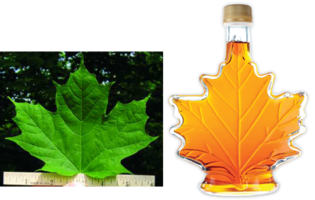
Sugar Maple leaf compare to a maple leaf shaped syrup bottle.
Sugar Maples give more to us than just their sap for maple syrup and candies. They also provide shade during the summer heat, nesting and resting places for animals, wood for canoe paddles, a glorious red foliage display during autumn, and the wood for traditional sled and sleigh runners for winter fun and travel. And that is not all! Learn more in the Sugar Maple pages of the Forest Trees of Maine.
Interesting Facts
- Sap is about 3% sugar.
- In a good year, 60 gallons of sap may be collected from a healthy mature maple tree.
- 60 gallons of sap will make about 1.5 gallons of syrup.
- Syrup makers work around the clock once the sap run starts because the collected sap must be processed within a few hours or it will spoil.
- Traditionally sap is collected in tented buckets hung on the maple trees from the sap spout - called a tap or spile. Full buckets are collected so the sap can be boiled over a wood fire and reduced down to syrup.
- Some sugarbush managers run a network of tubes from the trees directly to the sugarhouse to electric evaporators.
Activities for Children and the Young at Heart
- Plan a trip to your local Maine Maple Syrup producer. If you cannot attend in person, you can take a bit of a virtual trip by visiting this How Maple Syrup is Made webpage by the Maine Maple Producers Association (MMPA).
-
Pick you favorite maple recipe to make. Then, create a recipe of your own and submit it.
- Learn about other kinds of maple trees courtesy of the Maine Forest Service's online and searchable tree guide. You can purchase Forest Trees of Maine: Centennial Edition online, or ask for it at your local library.
- Compare the leaf photos of the six kinds (species) maple trees shown in the online guide. Do they all have the same number of main points? Are the leave edges all the same? Which species have toothed/serrated edges? Which species have smooth edges.
- Make a list of the specific uses for each species of maple, then check off the those that have benefitted you.
- Take a hike and see how many species of maple you can find. Predict before your hike, from what you learned in the online guide, what species you might expect to see. Did you find all that you though you might? Why do you thin this is so?
- Is the sugar maple leaf used as a symbol or logo for any products or teams? How many can you list?
- Write down all the reasons you are thankful for the sugar maple tree.
Share Nature Note with your friends, family, teachers, scouts, and anyone you think might be interested. Here is how they can sign up for a free subscription:
Read back issues online.
Suggest a topic by email; put Nature Note in Subject line and email Jocelyn Hubbell.
|