Protein Strands of Beauty and Purpose - Hair!
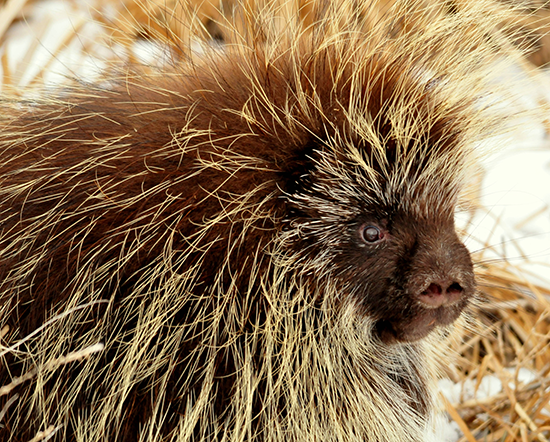
North American Porcupine. US Fish and Wildlife photo.
Just why do we have hair? Pause right here and see if you can name at least three reasons we, and other mammals, have hair. Hair is extraordinary in so many ways. It protects us, we can play with it, can fashion it into a beautiful braid, or cut (without any pain!), curl, or straighten it to suit our style.
Hair provides warmth where it is thick, and where it rises up along our arms and legs to hold body heat close to the skin. Hair can also help us cool down. When it is wet with sweat or water it holds the water near our skin. As the water evaporates we feel cooler. Hair also sends us sensory messages - a very gentle breeze, or a light touch, will move the fine hairs on exposed skin and activate sensory cells at the base of the hairs - almost instantly you will be aware of the breeze or touch. Hair is sensory in another way - it absorbs and holds our unique scent.
Eyebrows and eyelashes have the wonderful job of protecting our eyes. Thick brows help keep sweat, and falling rain or snow, out of our eyes. The water will be caught in the brows and roll to the outer edge away from the eyes. Eye lashes catch dust before it reaches out eyes and help direct droplets of water out to to the tips of each lash where the drop will fall away from the eye rather then into it.
Some animals, such as the porcupine, have very specialized hair. Its quills are actually thick hollow hairs with barbed tips. When in danger a porcupine will raise its quills. Any animal that tries to catch it has to put up with a mouth or paw full of quills in return. The quills release when touched and the barb tips ensure that they will hold once they skewer the skin.
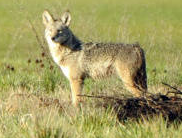
Coyotes have wonderful "capes" across their shoulders. This triangular section of fur's purpose is to allow snow and water to roll to the edge of the long guard hairs along the cape, then with a quick shake the coyote can clear itself of the droplets or snowflakes. Coyotes have several capes in succession. In the photo, kook for the first small cape above the shoulders with the lighter edge of long guard hairs. Can you see another cape too?
Interesting Facts
- Hair is strong. A single stand can hold about 3 ounces of weight. A deck of cards weight about 3.4 ounces.
- On average we lose 50 hairs a day. Hairs grow for several years (up to 4) and then naturally release.
- Most people have over 100,000 strands of hair on their heads!
Activities for Children and the Young at Heart
- If you have long locks, next time a long stand releases into your hair brush try lifting a deck of cards with it. What else can you lift with one strand of hair?
- If you have 100,000 stands of hair on your head and each strand can lift 3 ounces of weight, what could you lift if you braided all strands together?
- What natural hair colors do people have? How does it compare with other mammals?
- Do animals that go through a seasonal shed keep the same color through each shed? Why or why not? Why do they shed?
- What animal has the most interesting hair? Why? Who has the most colorful?
- Compare natural hair colors to natural feather colors. Are you surprised by what you find? Why or why not?
- Why do you think humans have less body hair than other animals? See if you can come up with three reasons, then research it.
- Songs and poems have been written about hair. Do you have any favorites? Write a poem or ditty about your hair.
|
Share Nature Note with your friends, family, teachers, scouts, and anyone you think might be interested. Here is how they can sign up for a free subscription:
Read back issues online.
Suggest a topic by email; put Nature Note in Subject line and email Jocelyn Hubbell.
|