Winter Survival - Amazing Adaptations
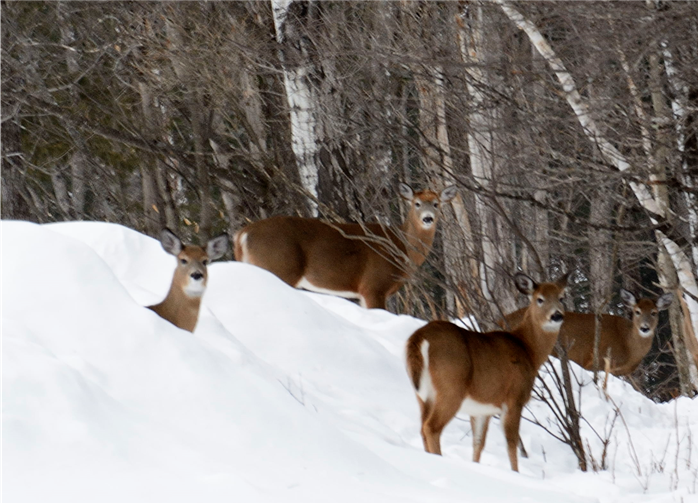
White-tailed deer in deep snow. Photo by Bruce Farnham, Mount Blue State Park Manager.
From tiny songbirds to large raptors, long-legged deer to waddling porcupines, and insects to frogs it is amazing how animals survive winter. Think about what they have to endure in Maine... extremely cold temperatures, often deep snow, lack of water, ice, body heat robbing wind, and food scarcity. What strategies do they use to survive? What adaptations do they have that help them during the winter months? Each kind of animal has specific strategies and related adaptations.
Some animals do not stick around for the winter. Their strategy is to migrate to a warmer climate where they can find food, water and shelter. Others stay active all winter and either have to actively find food and/or rely on caches they stored ahead of winter. Some "sleep" through winter as full-time sleepers (hibernators) or part-time sleepers (in torpor). "Sleep" as mentioned here being a greater metabolic shutdown than a normal night's sleep. During hibernation and torpor the breathing and heart rates, and body temperature are reduced for extreme energy savings. Adaptations may include seasonal changes to fur or feathers, a great ability to put on fat, or a body chemistry adapted to withstand freezing temperatures!
Interesting Facts
- Beavers build up the height of their dams before wintertime so that the water will not freeze all the way to the bottom of the pond. They need to be able to swim under the ice to get to their food caches.
- Some overwintering animals gather together to share body heat and for safety in numbers.
- Some animals combine strategies - they may migrate to a better overwintering area then go into torpor.
- People can adapt over time to cold temperatures but have to train very carefully to do so. Read Swimming to Antarctica: Tales of a Long-Distance Swimmer by Lynne Cox.
Activities for Children and the Young at Heart
- Make a list of animals. Include at least one insect, fish, amphibian, reptile, bird and mammal. Then, find out what strategy each uses to survive the winter, and their adaptations that help them do so.
- Which of the above animals would you like to be for a winter? Why?
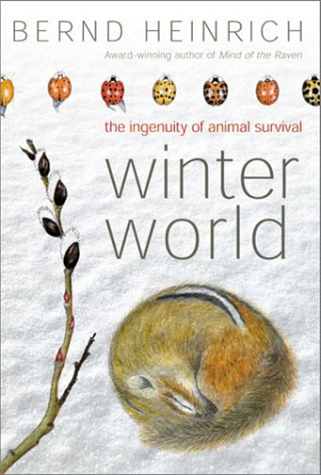
- Read Winter World, The Ingenuity of Animal Survival by Bernd Heinrich.
- Make a list of what you need to be prepared to be outside and active all day in the winter. How does it compare to the adaptations of the animals you have researched?
- Learn about Ice Safety.
- Go Winter Camping! Select Maine State Park campgrounds offer winter camping through March 15. Those with extensive winter camping experience may want to try camping on Maine's Public Lands - information is listed at the bottom of the linked PDF. View the Winter Camping information as a webpage.
|
Share Nature Note with your friends, family, teachers, scouts, and anyone you think might be interested. Here is how they can sign up for a free subscription:
Read back issues online.
Suggest a topic by email; put Nature Note in Subject line and email Jocelyn Hubbell.
|