It's been unseasonably hot this week in Maine - be sure to water your newly planted trees, check that your pets always have access to fresh, clean water, and check in on your neighbors. Remember that mature trees can help to lower surrounding temperatures by more than ten degrees, so find some shade and consider planting a couple more right trees in the right place!
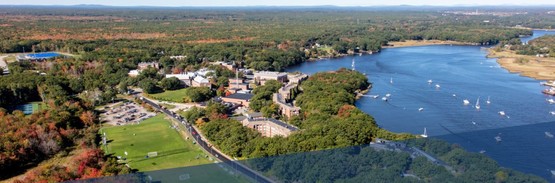 PPH -The University of New England School of Marine and Environmental Programs has received a substantial grant from the Maine Department of Agriculture, Conservation, and Forestry’s Maine Forest Service for its urban forestry enterprises, including the creation of a digital inventory of trees on both its Biddeford and Portland campuses.
The $23,000 Project Canopy Assistance Grant, a combination of state and matching funds, will go toward the design, creation, and implementation of a digital campus and street tree inventory based on geographic information systems (GIS) technology, according to a UNE press release. The project’s goals are to collect the tree data necessary for UNE to develop a comprehensive sustainability and management arboricultural plan for its two campuses. Read more...
An Unwelcome Arrival: Beech Leaf Disease Detected in Maine
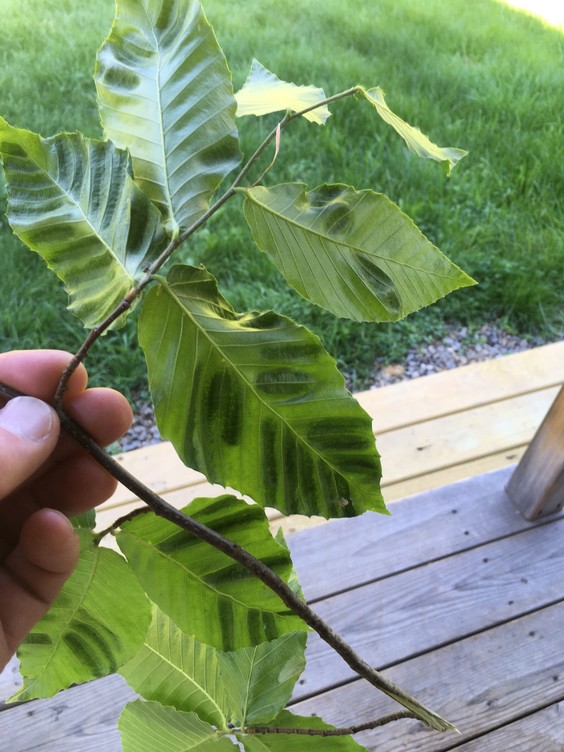 AUGUSTA - A disease that has been leading to decline and mortality of beech trees from Ohio to Southern New England has arrived in Maine’s forest. Beech leaf disease was confirmed in leaf samples from a forest in Lincolnville, ME (Waldo County) by Dr. Robert Marra of Connecticut Agricultural Experiment Station. The diseased trees were brought to the attention of the Maine Forest Service’ Pathologist by the landowners, who pay attention for changes in their frequent walks through their forest. Symptoms of the disease have since been seen in towns from Belfast to Rockport and inland to Searsmont and Hope. It appears to be widespread in the Midcoast, and is likely found elsewhere in Maine. Read more...
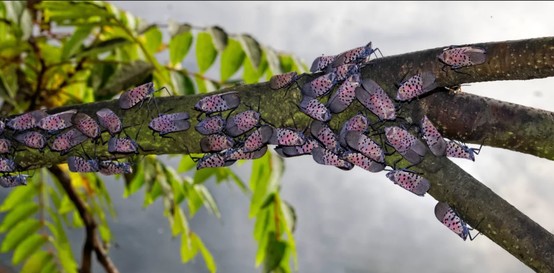 The Conversation - They’re one of the most damaging environmental forces on Earth. They’ve colonized pretty much every place humans have set foot on the planet. Yet you might not even know they exist.
We’re talking about alien species. Not little green extraterrestrials, but invasive plants and animals not native to an ecosystem and which become pests. They might be plants from South America, starfish from Africa, insects from Europe or birds from Asia.
These species can threaten the health of plants and animals, including humans. And they cause huge economic harm. Our research, recently published in the journal Nature, puts a figure on that damage. We found that globally, invasive species cost $1.3 trillion in money lost or spent between 1970 and 2017.
The cost is increasing exponentially over time. And troublingly, most of the cost relates to the damage and losses invasive species cause. Meanwhile, far cheaper control and prevention measures are often ignored. Read more...
June 10 - Invasive Plants Pull, Mt. Agamenticus
June 11 - TD Tree Days Applications due. For more info, email Shannon Jerram
June 19 - Forestry for Maine Birds Workshop, Sebec
June 21 - Monitoring Maine's Forest Health - Boothbay
Aug 12 - Forest Roads, Forestry and Farm Workshop, Blue Hill
|