May 15 – 22, 2021
Maine celebrates Arbor Week and National Invasive Species Awareness Week.
The Maine Department of Agriculture, Conservation and Forestry asks residents and visitors to take time out this week and appreciate the vast number of trees in the state. Learn about Maine’s iconic tree species, the invasive pests that are causing them harm, and what you can do to help.
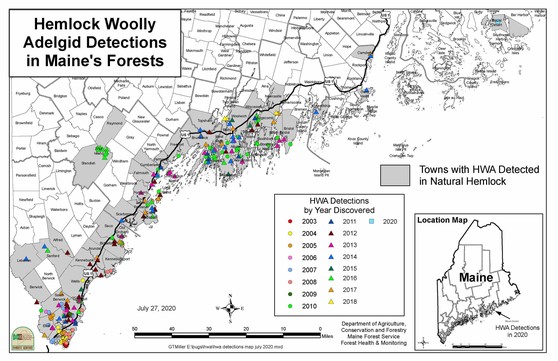
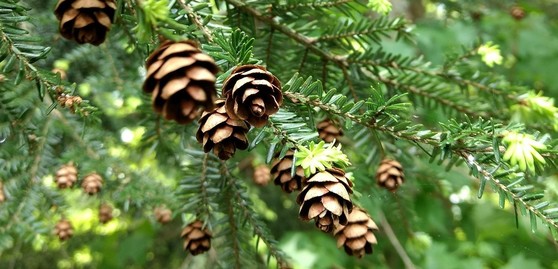 The hemlock tree (Tsuga canadensis) is a very important component of Maine’s forests as it provides critical habitat for a number of Maine’s wildlife species, e.g. white-tailed deer, and provides important shade and cooling for fish in streams and rivers. It is a valued timber tree and often grows 60-70 feet high. In 1999, the hemlock woolly adelgid (HWA), a tiny sap-sucking insect, arrived in Maine on hemlock nursery stock. In 2003, populations resulting from natural spread from Southern New England were detected in Kittery’s forests. HWA is now found in over 40 towns in 5 Maine counties.
-
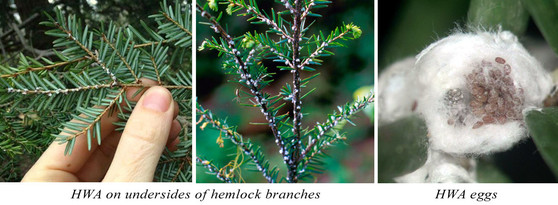
Learn how to recognize and report HWA. “Hems have stems!” Hemlock trees are one of a few conifers in the state that can be distinguished from pines, fir, and spruce by short needles that attach to the twigs with stems (instead of “suction cups”). HWA are extremely tiny and feed at the base of these short needles. At certain times of year, you can see white woolly balls made by the feeding insects underneath. If you live outside the known infested area and you see this, report here.
-
Take a Stand! Volunteer to "Take a Stand for Hemlocks". Adopt a hemlock stand and survey it annually for the presence of hemlock woolly adelgid. Participants are trained to identify hemlock woolly adelgid and to apply these detection and monitoring survey methods developed. Learn more.
-
Are you a schoolteacher, or need a K-12 project? The Gulf of Maine Research Institute has an investigative mission for hemlock woolly adelgid!
-
Time your tending! If you have work to do in hemlocks, try to time it for when HWA is harder to move. HWA cannot survive on cut hemlock branches from around August through February. The only life-stages that can survive off of rooted hemlock are the eggs and crawlers. Those are abundant from late-winter through early-summer.
- May 17, 2–3 pm, The Climate Crisis and Invasive Species
- May 18, 9 am-1:30 pm, Biological Threat Surveillance Tools (US Geological Survey Special Event)
- May 18, 2–3pm, The Model Legislative Framework for State Aquatic Nuisance Species (ANS) Programs and Resource Toolkit for Local Governments
- May 18, 3-4 pm, Spotted Lanternfly and Tree of Heaven: A Disastrous Duo Webinar
- May 19, 12-1pm or 7-8pm, Gardening the Beech: Balancing Two Options
- May 19, 2–3pm, The Regulatory Process for Classical Weed Biological Control
- May 20, 12-1pm, Diseases of Landscape Trees
- May 20, 2–3pm, Aquatic Plant Management Priorities
- May 21, 2–3pm, A Comparison of State Noxious Weed Lists and The Western Weed Action Plan
Check out Maine Arbor Week events presented by the Maine Audobon.
Spread awareness and celebrate the state's trees. Take your National Invasive Species Awareness Week commitment beyond this week. Tell your friends, family, neighbors and others about invasive species! It's a big state, and we can't get the word out to everyone without your help. Encourage them to get involved with National Invasive Species Awareness Week in their own way. Here are some resources to help get started:
|