Happy Earth Day!! The trees are budding, the bulbs are blooming, and the birds are singing! How will you celebrate today? Plant a tree, walk in the park, pick up litter in your community forest - there are so many ways you can make a difference.
Promoting health and wellbeing through urban forests – Introducing the 3-30-300 rule
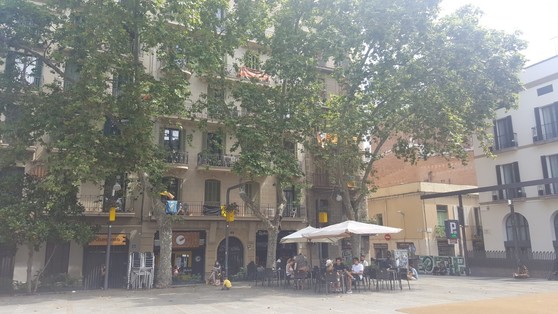 Cecil Konijnendijk van den Bosch/IUCN - Urban forests provide a wide range of essential benefits. Current global challenges, such as climate change, environmental degradation, and the COVID-19 pandemic, have resulted in increased awareness of the importance of urban trees and green spaces. When working with cities, national governments, and international organisations, I am often asked for specific guidelines for developing successful urban forestry programs. I have mostly declined, because every city is different, which makes it difficult to set transferable targets across various contexts and settings for e.g., urban tree canopy cover.
However, the current state of research and practice, the urgency to green our cities and neighbourhoods, and the call for guidance from decision makers have made me to reconsider. While situations will always be complex and different, and guidelines are not written in stones, I would like to argue for a new rule of thumb for urban forestry and urban greening: the 3-30-300 rule. This rule focuses on the crucial contributions of urban forests and other urban nature to our health and wellbeing. It also recognises that we have to consider many different aspects of the urban forest in order to be successful. It also addresses the need for urban forests to percolate into our living environments. At the same time, it is straightforward to implement and monitor. Read more...
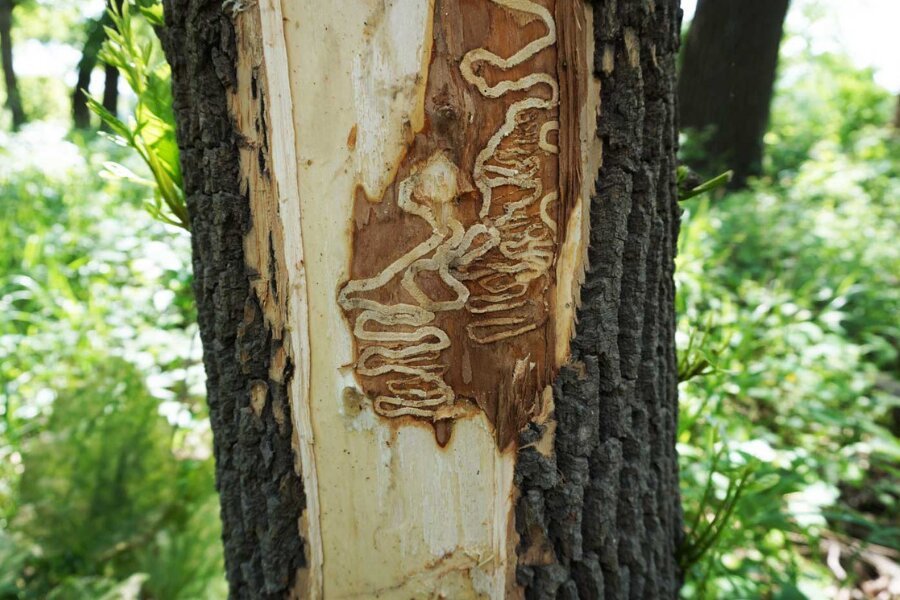 UMINN - Since its introduction, the emerald ash borer (EAB) has become the most devastating invasive forest insect in the United States, killing hundreds of millions of ash trees at a cost of hundreds of millions of dollars.
Now, new research from the University of Minnesota's Minnesota Invasive Terrestrial Plants and Pests Center (MITPPC) shows a possible path forward in controlling the invasive pest that threatens Minnesota's nearly one billion ash trees. Read more...
 Sandy Feather/Penn State - Extension educators, arborists, and other knowledgeable horticulturists have railed against the prevalence of mulch volcanoes for decades. So why do we still see so much mulch piled around the trunks of trees? Properly applied organic mulches are very beneficial for trees. Preferably two-to-three inches deep, not physically touching the trunk, and extending out to the drip line. Read more...
Ambiguity and clarity in residential yard ordinances across metropolitan areas in the United States
Using slingshots to battle invasives?
What urban nature really means for insect biodiversity
April 29 - Forestry Management Walk and Talk
May 6 - Managing Fruit Trees in the Landscape
May 11 - Forest Management and Vernal Pools - Houlton & Hammond
May 22 - Plant ID in the Field: Maine's Forest Canopy (The Gardens) - Boothbay
June 21 - Monitoring Maine's Forest Health - Boothbay
|