Nature Note

This time of year is so exciting. Every day brings on visible changes - snow melting, lake ice retreating, plants pushing forth new green shoots, and tree buds swelling. Sounds are changing too. Be a keen listener and make note of the increased sounds from the fields, woods, and waterways. And, as spring progresses listen for the dawn chorus!
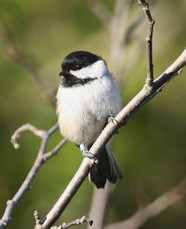
Black-capped Chickadees are busy staking out territory and getting ready to raise their young. Listen for them from a distance and make note of how their call changes when you enter their territory. They send out recognition calls to family and relations, warnings about predators, and vocalizations specific to territory and food. Theirs is one of many voices to be heard during the dawn chorus - held each morning at sunrise! Listen and learn more.
|
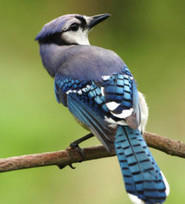
Blue Jays are renowned for their raucous calls, intelligence and antics. They are fun to watch and easy to hear. When you see them, make a note of what they are doing each time they make a call. Do you find that certain calls are paired with specific actions? Listen and learn more.
|
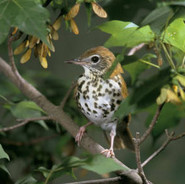
Wood Thrush arrive a bit later in the spring and their melodic calls make the wait worthwhile. Listen and learn more. Compare them to the Hermit Thrush, a marvelous songster with a beautiful airy and spiraling call. Listen here.
(Bird photos courtesy of US Fish and Wildlife Service.)
Listening to birds is just the beginning of the springtime symphony of sound. Mammals of all kinds are sounding off as well. Listen near rock walls for the alarm call of chipmunks. Sit out evenings to listen for coyote. Amphibians join the chorus too. Listen near vernal pools for frogs. Read my first Nature Note to learn more and listen to several of Maine's frogs.
Interesting Facts
- Just like all living creatures have their special niche within their habitat, so too do their vocalizations. Animals living within the the same habitat have evolved over time to have unique vocalizations that can be heard when others are calling out too. It is like a well-trained symphony - the string section can be heard while the brass section is playing, and while the drums are beating too!
- Some animals have vocalizations that we cannot hear without the aid of special listening equipment. Bats echolocate in the high frequencies above the range of hearing of most people. Elephants have a deep low rumble - that you could feel through the ground if you were standing nearby, but not hear.
Activities for Children & the Young at Heart
- Create your own Symphony of Animals by trying out the BeastBox. Listen to the example then make your own music by mixing wild animal voices with beatbox loops and unlock Beast Mode by adding 5 animals from the same ecosystem. Created by Ben Mirren and supported by the Cornell Lab for Ornithology.
- Watch this Short Guide to Chipmunk Noises by National Geographic.
- Keep a sound journal. Write about what you hear, the date and time you hear it, and the weather conditions. If you can see the animal making the sound - note what they were doing at the time.
- Record what you hear on a smart phone or inexpensive recorder. Download the sound files to a computer so you can add notes, listen later and have your own sound library.
- Test your vocal cords! Try imitating the sounds you hear. How many animal sounds can you imitate?
- As the days get warmer, listen for the dawn chorus. I like to sleep with my window open (screen in place) so that I awake to the sound of birdsong at sunrise.
|
Share Nature Note with your friends, family, teachers, scouts, and anyone you think might be interested. Here is how they can sign up for a free subscription:
• Text DACF NATURE to 468311 OR Subscribe online
Read back issues online.
Suggest a topic by email; put Nature Note in Subject line and email Jocelyn Hubbell.
|





