Nature Note

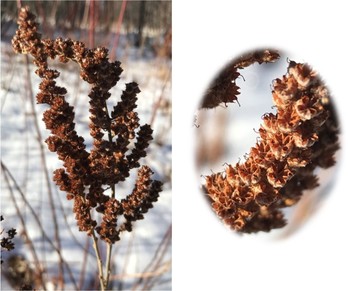
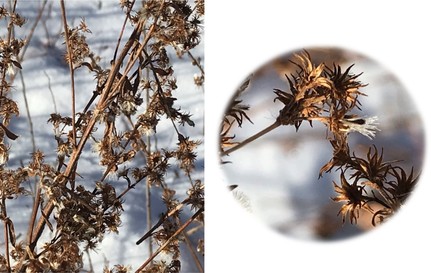
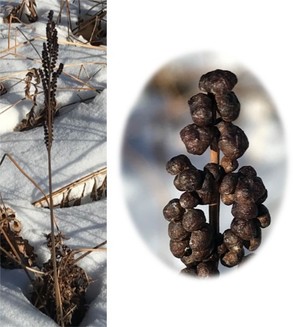
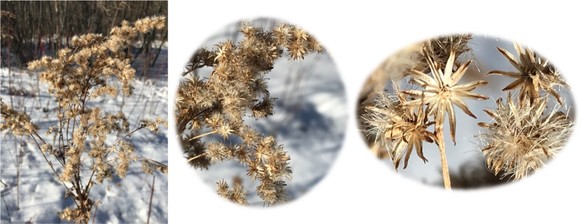
Wintertime is a fantastic time to roam through fields. What may at first look stark and dead is really full of life. Look closely and you'll see that overwintering plants, many of which are commonly called "field weeds," hold packets of potential - the stored energy of life waiting to erupt - in the form of seeds. I hope the photos below inspire you to get out on a field journey of your own this winter.
Interesting Facts
- Most plants produce a super abundance of seeds. One milkweed pod holds an average of 225 seeds. Multiply the number of pods on one plant by the number of seeds per pod and that is a huge number of seeds! Why do you think so many seeds are produced?
- Seeds are shaped to travel. Some have wings, others have barbs or spines, still others take different shapes or form... some even shoot their seed! How many modes of travel do you think seeds take? List a few plants you know and look up the shape of their seed. Find out how they travel. Form follows function.
Activities for Children and the Young at Heart
- Take a field walk and record all the different plants you see that have set seed. Take photos or make drawings then later as you reflect on your walk, pull out a field guide and see if you can identify the plants you found. Two books I recommend are:
-
Winter Weed Finder: A Guide to Dry Plants in Winter by Maine author Dorcas, S. Miller
-
Guide to Nature in Winter by Donald and Lillian Stokes
- Try identifying the plants pictured in this Nature Note.
- Become a Citizen Scientist and keep your eye out for invasive plants while you are exploring the fields. Asiatic Bittersweet is just one to keep an eye out for especially where meadows meet woodlands. Learn more about invasive plants and how to report them with iMapInvasives at this Invasive Plants webpage by the Maine Natural Areas Program.
Share Nature Note with your friends, family, teachers, scouts, and anyone you think might be interested. Here is how they can sign up for a free subscription:
Read back issues online.
Suggest a topic by email; put Nature Note in Subject line and email Jocelyn Hubbell
|