Nature Note

What is your first memory of seeing a duck? Was it at a local park, a farm, or at the ocean? Perhaps a storybook provided your first introduction. Or, maybe Daffy Duck of cartoon fame? Or was it a rubber ducky in the bathtub? Many of us began learning about ducks at a very young age through cartoons and storybooks, then later saw them in the wild. The Mallard is recognized most often – probably because it is the most common duck in North America. Check out this guide to waterfowl on the wing, Ducks at a Distance by Bob Hines of the US Fish and Wildlife Service, to learn about the great diversity of waterfowl in North America and how to identify them.
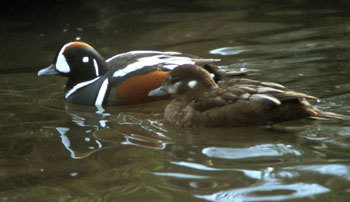
Of Maine’s 292 kinds (species) of birds, there are 30 kinds of ducks: 11 dabbling ducks, 13 diving ducks, and 6 sea ducks. They, along with geese and swans, are called waterfowl – the common name for the scientific family of water birds, Anatidae. Learn more about Maine’s ducks at the Waterfowl webpage by Maine Inland Fisheries and Wildlife.
|
Interesting Facts
- The largest duck in North America is the Common Eider.
- Some ducks, like Hooded Mergansers, nest in tree cavities while others, such as Mallards, nest on the ground. Some cavity nesters may also use nest boxes built and put out for this purpose.
-
Wood Ducks regularly produce two broods a year.
- Nictitating membranes are clear eyelids that act like goggles to protect the eyes of diving ducks.
Activities for Children & the Young at Heart
1. Participate in the Junior Duck Stamp Challenge 2021 – open to k-12 grade students. Educators, mentors or parents may register to attend the free information and training sessions on1/14 and 1/28 or download the curriculum and do it on their own with students. Deadline to submit artwork is March 1, 2021.
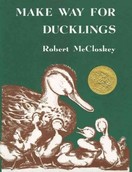
2. Read Make Way for Ducklings by Robert McCloskey.
3. Play Duck, Duck, Goose! But adapt it by calling out a new species of duck each time you play. Example – Mallard, Mallard, Goose! Be sure to learn about each duck species that will be called out ahead of time. To make the game more fun, have each player make a duck ID card ahead of time. All cards are placed in the center of the game circle and then one is selected for each round of the game.
|
Share Nature Note with your friends, family, teachers, scouts, and anyone you think might be interested. Here is how they can sign up for a free subscription:
Read back issues online.
Suggest a topic by email; put Nature Note in Subject line and email Jocelyn Hubbell.
|





