Events & News

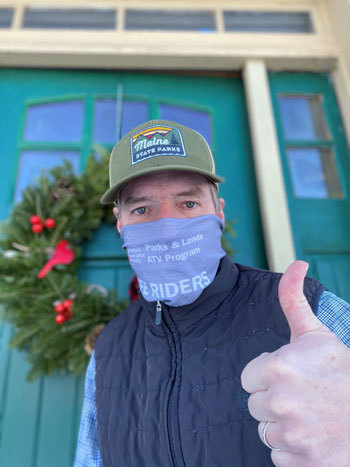 |
With two kids at home studying for finals in December, a thought occurred to me: For many of us, 2020 (or at least nine months of it) was like a final exam – except there was no syllabus! Fortunately for me, the Bureau’s final exam was a group project. With expert input and vital contributions from across the agency and from countless private sector partners, we passed the exam with flying colors. In April, like nearly all of state government, we transitioned a staff of hundreds to remote work within a matter of weeks. We quickly learned how to stay connected, while we dramatically reduced our carbon footprint. We then turned to embrace a sustained increase in outdoor recreation, while ensuring that our staff and visitors were COVID-safe. Our track record in that regard remains spotless – not a single known COVID case among staff. State Parks, Public Lands, rail trails, and boating use was off the charts all summer long, and after a delayed opening of the season, we set an all-time record for State Park campground use. In Maine, as across the country, we welcomed scores of new campers and day-use visitors. If 2021 season pass purchases are any indication, we fully expect many of these new visitors to come back again. So just like my kids, as the end of year holidays are upon us, there’s no better time to take a breath, reflect on the remarkable challenges – and accomplishments – of 2020, and prepare for what the next semester brings. At least this time around we have taken the prerequisite.
~ Andy Cutko, Director, Maine Bureau of Parks and Lands
Top of page
Maine State Park First Day Hikes, part of the nationwide initiative led by America’s State Parks to encourage people to get outdoors, are going virtual for 2021. Our staff will miss leading you on these traditional hikes, but are providing self-led and virtual options so that you may hike into the New Year at our suggested locations or via your computer. Share your self-guided hike photos and comments with us by tagging @mainedacf to Instagram and Facebook.
Top of page
|
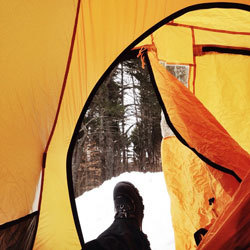
You can be toasty warm when winter camping and recreating. All it takes is a bit of preparation. Here are some tips for making your winter camping this season the best ever.
Be Prepared:
- for changing weather conditions (both you and your car),
- to provide your own first aid, and
- to not count on your cell phone, which in Maine can be very unreliable,
- know your limits, and those of your companions (outdoor skills & physical ability),
refresh your outdoor skills & consider an easy adventure to start the winter season
- for unstable ice conditions - do not travel or fish on ice unless you are certain of the thickness and your safety.
- tell a friend where you are going and when you expect to return so that they can initiate help if you do not return on time.
Winter Camping Locations and additional information.
Top of page
|
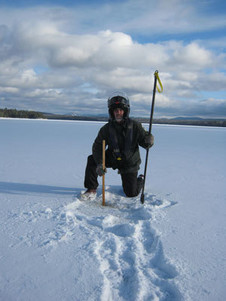
Ice fishing and snowmobiling on frozen waters can be a very enjoyable experience. However, you should be aware that when traveling on frozen lakes you could be just one poor decision or miscalculation away from plunging into icy waters.
Before you venture out onto the ice, especially early in the winter, you should check the thickness of the ice. It doesn’t take very long to chop a hole in the ice with an axe or chisel. I usually chop until I can see at least six inches of good dark ice. Six inches of ice is enough to support 4000 pounds according to the U.S. Army Cold Regions Research and Engineering Laboratory. I figure that is plenty to support me and my snowmobile. See the chart for ice thickness and strength calculations. Don’t assume that if there is a track on the lake that the ice is safe!
To minimize your risk when traveling on frozen lakes you should check with the rangers or wardens who patrol the area where you plan to take a trip. The AWW usually has a ranger on duty at Chamberlain Bridge. He will know the current ice conditions and give you advice concerning areas that should be avoided.
When riding on large inter-connected lakes, some hazard areas to avoid are thoroughfares, inlets, outlets, pressure ridges, and spring holes. Basically, anywhere there is moving water should be avoided because moving water will not freeze as easily as standing water.
I recommend that you bring some basic safety equipment on your winter excursions on frozen lakes. My emergency equipment includes a throw bag for pulling someone else out of the water and the "picks of life" for pulling myself out of the water. These are nothing more than ice picks with a retractable cover over the sharp end. A couple of good-sized spikes will serve the same propose. I also pack matches in a watertight container, a compass, and small first aid kit.
One of the most important things you can do for your safety when embarking on any outdoor adventure is -- tell someone where you are going and what time you expect to return. This will help rangers and wardens find you when you really need help.
Minimum ice thickness required
to support a load
|
Load
(tons)
|
Required ice thickness (inches) |
Distance between loads
(feet)
|
| 0.1 |
2 |
17 |
| 1 |
4 |
34 |
| 2 |
6 |
48 |
| 3 |
7 |
58 |
| 4 |
8 |
67 |
| 5 |
9 |
75 |
| 10 |
13 |
106 |
| 20 |
18 |
149 |
| 30 |
22 |
183 |
| 40 |
26 |
211 |
The table is valid when the load (such as a person on foot, or a wheeled or tracked vehicle) is distributed over a reasonable area of a continuous ice sheet. The larger the load, the greater the area it should cover for the calculation to remain valid. Neither large loads that are concentrated in relatively smaller areas, nor loads that are at or near the edge of a large opening in the ice, are safely described by the equation or table. In such cases, seek more advice.
~ Matt LaRoche, Superintendent, Allagash Wilderness Waterway
Top of page

Hearty Sausage Gravy
1 lb. ground pork sausage
2 Tbsp. butter
1/3 cup flour
3 cups milk
1 Tbsp. fresh ground pepper, or more to taste
1 tsp. ground garlic powder
Brown the sausage in a large skillet over medium high heat. As it cooks, crumble the sausage into bite-size pieces. Once the sausage is crumbled and lightly browned - but fully cooked with no pink showing - add the butter and stir until the butter is melted and foamy. Sprinkle the flour over the sausage, stirring quickly until it is well combined with the sausage fat and butter. Be careful that the flour does not burn; it should brown but not blacken. Continue stirring and slowly pour the milk into the sausage-flour mixture. Lower heat as needed to keep the flour from clumping. Stir well until thickened; 2-5 minutes, depending on the heat setting. Once it’s thickened to your liking, remove from the stove and add the pepper and garlic powder. Serve hot on your favorite biscuits.
Helpful hints: In a pinch, I have used half & half, buttermilk, and heavy cream in place of the milk, I just use 2 cups instead of 3 for milk. You can also use some fresh herbs like thyme to add an additional flavor, or even a dash or two of hot sauce. If you don’t have any biscuits on hand, even a couple slices of toast will make a yummy meal.
~ Jen Metzger, Boating Facilities Secretary
Top of page
|

Over and Under the Snow
Written by Kate Messner and illustrated by Christopher Silas Neal
Above the snow, the world is hushed and white, but underneath is a secret world of squirrels and snowshoe hares, bears and bullfrogs, and many others who live outside and must survive winter. (Picture book. Ages: 4-8)
Watch and listen to author read this book on YouTube.
|

The Long Winter
Written by Laura Ingalls Wilder
The severe winter of 1880–1881 in the southeastern Dakota Territory is told through the experience of then 14 year old year Laura Ingalls Wilder. This autobiographical children's novel, originally published in 1940, is the sixth of nine books in her Little House series.
Top of page
|
Send article suggestions or newsletter comments to Jocelyn Hubbell, Interpretive Specialist, webmaster, and newsletter editor for the Maine Bureau of Parks and Lands.
www.ParksAndLands.com
|