Nature Note

Pumpkins are one of nature’s beautiful edible treats. Originating in the Americas and grown for thousands of years, they have been domesticated to produce the amazing variety of decorative and edible kinds available today. The wild pumpkin of some 7,000-plus years ago was nothing like today’s farmed varieties. It was small, hard and bitter flavored. Over time, farmers selected for the traits they liked, such as flavor, shape, color, size. This careful selection and planting of seeds from the pumpkins they liked led to the many varieties we enjoy today.
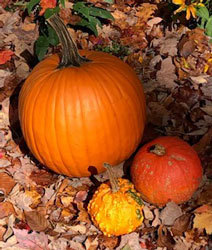
Pumpkins may be cooked in an amazing number of ways and added to other foods to make very healthy meals. A traditional snack uses the pumpkin blossoms. They are rolled in a mixture of breadcrumbs, flour and egg then fried, and eaten immediately while warm. Long strips of pumpkin may be roasted over an open fire then eaten. A whole pumpkin can be roasted in coals by slicing off the top (saved as lid during cooking), removing the seeds, and filling the pumpkin with a mixture of milk, honey and spices. Ginger was probably originally used. Cinnamon, nutmeg, cardamom, mace and other spices are also tasty. Experiment with other fillings such as rice, beans and cheeses.
Interesting Facts
- Pumpkins are believed to have originated in Central America over 7,500 years ago.
- The oldest domesticated pumpkin seeds are believed to be from the Oaxaca Highlands of Mexico.
- The heaviest pumpkin ever grown, as of 2012, weighed 2009 lbs. and was grown in Topsfield, Maine. Do you know who holds the record today? Find a Farmer’s Market near you to get local pumpkins.
- Damariscotta, Maine holds a Pumpkinfest & Regatta – cancelled this year – but mark your calendar for October 9-11, 2021. In the meantime view pumpkin art at their website, and more art and photos of pumpkin boats on their Facebook. Does this inspire you to make your own Jack-o-Lantern art?
- Pumpkin gets its name from “pepon” (Greek), meaning “large melon”. The French pronounced this “pompon” and the English pronounced it “pumpion”. It is thought that American colonists were the first to pronounce it as pumpkin.
- Provide Vitamin A, Vitamin B, potassium, protein, iron, and fiber, and low in calories, fat, and sodium.
Activities for Children & the Young at Heart
- List as many children's stories as you can that feature pumpkins. What role did they play in the story?
- Design a Three Sisters garden for planning next spring. To plant this indigenous people’s traditional and efficient grouping of plants, where each benefits the growth of the other, you need to form a circular mound of soil to plant corn, beans, and squash (pumpkin). Watch to see which seed (corn, bean or pumpkin) sprouts first and make a weekly drawing of what you observe.
- How many pumpkin recipes can you find? Have you ever eaten pumpkin ice cream or pumpkin donuts? Try cooking up at least one new recipe. Here is a pumpkin recipe and history link to get you started.
|
Share Nature Note with your friends, family, teachers, scouts, and anyone you think might be interested. Here is how they can sign up for a free subscription:
Read back issues online.
Suggest a topic by email; put Nature Note in Subject line and email Jocelyn Hubbell.
|





