Invasive Pest Outreach Information
Invasive Spotted Lanternfly Egg Masses Found in Maine
September 29, 2020
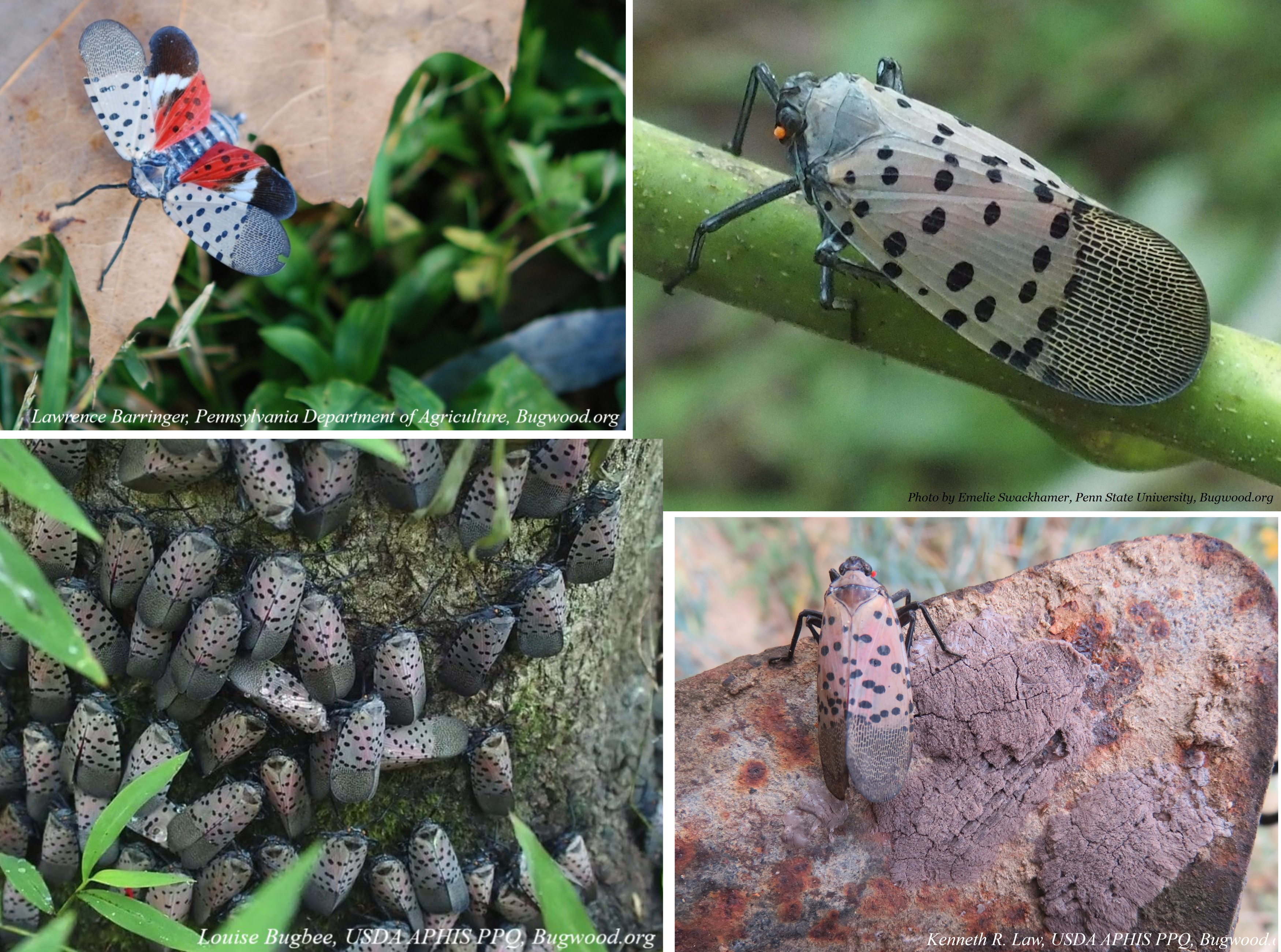
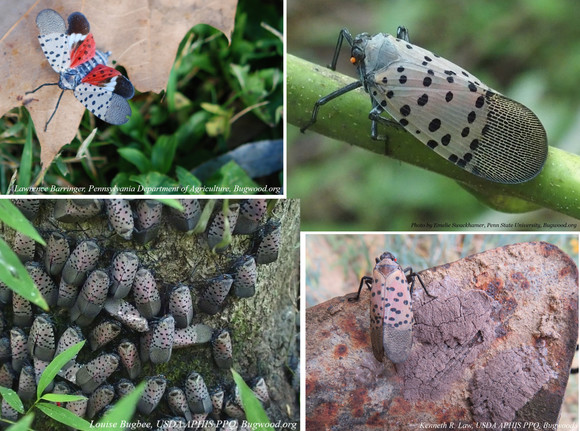 Spotted lanternfly adults. Look for large, gray insects, about one inch long, with black spots and red underwings. You may see adults between August and November.
The Maine Department of Agriculture, Conservation and Forestry (DACF) announced that hatched egg masses of the invasive spotted lanternfly (Lycorma delicatula) were found on trees imported from Pennsylvania and planted in some Maine communities. The DACF is urging residents, especially those that live in Boothbay, Freeport, Northeast Harbor, and Yarmouth, to report sightings of this insect. This time of year, the spotted lanternfly is in the adult stage, pictured above.
The spotted lanternfly (SLF) is an invasive sap-feeding insect from Asia that was first found in the United States in 2014, in Pennsylvania. While the preferred host plant of this pest is tree-of-heaven (Ailanthus altissima), SLF attacks over 100 species of trees, shrubs, and vines, and has the potential to impact a broad range of agricultural commodities, including apples, peaches, grapes/wine, maple syrup, as well as the ornamental nursery industry.
The DACF Horticulture Program has inspected all the suspect trees and asks the homeowners and landscape companies to keep an eye on the areas where egg masses were found to confirm that no live populations are present. Currently, no living or dead spotted lanternfly adults have been found in Maine.
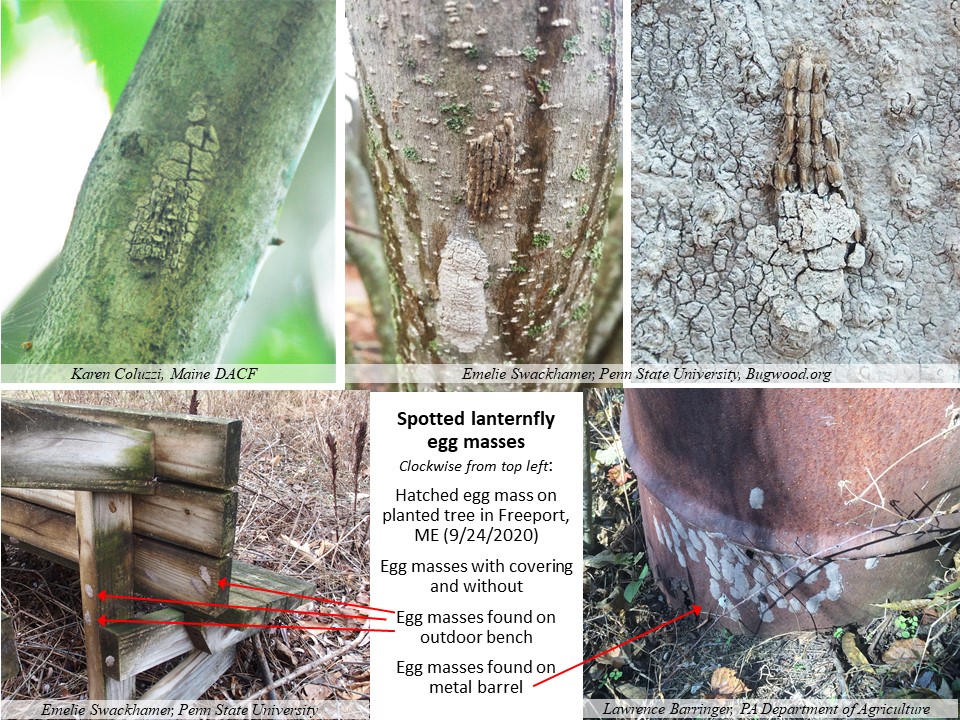
SLF adults develop from the nymphal stage starting in July, and will feed and lay eggs until they are killed by a hard frost. The overwintering egg masses can be laid on any surface, including vehicles, nursery stock, and other outdoor structures.
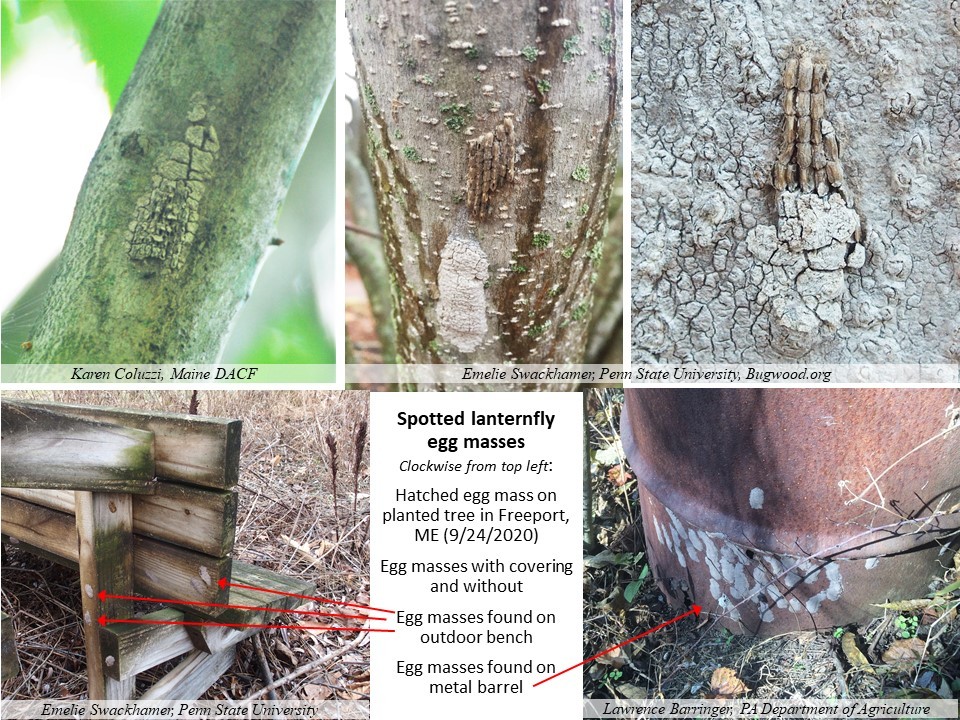 Spotted lanternfly egg masses. They are laid on any smooth surface and often covered with a gray waxy coating that looks like mud. Look for fresh egg masses between September and May the following year.
Currently, there are known populations of SLF in Connecticut, Delaware, Maryland, New Jersey, New York, Pennsylvania, Virginia, and West Virginia. The DACF urges anyone who received goods or materials, such as plants, landscaping materials, or outdoor furniture, from a state with a known SLF infestation to carefully check the materials, including any packaging, for signs of SLF.
“These most recent finds call attention to the fact that there are many ways that spotted lanternfly can travel here from other states,” said State Horticulturist, Gary Fish. “Early detection plays an important role in the protection of our state’s economic and ecological resources from invasive species, and we ask anyone who may have received shipments of wood, ornamental plants, or any other materials from Pennsylvania or other Northeastern states to help protect the natural resources and agricultural industries of Maine by checking for and reporting any signs of spotted lanternfly.”
If any life stages of SLF are found, residents should take a photo or collect the specimen and report any potential sightings to bugwatch@maine.gov. For more information, visit the DACF Spotted Lanternfly webpage.
Questions/Comments? Contact us!
Email: bugwatch@maine.gov
Facebook - Twitter
|