Nature Note 17: Explosive Pod: Jewelweed

Having trouble viewing this email? View it as a Web page. Bookmark and Share

Nature Note

Nature Notes Header

Explosive Pod: Jewelweed

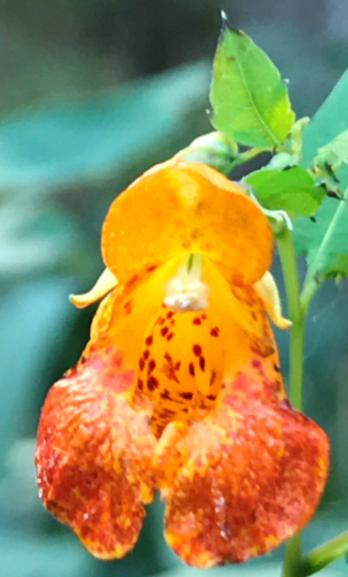
Jewelweed flower

The bright orange flowers of Jewelweed (Impatiens capensis) beckon viewers to take a closer look. But touch a ripened seed pod while doing so and you’ll be in for a surprise - an explosion of seeds! This makes jewelweed an especially fun plant to look for in autumn.

Look for this Maine native in wet woodlands and moist, shady areas. It grows 2-5 feet tall on slender, fragile stems. Leaves are oval and toothed along the edges. Once you find a stand of jewelweed, sit back and watch. Hummingbirds feed on the nectar and rely on it during their autumn migration. The angle of the flower’s nectar spur is specific to hummingbirds, making them the primary pollinator of jewelweed. Bumblebees also search out the flower, which blooms mid-summer to frost, and are important secondary pollinators. Butterflies and other long-tongued insects seek out the nectar as well.

Jewelweed stems are very watery. The stem sap is a traditional topical treatment for skin rashes and poison ivy. The sap also has anti-fungal properties and is used for treating athlete’s foot. It is important to note that some people are sensitive to jewelweed and may develop a severe skin rash from the juice.  

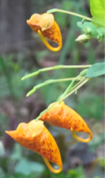
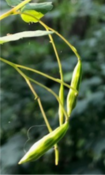
(Photo at top right shows nectar spur bending under each flower in side-view. Photo below shows seed pods ripening.)

Interesting Facts

Side view of jewelweed showing the nectar spur bending under the flower.
  • A self-seeding annual that is easy to propagate in early autumn.
  • Has two types of flowers: those that open for pollination, and smaller, inconspicuous flowers that never open. Instead, they fertilized themselves without pollen exchange with another flower. They are called cleistogamous flowers. Look for these 1 mm long flowers at the base of leaves.
  • One of a few native plants that can out compete the non-native invasive garlic mustard (Alliaria petiolata).
Seed pods of jewelweed.

Activities for Children & the Young at Heart

1. Find a patch of jewelweed and record all the flying visitors you see.
2. Observe the seed pods of jewelweed and compare to other seeds you see during autumn. Are they all the same shape or different? Do they disperse their seeds in the same or different ways? Keep a list of all the seeds you find and what you observe. Make a drawing of each with your notes.

Share Nature Note with your friends, family, teachers, scouts, and anyone you think might be interested. Here is how they can sign up for a free subscription:

Read back issues online

Suggest a topic by email; put Nature Note in Subject line and email Jocelyn Hubbell.