Project Canopy
How much space do you think you need to grow a forest?
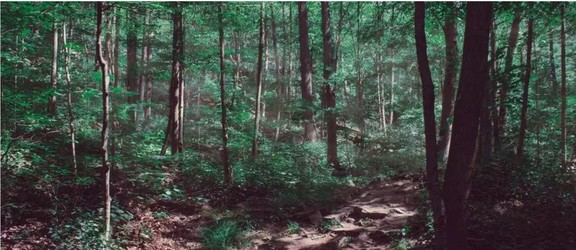
If your answer is bigger than a couple of tennis courts, think again. Miniature forests are springing up on patches of land in urban areas around the world, often planted by local community groups using a method inspired by Japanese temples.
The idea is simple – take brownfield sites, plant them densely with a wide variety of native seedlings, and let them grow with minimal intervention. The result, according to the method’s proponents, is complex ecosystems perfectly suited to local conditions that improve biodiversity, grow quickly and absorb more CO2. Read more...
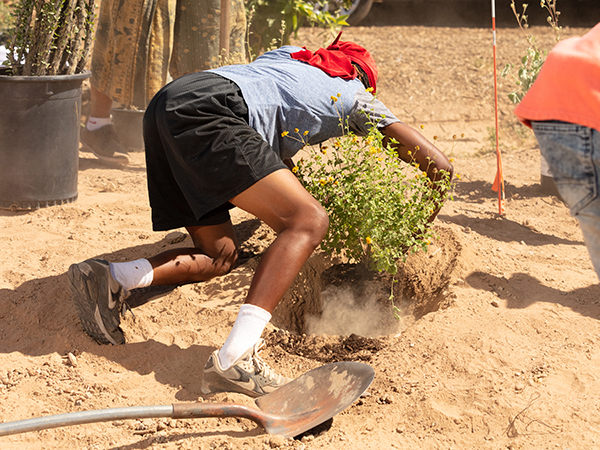 WASHINGTON POST - High noon in America’s hottest city. The sun blazed in a cloudless sky, making the air shimmer above the softening asphalt. A thermometer registered more than 100 degrees in the shade. Not that there’s much shade to speak of in the central Phoenix neighborhood of Edison-Eastlake, hemmed in by highways and covered in scorching concrete...
“We talk about climate...as something mysterious and ambiguous that comes from the sky. But it is also something we are driving with the way we are paving our streets,” Hondula said. “Urbanization is a critical part of the story.” Natural environments, he explained, are incredibly effective at getting rid of heat. That’s because of the way trees and other vegetation release water into the surrounding air, a process called evapotranspiration. Turning water from a liquid to a gas uses heat energy, and it can result in air temperatures in a healthy tree grove being 10 degrees lower than in open terrain. Even scrubby desert plants are capable of cooling their environments, especially at night.
In paving over the desert, Phoenix’s developers not only lost this cooling capacity but they made the problem worse. Tall buildings create canyons in which heat gets trapped close to the ground. Hard surfaces like pavement absorb and hold on to heat even after the sun goes down, causing daytime high temperatures to linger into the night. Human activities, like driving cars or running factories, also produce “waste heat” that compounds the problem. Read more...
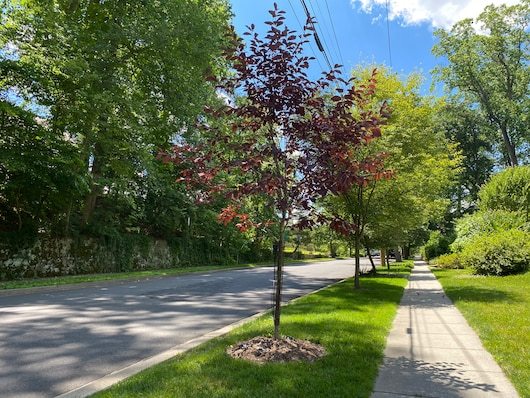
WASHINGTON POST - If you are looking for rays of hope in dark times, consider this: The urban forest in Washington is lush and vital. It is one part of our (green) infrastructure that is being maintained proactively and, from a plant lover’s perspective, has never looked more interesting or been more inspiring.
Those of us who have lived in this town for a long time remember when that wasn’t the case, with an alarming decline in the canopy of the urban forest due to neglect and development, a situation that led to the creation of the nonprofit Casey Trees.
The condition of the urban forest goes beyond pure aesthetics. A leafy city is a cooler, cleaner city; it’s simply a nicer place to live, and it makes us healthier in mind and body. The tree, it turns out, is the one hugging us. Read more...
Portland, Maine is in the middle of collecting its first round of urban FIA data, and this data will be available in a few years after data collection for the first cycle is complete.
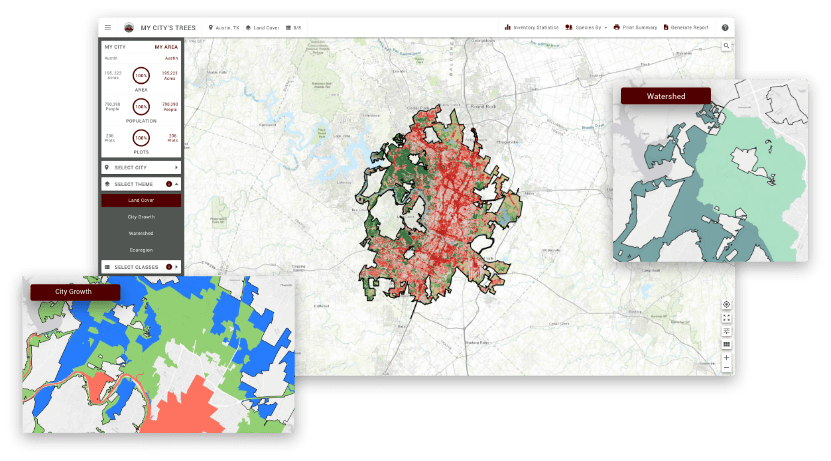 USFS Pacific Northwest Research Station - The United States Forest Service (USFS) is excited to share the first west coast Urban Forest Inventory and Analysis (FIA) dataset through the interactive My City’s Trees application for the City of San Diego.
My City’s Trees is an application that enables anyone to access Urban FIA data through interactive visualizations and summaries categorized by several themes. Data are available from the 2017 field season where, in partnership with the City of San Diego, Urban FIA crews completed a full survey of 185 plots representing 169,844 acres of land. San Diego themes include land cover watersheds, pollution burden, climate designations, and residential annual income. In addition to data visualization, My City’s Trees offers pre-built and custom summary reports within each theme. These summaries describe species-specific counts of trees, carbon storage and sequestration, associated energy savings, runoff and pollution prevention, and more!
Analysts and scientists with the USFS FIA program, including the iTree team, and cooperators at the University of New Hampshire are preparing a comprehensive report summarizing the results of our 2017 data collection effort in San Diego to complement and supplement the My City’s Trees interactive tool. Meanwhile, field crews continue to revisit San Diego urban plots, as a key feature of Urban FIA is remeasurement of plots to monitor trends over time.
Data collected on plots throughout the San Diego sampling area during 2017 are also available through the FIA Urban DataMart.
For more information about Urban Forest Inventory and Analysis (Urban FIA), please visit our national website.
Knotty tree fungus strikes cherry, plum trees in Augusta
A Maine-based cross laminated timber factory could mean more affordable housing
Should I cover large pruning wounds with a tree wound dressing?
Does spending time outdoors reduce stress? A review of real-time stress response to outdoor environments
 July 14 - Webinar: Enhancing Tree Health in Water Sensitive Urban Design, 5pm EDT
July 16 - Webinar: i-Tree and the Urban Forest, 9am
July 22 - Webinar: Managing Emerald Ash Borer and Climate Change, 12pm EDT
|