Nature Note

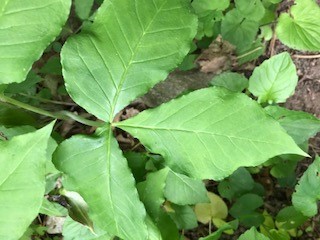
Leaves of the Jack-in-the-pulpit plant provide a shady overstory for the pulpit.
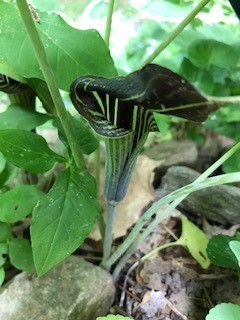
One of Maine's most fascinating flowers of the moist and shady areas of deciduous woodlands is the Jack-in-the-pulpit, Arisaema triphyllum. It can be easily missed unless you are keeping an eye out for it. Look in early June for the leaflets-of-three that stand atop a one- to two-foot tall stem. Each plant usually has one or two of these compound leaves which provide a shady overstory for the pulpit.
Gently move the leaves aside to find the pulpit - the deep purple/maroon and green striped protective sheath that hides "Jack" (or "Jackie" as you will later learn). This sheath, called a spathe, is a specialized leaf that provides a hood over "Jack" and enfolds him. It provides added protection from sunlight and also helps to retain moisture.
A cluster of shiny red berries form from the pollinated flowers of female plants by late summer. The rest of the plant withers to the ground, back to its corm (a swollen underground stem for storage of carbohydrates - which provide energy for the plant), and goes dormant.
|
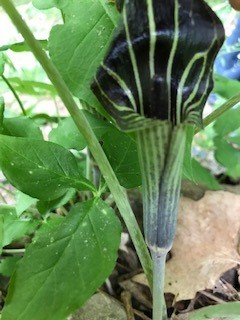
"Jack" is revealed in the photo at right. He is really a fleshy spike, with tiny maroon and green pollen-producing flowers, called a spadix. In these photos the maroon is so deep it looks almost black.
Interesting Facts
- Plant may live twenty-five or more years.
- Pollinated by small flies and fungus gnats.
- Berries are eaten by wood thrushes, other birds, and mammals. NOTE: All parts of this plant - if eaten raw - is toxic to humans. The sap and flesh from roots, corm, and stems may irritate the skin.
-
Arisaema, the genus name, comes from the Greek, aris - meaning arum - the family to which this plant belongs, and aima - meaning red - for the blood-red berries, and perhaps a reference to the maroon stripes as well.
-
triphyllum, the genus name, means three-leaved.
- A plant may produce male flowers (the pollen producers) one year and female flowers (the fruit producers) the next, or switch from male to female and back in a single growing season. Flower type is dependent on the amount of stored energy in the corm. If the corm has lots of stored carbohydrates female flowers will be produced at the start of the season. If the corm is low on carbohydrates male flowers will be produced. So there are both Jacks and Jackies-of-the-pulpits!
- Plants with one just one compound leaf stalk are generally male; those with two are generally female.
- Plants from seed take five years to flower.
|
Activities for Children & the Young at Heart
- How many plants can you find that have a spathe and spadix? Look online or through plant books. (Hint to get you started: one is associated with Peace.)
- If "Jack" or "Jackie" could speak from the pulpit to the animals and plants of the forest, what do you imagine might be said? What might be said to hikers such as yourself? Write a short story based on your ideas.
- Try drawing a Jack or Jackie-in-the-pulpit but make the stripes your favorite colors. Why do you think the spathe is striped?
Share Nature Note with your friends, family, teachers, scouts, and anyone you think might be interested. Here is how they can sign up for a free subscription:
Write to me if you have a plant or animal that you'd like covered in a Nature Note. Send an email by using the link below. Be sure to put Nature Note in the subject line.
- Jocelyn Hubbell, Interpretive Specialist, Maine Bureau of Parks and Lands.
www.ParksAndLands.com
|