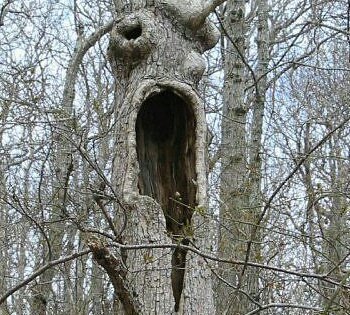
Project Canopy
Photo credit: earthstoriez
Halloween can be a really scary time, but what’s even more scary is waking up to hearing a large CRACK when your big beautiful shade tree fails and damages your home, car or worse. But there are easy ways to quell your anxiety and keep your investments safe.
First – when planting a new tree, make sure it’s the “right tree for the right space”. Will its mature size fit next to your home or under power lines? Is it hardy to your climate? Second – inspect your tree before you take it home or before it’s planted. Is the trunk damaged, are there broken branches - any wound can be an entry point for fungus and disease. Are the roots circling, is the root flare buried, or are there even enough roots present? Good root structure is the foundation that keeps your tree upright and is important to feeding the leafy canopy. When you plant your new tree, make sure all the burlap, wire or container is removed, the roots are spread so that they can grow out away from the trunk and that the tree is not planted too deep. You want to see the very top of the “root flare” (where the roots connect to the trunk) just above the soil level. Too deep and the trunk can rot. Water well and make sure your mulch is 2-3” away from the trunk.
If you have an established tree on your property, have a licensed arborist visit it regularly. They are trained to see problems we can’t. The sooner you deal with a potential problem, the less $ it will cost – wait too long and the repair bills and increased insurance premiums can cost a lot more.
With the right planting and the right pruning, a healthy tree can provide clean air, clean water and energy savings for a lifetime. And that’s not scary at all.
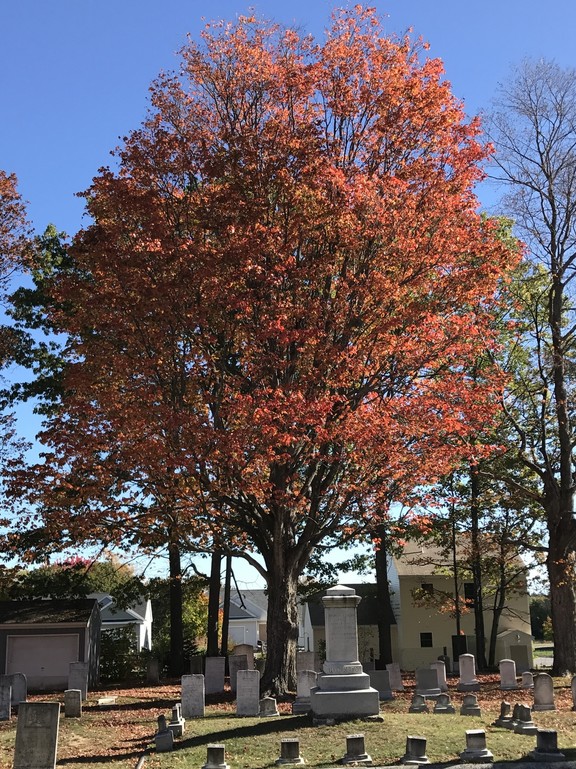
NAT GEO - In the heart of Brooklyn, New York, one of the most densely populated places on the planet, researchers have discovered a new animal species: a shimmery beetle, smaller than a grain of rice, with an exoskeleton of olive green and red.
Marc DiGirolomo, a biological technician at the U.S. Forest Service, found the insect in Green-Wood Cemetery, 478 acres of graves and greenery, with sweeping views of lower Manhattan. The wood-boring jewel beetle was discovered in the cuttings of a European beech tree.
“We never expected to find something new to science,” DiGirolomo says, who came across the new species as part of an insect identification study by the U.S. Department of Agriculture.
The USDA chose to study Green-Wood in part because of its high concentration of native, non-native, and rare plants. The cemetery has 7,000 trees of more than 700 different species, making it rife with insects and larger animals. That biodiversity is no accident: Green-Wood’s horticulture team works year-round to plant and maintain a huge variety of plants, trees, and shrubs, earning the cemetery Level III Accredited Arboretum status—one of only 29 in the world.
But long before Green-Wood officially became an arboretum in 2015, the cemetery was already a refuge for the dead and the living, including a variety of plants and animals. And Green-Wood isn’t alone. For nearly 200 years, many U.S. graveyards have been repositories of urban biodiversity, home to unexpected, beautiful, and sometimes even undiscovered species. Read more...
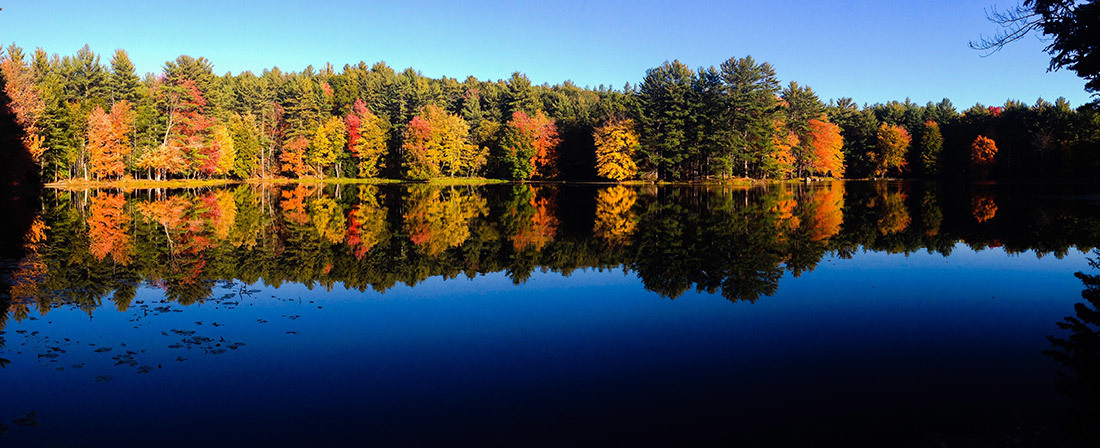 RED — throughout history humans have been attracted to and fascinated by the color. I, too, feel that draw as I move quickly through the White Mountain National Forest in New Hampshire on a crisp autumn day. My senses are heightened and aroused in so many ways when I hike deep within any New England hardwood forest. From the earthy aroma of moss and decaying leaves to the gurgle of a chilly rushing stream, to the sound of leaves gently hitting the soft forest floor, to the main attraction: eye-popping oranges, yellows and fire-truck reds creating 360-degree visual fireworks.
Much of this display comes courtesy of the sugar maple (acer saccharum). It’s responsible for the brightest colors of our New England fall, the soul-grabbing reds, oranges and yellows that put so many forest lovers, hikers and casual passers-by into a place of contentment and even bliss.
But the sugar maple is also, many scientists believe, the canary in the coal mine when it comes to climate change. Read more...
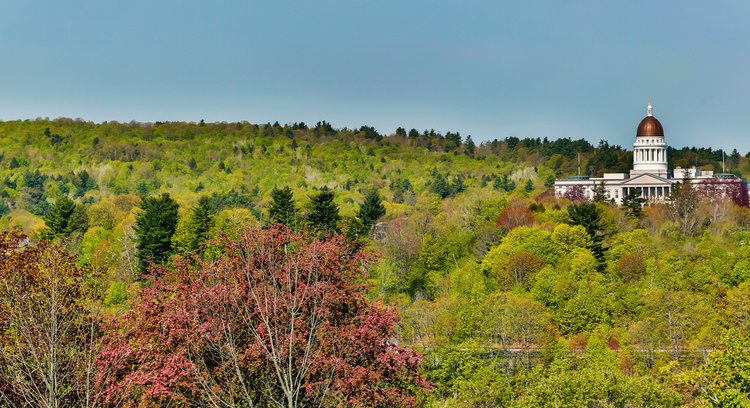 AUGUSTA — When it comes to connecting people to wildlife, Howard Hill Historical Park has it all, the state’s commissioner of Inland Fisheries and Wildlife said Thursday at the 164-acre site’s dedication.
With fall’s array of multicolored leaves on display for miles behind her, Commissioner Judy Camuso said Howard Hill’s prominence and easy access for people, combined with its spectacular and diverse habitat for wildlife, make it the perfect spot for people to make and share connections to nature, and instill those connections in future generations.
“An oasis for both people and wildlife, right here in the heart of our state capital,” Camuso said from an overlook with expansive views of Augusta and beyond, to a few dozen attendees at the park’s dedication Thursday. “From a wildlife perspective, Howard Hill has it all. With softwoods and hardwoods, it provides a home or stopping off point for a whole host of wildlife species.
“The key for all of Maine’s diverse wildlife will be protecting a wide range of habitats and in providing connectivity between those habitats. This dedication is an example of ensuring that not only does Maine’s wildlife have a home, but the people of Maine and those that visit have a place to enjoy Maine’s wildlife. People will protect what they care about.” Read more...
Is it too late to plant a new tree?
John Bunker Recognized for Saving Maine's Apple Heritage
Urgent tips for managing storm-damaged trees
Have you Checked your Trees Lately? A Routine Check-up of Trees Saves Lives & Property
Log Peeling Workshops for Detection of Emerald Ash Borer
|
The Maine Forest Service is announcing three upcoming log peeling workshops. During these workshops, ash trees girdled by volunteers and Maine Forest Service staff in Spring 2019 will be processed. Trees are girdled as part of the Maine Forest Service’ emerald ash borer detection surveys. The workshops are open to anyone who would like to learn more about emerald ash borer and volunteer their time to help in the process.
-
November 6th, 2019 in Lyman, Maine, 8:30 am until 3:30 pm (or done), Maine Forest Service field office, 2281 Alfred Road
-
November 13th, 2019 in Madawaska, Maine, 8:30 am until 3:30 pm (or done), Madawaska town garage, 9 Public Works Avenue
-
December 4th, 2019 in Bar Harbor, Maine, 8:30 am until 3:30 pm, Acadia National Park Headquarters off Rt 233 (Eagle Hill Road), 20 McFarland Hill Drive
If you are interested in joining us, please contact Patti Roberts at Patti.Roberts@maine.gov or (207) 287-2431 with details of the event you plan to attend. If you girdled a trap tree and are unable to attend one of these events, or have not received instructions for preparing your tree, please also contact Patti.
|
Oct 31 - iTree Workshop Series: October 2019 i-Tree Hydro. Register here
Nov 4 - 3rd Maine Modern Wood Heat Symposium – Portland. Register here
Nov 7 - Webinar: Emerald Ash Borer Update, 12pm More info.
Nov 19 - Webinar: Health Benefits of City Trees: Research Evidence & Economic Values, 2pm. Register here.
Nov 26 - 2pm. Webinar: LiDAR for Resource Assessment More info.
|