Invasive Pest Outreach Information
August is the height of summer, and it is also the best time to spot the Asian longhorned beetle (ALB) as it starts to emerge from trees. We are hoping that the citizens and visitors of Maine will take five minutes to step outside and check their trees for any signs of this invasive pest. Checking trees for the beetle will help residents protect their own trees and better direct the USDA’s efforts to eradicate this beetle from the United States.
If you see any of these signs, go to www.maine.gov/alb to learn how to report.
The Asian longhorned beetle (and it's Anoplophora cousins):
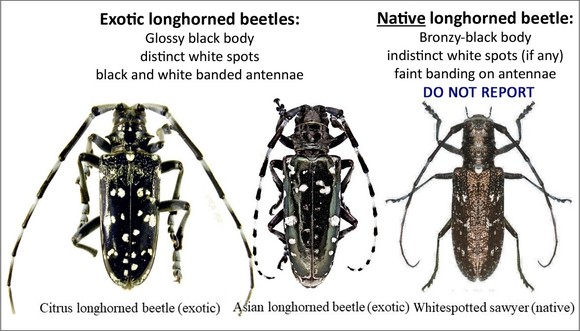
- is over 1" long
- has very long antennae, banded black and white
- is glossy black with distinct white spots
- attacks maple trees and other hardwood trees
- would emerge from trees late July - October
- has native lookalikes, e.g. the whitespotted sawyer (not harmful)
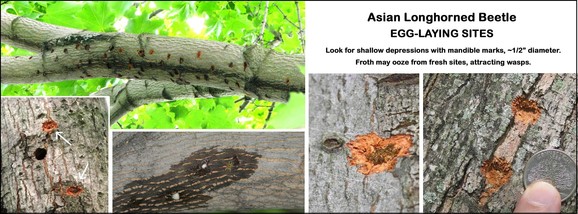
ALB females start to lay eggs in August. They use their mandibles to create a depression in the bark. Any tree suspected to have Asian longhorned beetle will have these marks.
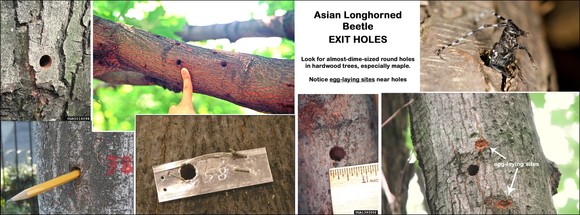
When Asian longhorned beetles emerge from the trees, they make perfectly round holes. If you can fit a pencil into the hole about 2 inches deep, it may be an ALB exit hole. Look for egg-laying sites if that's the case.
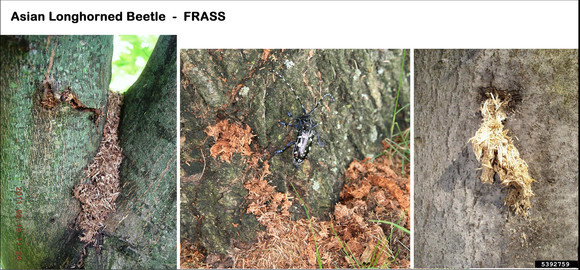
Frass is the sawdust-like material that the larval stage of the beetle makes as it tunnels through the tree. Frass can be seen coming out of egg-laying sites and in piles on branches and the ground.
Questions/Comments? Contact us!
Email: bugwatchME.agr@maine.gov
Facebook - Twitter
|