Project Canopy
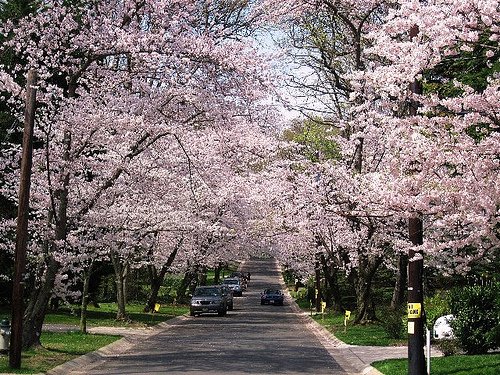
CityLab - Several years ago, walkability guru Dan Burden wrote a detailed monograph titled 22 Benefits of Urban Street Trees. Among other things, he calculated that "for a planting cost of $250-600 (includes first 3 years of maintenance) a single street tree returns over $90,000 of direct benefits (not including aesthetic, social and natural) in the lifetime of the tree." Burden cites data finding that street trees create slower and more appropriate urban traffic speeds, increase customer traffic to businesses, and obviate increments of costly drainage infrastructure. In at least one recent study (reported after Burden’s analysis), trees were even found to be associated with reduced crime.
I think some of the most important benefits, though, are felt emotionally. Burden puts it this way: Read more...
 Orange County - While several species of oak, maple, crape myrtle, ficus, magnolia and other common shade trees have a life expectancy of 50-80 years or longer in unstressed environments, few reach their full potential in cities and urban areas.
Why? In order to accommodate growing populations, cities have large areas of paved concrete and asphalt surfaces that create ‘urban heat islands (UHI)’.These hard surfaces absorb large amounts of heat that builds up during the day and is released at night, leading to much higher night temperatures in cities than in surrounding areas.
The good news is that trees offer many benefits that offset the impacts of UHIs. Cities with larger tree canopies are a testament to this fact and have fewer adverse impacts from UHIs than do cities with low tree canopies. Read more...
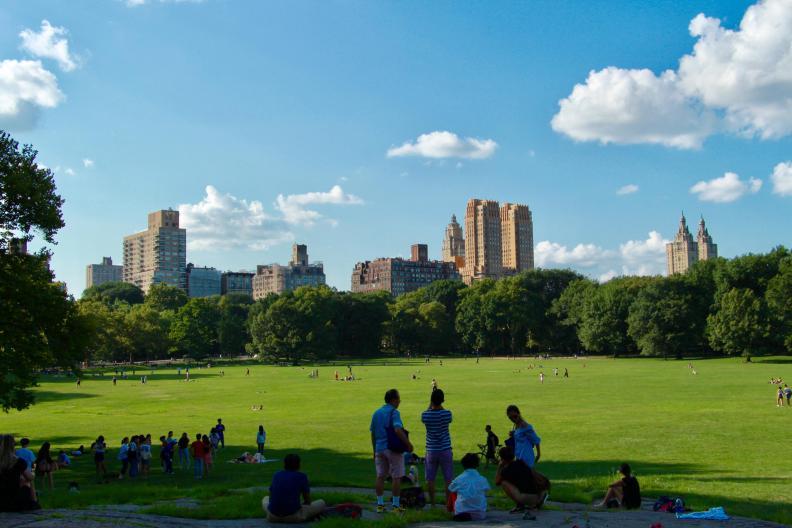 NYC-Investments in Bronx and northern Manhattan parks were tied to a drop in crime between 2003 and 2016, a study argues.
The New York Restoration Project, a nonprofit parks conservancy that operates in low-income communities, funded a study of its own investments in Inwood, Washington Heights and East Harlem in Manhattan and Highbridge and Hunts Point in the Bronx. Crime rates in those neighborhoods before and after 2003 were compared with rates in three demographically similar neighborhoods where it did not invest: Kingsbridge Heights and Soundview in the Bronx and central Harlem.
Non-major felony crime dropped more in the areas where the nonprofit either helped to maintain city-owned parks or owned and maintained smaller community parks and gardens.
"The point of the study is to try and develop some data behind what we know to be true: Investing in quality open space and providing people with access to nature reduces crime and improves public health, among other things," said Deborah Marton, executive director of the restoration project. Read more...
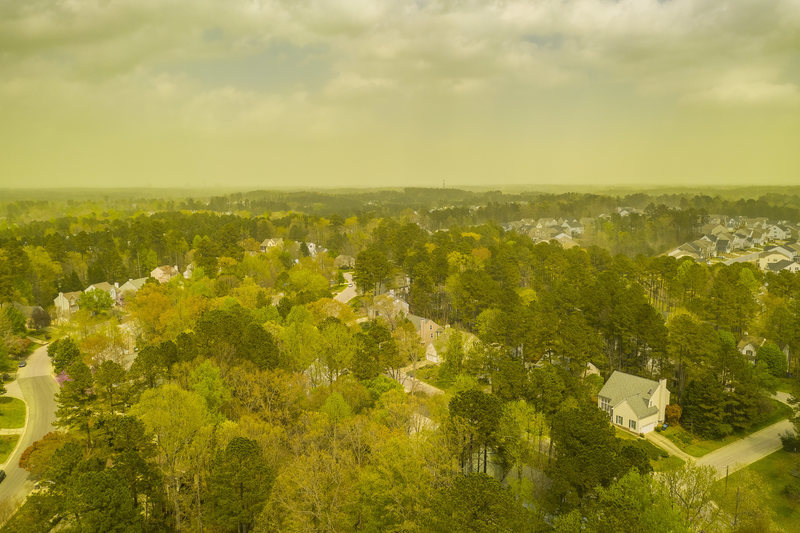 Atlas Obscura - One day this past April, the residents of Durham, North Carolina, saw the sky turn a peculiar but familiar shade of chartreuse. Enormous clouds of a fine, yellow-green powder engulfed the city. It looked, and felt, like the end of the world. “Your car was suddenly yellow, the sidewalk was yellow, the roof of your house was yellow,” says Kevin Lilley, assistant director of the city’s landscape services. Residents, quite fittingly, called it a “pollenpocalypse.”
Male trees are one of the most significant reasons why allergies have gotten so bad for city-dwellers in recent decades. They’re indiscriminate, spewing their gametes in every direction. They can’t help it—it’s what evolution built them for. This is fine in the wild, where female trees trap pollen to fertilize their seeds. But urban forestry is dominated by male trees, so cities are coated in their pollen. Tom Ogren, horticulturalist and author of Allergy-Free Gardening: The Revolutionary Guide to Healthy Landscaping, was the first to link exacerbated allergies with urban planting policy, which he calls “botanical sexism.” Read more...
What Will My Woods Look Like?
Winter Burn on Evergreens
Poison Ivy Quiz
Black and Chestnut Oak Seedling Response to Glaciated Soil: Implications for Northward Expansion in Response to Climate Warming
The Department of Agriculture, Conservation & Forestry, Maine Forest Service, has a current vacancy for a District Forester in Norridgewock. Read more...
July 2 -Working in Trees: Safety Workshop, 9:00 AM – 4:00 PM EDT. Urban Forestry Center, Portsmouth, NH Register Here.
July 16 - Learn at Lunch Webinar: Spotted Lanternfly & Other Invasive Landscape Tree Pests, Utah State University Register here
| 


