Project Canopy
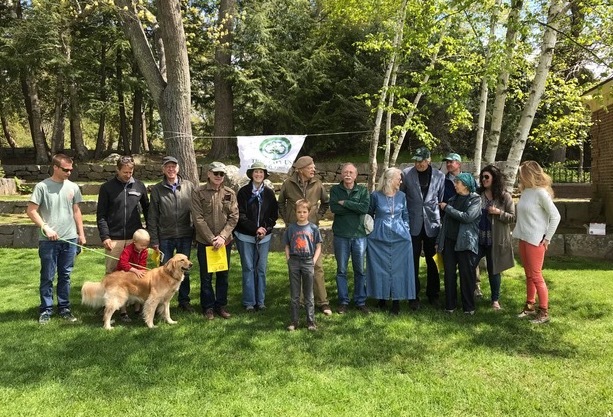 CAMDEN — Maine’s Dept. of Agriculture, Conservation and Forestry will celebrate the state’s annual Arbor Day at the Camden Amphitheater on May 20, and during the ceremony, Camden resident Nancy Caudle-Johnson will recognize several Camden citizens representative of the town’s own tree stewardship efforts.
Camden will host the celebration and Tree City USA awards, as Camden celebrates its 25th Arbor Day and enters its 25th year as a Tree City USA. Read more...
AUGUSTA, Maine – In an ongoing effort to increase awareness of the threat of emerald ash borer (EAB), the Maine Department of Agriculture, Conservation and Forestry is tagging ash trees in communities statewide that are at risk of invasion. The tagging effort coincides with Maine Arbor Week and National Emerald Ash Borer Awareness Week, May 19-25, 2019.
“Over 100 million ash trees have died across the country from the emerald ash borer since its original detection in Michigan in 2002. In 2018, EAB was discovered in Maine for the first time. Although the infestations are confined to northern Aroostook County and southwestern York County, every community with ash trees is at risk. “Awareness and early detection provide the best opportunity for management in our communities and in the forest,” explained Colleen Teerling, Entomologist with DACF.
Adult emerald ash borers are tiny, about the width of a penny, and infest trees from the top down, making detection particularly difficult. In most areas where it is found, trees are already dead or dying, meaning the insect was there for years before detection. Surveillance efforts in the state include hanging purple prism traps in ash trees, girdling ash trees to act as detection trap trees, bio-surveillance with a native stingless, ground-nesting wasp, and public education and awareness.
During Maine Arbor Week and Emerald Ash Borer Awareness Week, Maine cities and towns are tagging ash trees for public awareness. These tags identify which trees in the landscape are ash, helping citizens understand the visual impact this insect will have on our streets and in our forests, if left unchecked. The tags also have a calculated value based on size that will give the public an understanding of the environmental and economic values trees provide on an annual basis.
Because ash trees grow quickly and are very tolerant of poor growing conditions, they are a popular choice for a street tree. Some Maine towns are planted with as much as 30% ash. It's ironic, given that many main streets were lined not that long ago with majestic American elm trees, another tree lost to an invasive forest pest. Many of the ash trees on our streets and parks were planted in the wake of Dutch elm disease, when we lost our elms 30-40 years ago.
To organize a community tree-tagging event, contact Jan Santerre, Project Canopy Director at (207) 287-4987. To learn more about the tree tagging effort, go to www.maine.gov/dacf/php/caps/EAB/EABashtag.shtml.
The Maine Forest Service is also welcoming landowners with significant ash resource to participate in the trap tree network. More information can be found here; http://www.maine.gov/dacf/mfs/forest_health/invasive_threats/eab_trap_trees.htm.
To learn more about the emerald ash borer, including the quarantines that affect trade, go to http://www.maine.gov/eab.
For more information about the Maine Department of Agriculture, Conservation and Forestry, go to: www.maine.gov/dacf.
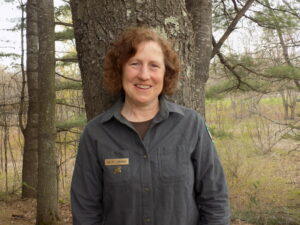 FARMINGTON — On Monday, May 20 Patty Cormier will begin her duties as the Director of the Maine Forest Service.
The position is also known as the State Forester. She will report to Department of Agriculture, Conservation and Forestry Commissioner Amanda Beal.
In her new role, Cormier will interface with federal agencies to represent the forests and forestry interests of Maine, and oversee three divisions, the Forest Protection Division (Forest Rangers and planning staff), the Forest Policy and Management Division (Foresters including planning staff such as Urban forestry, Water Quality, Stewardship) and the Forest Health and Monitoring Division (Entomologists, Pathologist and Inventory staff). She will also serve on the Baxter Park Advisory Committee. Read more...
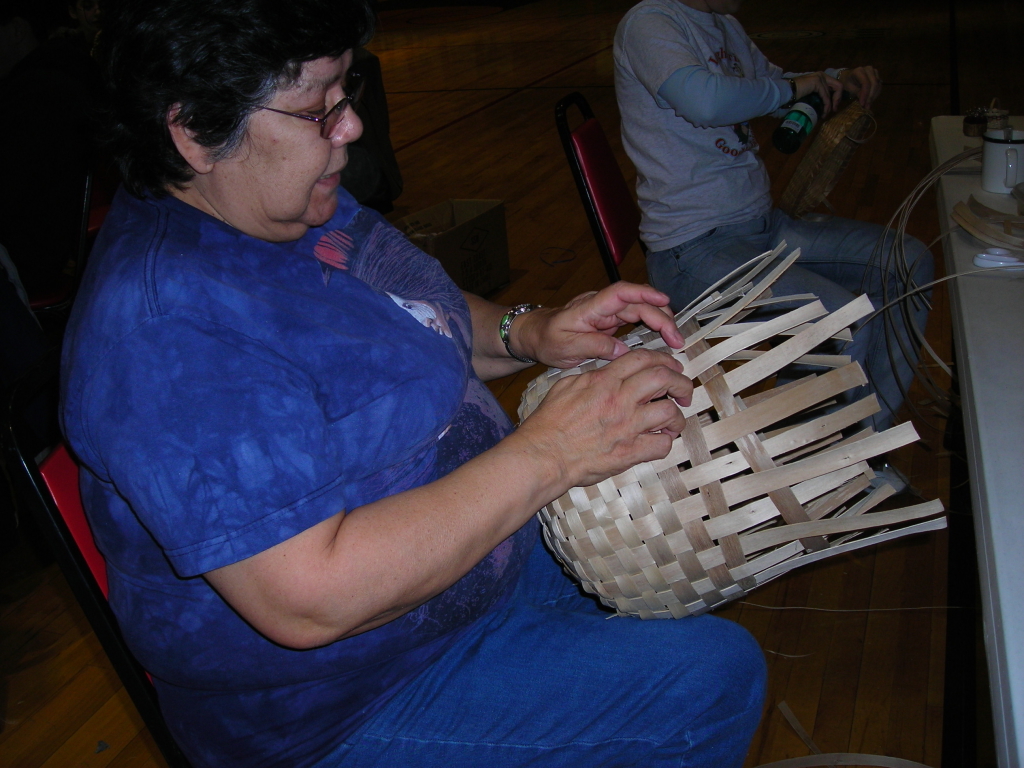 TIMES RECORD - Brown ash trees, also known as black ash, are critically endangered throughout the state of Maine. The Emerald Ash Borer (EAB), a parasitic beetle that has already killed ash trees across the United States, was first detected in Maine last May—several years before it was anticipated. Faced with these ongoing threats, the Wabanaki (Mi’kmaq, Maliseet, Passamaquoddy, and Penobscot tribes), has been leading the defense of brown ash trees in Maine.
Native to wetlands, but often planted in New England towns, brown ash trees play a critical role in basket-weaving practices, particularly to those of the Wabanaki. The authors met with Jennifer Neptune, a member of the Penobscot Nation, Director of the Maine Indian Basketmakers’ Alliance (MIBA), and a co-curator of an upcoming art exhibition at Colby College, to learn more about the importance of brown ash to her as well as the tribe and organizations of which she is a member. The use of brown ash wood is integral to Indigenous basket weaving traditions. Not only does the wood possess flexibility and strength, but the brown ash is also considered to be the source of life in Wabanaki creation stories, central to Wabanaki culture. Under threat of local and global extinctions, brown ash tree endangerment jeopardizes the livelihoods of basketmakers and cultural practices of Wabanaki peoples. Read more...
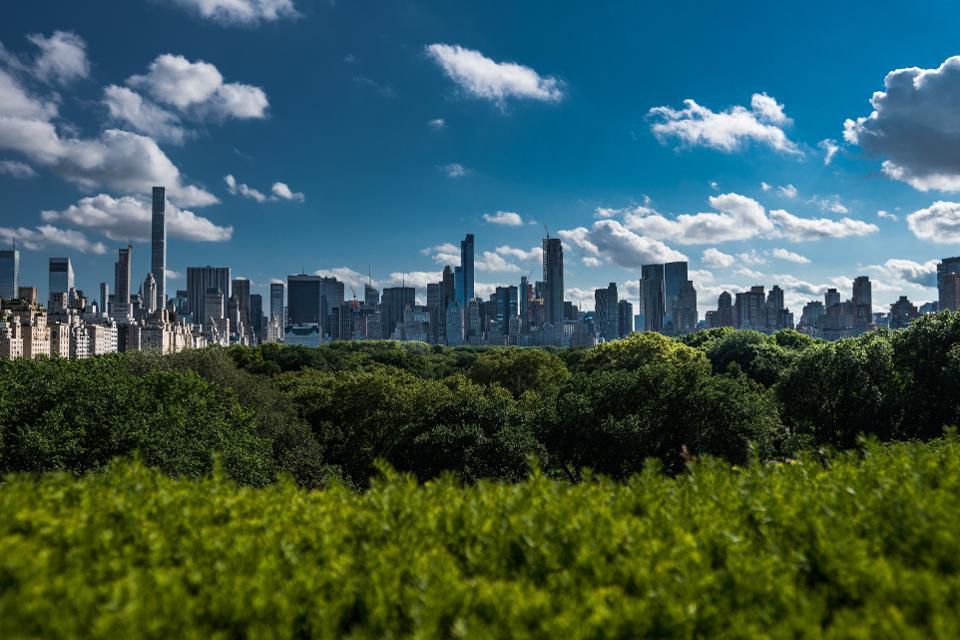 FORBES - High air temperatures in the summer as well as heat waves threaten those with existing health conditions, especially those with cardiovascular, pulmonary, and renal conditions. Spikes in temperature cause electricity demand to rise in tandem, which puts increasing loads on the electrical grid during the day. Trees provide shade and cool down the air around them through evapotranspiration, a process trees use to move water through their branches.
Researchers from the Nature Conservancy, NASA, and Stanford University examined urban tree cover in 97 cities across the U.S. and applied their findings across the entire U.S. urban population. Their study is one of the most comprehensive studies on the impact of heat in cities, especially since they quantified the connection to human health and electrical demand across a large dataset. Read more...
May 20 - Maine Arbor Week Ceremony, Camden Public Library, 1-3pm
Revised Advisory List of Invasive Plants for Maine
The Maine Natural Areas Program (MNAP), within the Maine Department of Agriculture, Conservation and Forestry, maintains the Advisory List of invasive plants for Maine. MNAP staff, with input from the Department’s Terrestrial Invasive Plant Scientific Advisory Committee (TIPSAC), have revised the Advisory List based on a plant’s ecological impacts and biological traits. MNAP is now accepting public comments on the revised Advisory List. The link below titled “Overview of Advisory List (PDF)” contains instructions on how to provide comments if desired, and details of a public meeting to be held on June 4, 2019.
-
Overview of Advisory List (PDF) - An explanation of how the Advisory List is different than the regulatory Do Not Sell list. It also addresses how aquatic invasive plants are listed in Maine.
-
Advisory List (PDF) - Sorted advisory list by invasiveness ranking and plant common name.
USDA Rural Community Development Initiative Grants - Applications due June 5, 2019. For more information, click here!
| 


