Trees on Maine Street - March/April 2016 edition

Having trouble viewing this email? View it as a Web page. Bookmark and Share

Project Canopy

Advice on Pruning Urban Apple Trees for Wildlife

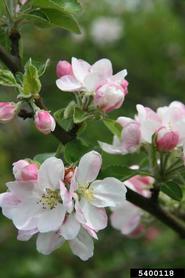
apple flowers

On a cold and rainy Saturday, the Upper Kennebec Valley chapter of the Small Woodland Owners Association of Maine was fortunate to have Joe Dembeck; a self- proclaimed “Apple Tree Enthusiast” as well as the Executive Director of the Somerset County Soil and Water Conservation District give a great talk and demonstration on pruning apple trees for wildlife. Whether you have an overtopped apple tree in your back yard or on the back 40, his information was very interesting.

There are still questions as to the origin of apple trees. Some theorize they are the result of cross–pollination of ancient plum and meadowsweet, perhaps originating in Kazakhastan then eventually brought to North America by missionaries and colonists. Early settlers mostly used the apples for cider. There are only 4 species of native apples to North America, all of them crabapples. To wildlife, all that makes no difference, the birds and critters just like apples and have always contributed to spreading the seeds.

More

Image credit: Robert Vidéki, Doronicum Kft., Bugwood.org

Invasive Forest Pest Workshops in March and April

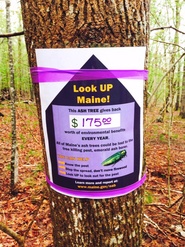
Ash Tree Awareness Tag

Invasive Forest Pest Workshops are being offered by Maine Association of Conservation Districts (MACD) through a grant from Maine Department of Agriculture, Conservation and Forestry. Workshops will be offered in spring and summer 2016 in York, Cumberland, Oxford, Somerset, Franklin, Androscoggin-Sagadahoc, Kennebec, Knox-Lincoln, Waldo and Hancock counties. Workshops will be posted on the MACD website as they are scheduled: maineconservationdistricts.com/forest-pest-outreach.

These workshops will help landowners and users, landscape and forest professionals, and all residents of the state to identify current and potential invasive forest pests and their host species, to understand the threats to our forests and woodlands posed by these pests, and learn how to report suspected pest sightings or damage to trees that may be a result of pest infestations.

All participants will receive an information packet with fact sheets about the major pest species, a list of host trees that the species may be found on, and other relevant information. When possible, workshops will also include an optional outdoor visit to a site where invasive pests or host trees may be found.

More


Visit www.projectcanopy.me for more news and information; our calendar of events; local, state, and national urban forestry highlights.