|
Keen on Cleaner Air
Thanks to the Maryland Port Administration’s (MPA) 2021 Diesel Emission Reduction Act (DERA) award, Keen Transport was able to scrap and recycle an older dray truck and replace it with a new zero-emission battery electric-powered truck. The new 2024 Kenworth T680E truck is currently in operation and servicing customers in the greater Baltimore region and beyond. Keen installed two charging stations to repower the truck; one at their facility in Carlise, Pennsylvania, and the other is located at Dundalk Marine Terminal.
“Keen Transport is grateful for the opportunity to participate in the Dollars for Drays program,” said Keen’s Senior Manager of Inland Transportation Steve Bourne. “We believe it’s the first battery-electric, zero-emission heavy-duty truck servicing the Port of Baltimore on a regular basis — something we’re very proud of!”
Since 2008, MPA has been awarded nearly $25 million from state and federal grants to support its Diesel Equipment Upgrade Program to replace older diesel-powered equipment used at the Port with more energy-efficient models.
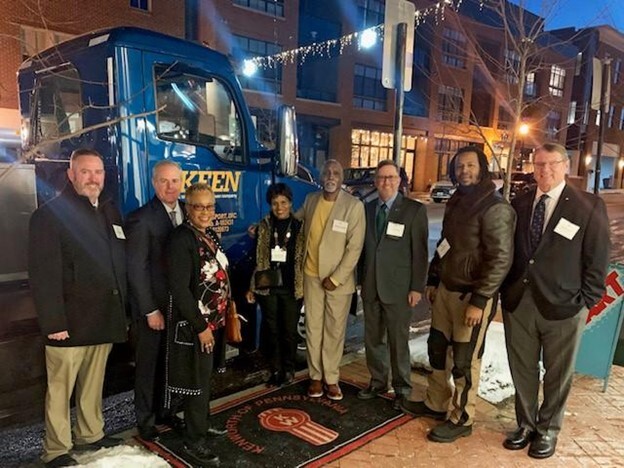 Photo: Earlier this year, Keen’s new EV dray truck was on display during the Baltimore Port Alliance Legislative Reception in Annapolis. From left to right: Keen Transport Senior Manager of Inland Transportation Steve Bourne, MPA Deputy Executive Director Brian Miller, Turner Station Conservation Teams President Gloria Nelson, Turner Station Conservation Teams Board Member Edie Brooks, Turner Station Conservation Teams Vice President Michael Thompson, Wallenius Wilhelmsen Senior Vice President Port, Terminal and Stevedoring Operations Americas Michael Derby, Keen Transport Driver Rob Graham, and EcoLogix Group Principal Dan Spack.
Photo by Colleen Doyle/ Doyle Communications
|
|
A Grand First for TERP
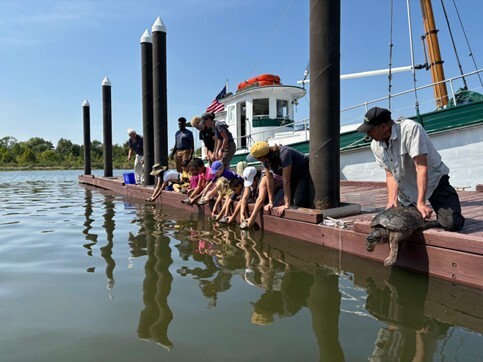
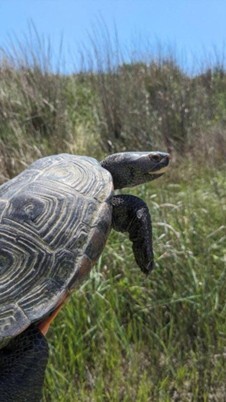
The Port of Baltimore “Terrapin, Education, Research Partnership” (TERP), a program that gives baby terrapins from Poplar Island a head start and a chance to thrive in cozy Maryland classrooms safe from the perils of nature, has recorded its first documented second-generation hatchling.
 |
|
In May, Poplar Island researchers observed a nest with 17 eggs and the mother, named “Peanut Butter,” a terrapin raised in Nichole Alfonsi Werre’s classroom at Chesapeake Bay Middle School during the 2014-2015 school year. One of these lucky hatchlings will return to the same classroom where Peanut Butter was nurtured in the head start program. |
A Facebook post by Roosenburg Lab at Ohio University marked the occasion, “This will be our first confirmed terrapin second-generation head-start, and we are designating Nichole Alfonsi Werre our first TERP grandparent.”
The TERP program supports conservation research conducted by Ohio University Associate Professor of Biology Dr. Willem Roosenburg. Among his research findings, Dr. Roosenburg has noted that females in the head start program mature and are ready to lay eggs much earlier than females in the wild, which can take 7-8 years.
|
“Since 2005, 3,299 Poplar Island turtle hatchlings have participated in the head start program. I estimate that we’ve engaged with nearly 100,000 Maryland students through this program, with each of those 3,299 baby terrapins spending time in a classroom with approximately 30 children,” said Maryland Environmental Service (MES) Lead Environmental Specialist Laura Baker.
Photo (above): Dr. Willem Rosenberg recognizes teacher Nichole Alfonsi Werre for raising the recaptured terrapin who produced the first second-generation terrapin for this year’s TERP cohort.
Photo credit Dr. Melanie Parker, Arlington Echo
Photo (right): Peanut Butter, the mother terrapin, received her head start at Chesapeake Bay Middle School in Pasadena, Maryland.
Photo by Dr. Willem M Roosenburg/Ohio University
|
|
 |
|
|
Dredging at Colgate Creek
A dredging project at Colgate Creek, expected to be completed by the end of 2025, will remove 200,000 cubic yards of sediment to widen and deepen the berth, allowing better access to the recently renovated berths on the west side of the Dundalk Marine Terminal.
According to MPA Deputy Director of Harbor Development Darren Swift, the dredged material will likely be transported by barge to Hawkins Point, where it will be offloaded straight into geotubes and dewatered. Then, the geotubes will be ready for innovative or beneficial use projects in the Patapsco River. A private developer has already inquired about using approximately half of this material for a nearby wetlands restoration project. Other potential uses include daily and intermediate cover for the Quarantine Road Landfill.
“The MPA is working on a five-year plan to ramp up our innovative and beneficial use program, starting with utilizing 50,000 cubic yards [dredge material] and growing that to 500,000 cubic years over five years. We really believe that's going to start in 2025, as there is an increasing interest from private producers for the material,” said Swift.
The Colgate Creek dredging project will be discussed at future Citizen Advisory Committee meetings, which are open to the public.
Photo: CSI Environmental geotubes filled and dewatered at the Cox Creek DMCF.
Photo by Anchor QEA
|
|
Considering Confined Aquatic Disposal
Dredging keeps the Port of Baltimore’s shipping channels open for business and our economy thriving. The challenge is finding a place or repurposing the sediment that is removed. Looking to the future and seeking to address long-term capacity issues, in 2011, the Harbor Team, an advisory committee to the State of Maryland’s Dredged Material Management Program (DMMP), recommended that Confined Aquatic Disposal (CAD) be considered as a potential option for placement.
CAD, a technique that has proven successful in Boston, Newark Bay, and multiple West Coast locations, is being considered for the Port of Baltimore. The Maryland Port Administration (MPA) conducted a successful CAD pilot project in 2016 and is now considering a second project in close consultation with stakeholders. The success in other locations shows the potential for CAD in Maryland.
The newly formed CAD Subcommittee, under the DMMP’s Bay Enhancement Working Group (BEWG) is actively meeting monthly for at least the next five months. The next meeting is scheduled for November 14, 2024, from 1:00 – 3:00 p.m. at the Cox Creek Operations and Maintenance Complex. This open approach ensures that all stakeholders are included and informed. Community input is vital to this potential approach to dredged material placement.
Learn more by visiting the DMMP’s CAD webpage and signing up for the new CAD Bulletin electronic newsletter. This newsletter will provide timely and accurate information about the potential CAD pilot project, upcoming meetings, and regulatory updates.
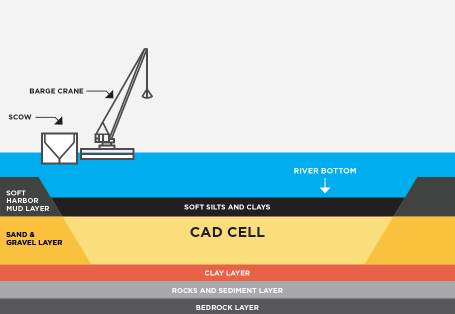
How does CAD work?
 |
|
A thin layer of silt and clay on the river bottom is removed. Next, a layer of sand and gravel is removed to deepen the cell, but only in areas with a relatively thick, impervious clay layer. The resulting depression is filled with dredged material from Baltimore Harbor. The thick clay underneath the cell creates a barrier, effectively eliminating the potential for deposited sediments to interact with aquifers that lay still deeper beneath the surface. The sand that is removed would be used in nearby construction. |
|
|
Family Sees Ancestors’ Gravestones Returned to Poplar Island
Talbot County’s Poplar Island, 34 miles south of Baltimore in the Chesapeake Bay, was once home to approximately 100 residents, including the Howarth family (present day spelled Howeth), a timber and farming family who left in the early 1900s for financial reasons. By the 1920s, the island’s last remaining full-time residents were forced to flee due to flooding and erosion. Left behind were the graves of their ancestors.
For years, Harvey Howeth would return to the island to tend to his family’s gravesite. After that was no longer feasible, its fate weighed heavily on his mind. More than 60 years ago, a family friend took Harvey and another friend to the island to see how the cemetery was faring. Water had intruded into the site, and it was turning into a muddy marsh.
Finding no evidence of the bodies, they decided to save the gravestones by digging them out by hand without any tools. From there, the gravestones were stored on Tilghman Island. Then their fate weighed heavily on the mind of Harvey’s nephew, Louis Howeth, until 2024 when Louis, along with his son, Lee, successfully navigated the process and returned the gravestones back to Poplar Island.
“It’s an emotional day, and I’m happy to see it completed. They’re back where they belong,” said Lee Howeth, during a June 2024 visit to Poplar Island with more than a dozen Howeth family members to see the installed gravestones. “These [names on the headstones] are all Howarths here. But they represent a bigger community that is here and many other surnames and other people that were here.”
In 1847, the island was documented as 1,140 acres, but by 1993, the U.S. Army Corps of Engineers found that the island had shrunk to just five noncontiguous acres. Today, partners are in the process of restoring the remote island habitat to 1,715 acres through beneficial use of dredged material from the approach channels leading to the Port of Baltimore.
Watch a video and read the full article of this family’s incredible story in the Chesapeake Bay Journal, an independent environmental news organization covering the Chesapeake Bay offering free subscriptions. Chesapeake Bay Journal reporter Jeremy Cox spent 15 months reporting on the family’s quest to return the gravestones.
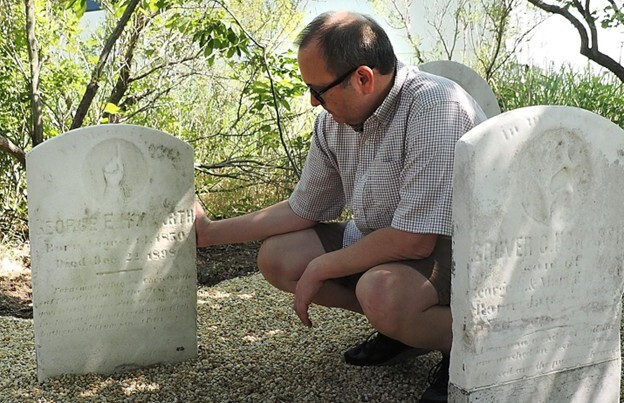 Photo: Lee Howeth kneels beside the gravestone of his great grandfather, now returned to Poplar Island.
Photo by Dave Harp/Chesapeake Bay Journal
|
|
Inspiring the Next Generation of Birders
|
Master bird bander Mike Hudson of Birds of Urban Baltimore noticed something special about Theo, an approximately 9-year-old boy participating in the Port of Baltimore's Youth Birding Week last June: Theo could hear a rare bird from farther away than some of the adults. Theo and a few other especially gifted students were invited to return as bird banding assistants.
Theo returned with enthusiasm and served as a scribe, which is the person at the bird banding station charged with writing down all the information about the bird being banded. This information includes species identification and measurements, the unique code on the metal band, and any other pertinent information. This is an important job, as the data is used to inform scientists about bird migration and the effects of climate change.
|
|
 |
For MES Environmental Specialist Clara Liddell, Theo's experience at the camp and assisting at the banding station strengthened the desire to share the outdoors with more young people. "In general, the kids who learn about nature end up becoming adults who care about the environment and adults who can make choices to conserve the environment through their actions," said Liddell.
 |
|
If you have a young birder seeking opportunities to explore, Liddell suggests bringing them to observe bird banding at Masonville Cove (see schedule), signing them up for the POB’s Youth Birding Camp next summer, visiting the eBird website, trying apps that enable community science such as Seek by iNaturalist and Merlin Bird ID, or simply getting outside and observing nature.
Photo (above): Master bird bander Mike Hudson (left) with Theo and his mom, Andrea.
Photo by Clara Liddell/MES
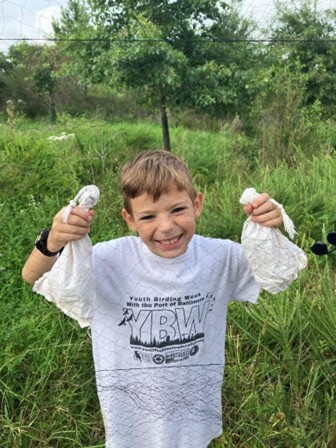
Photo (left): Theo holds two bird bags.
Photo by Andrea Appleton
|
|
|
Wharf Logs Find a Retirement Home Near the Beach
After a useful career at Port of Baltimore marine terminals, serving as curb stops and increasing safety for cargo handling equipment, approximately 20 wharf logs found their retirement home in a nearby waterfront community.
While engaging with communities about the Cox Creek Dredged Material Containment Facility (DMCF) expansion project, MPA Harbor Development team members learned that the Riviera Beach community in northeast Anne Arundel County was looking for a solution to curb illegal parking on a community-owned lot. At the marine terminals, wharf logs must be replaced after a certain amount of wear and tear. By donating these retired wharf logs to the residential community, MPA and BPA kept them in use and out of the landfill—a win-win for everyone.
Wharf logs have been donated to other communities to use as bollards to block vehicular access to restricted areas. “We are always looking for opportunities to provide assistance in community enhancement projects when we can,” said MPA Program Manager for Education and Stakeholder Engagement Katrina Jones. Community representatives seeking similar recycled donations should reach out by emailing ecoport@marylandports.com.
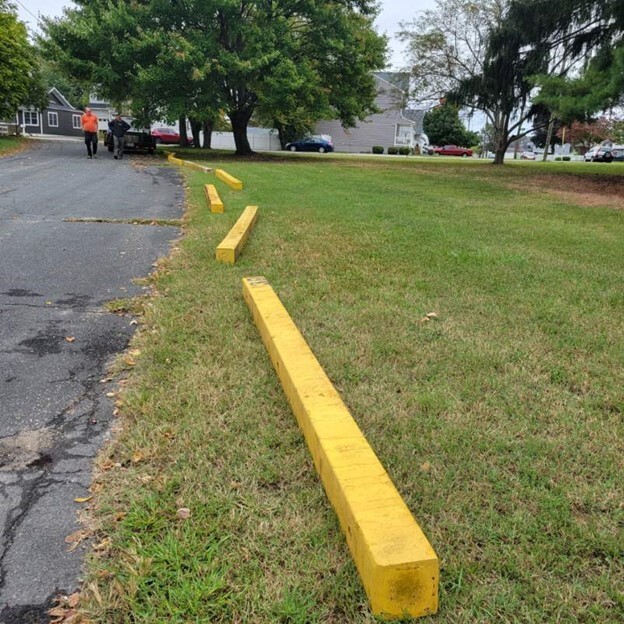 Photo: After the wharf logs were delivered, Riveria Beach community members positioned them to discourage illegal parking in their community.
Photo by Katrina Jones/MPA
|
|
¡Bienvenidos a Cala de Masonville!
More than 200 people, many of whom were members of the Brooklyn community and the Baltimore congregation of Templo de Alabanza y Restauración, attended Latino Conservation Day at Patapsco Valley State Park on August 11, 2024. Participants enjoyed activities conducted in both Spanish and English, such as guided hikes, outdoor games and raffles.
"It was wonderful to see so many people and families, many of whom participated in an outdoor church service in the morning, and a lot of them stayed for the event to enjoy time with family and learn about conservation, the outdoors and nature," said MES Environmental Specialist Matias Orrego. "We hope the day sparked many future visits to Masonville Cove and Maryland's parks, leading to a lifelong love of nature."
An initiative led by the Hispanic Access Foundation, Latino Conservation Day and Week aims to promote outdoor engagement and conservation efforts within Latino communities. The Masonville Cove Partnership planned the event in collaboration with the Maryland Environmental Service and the National Aquarium. Participating partners included MPA, U.S. Fish & Wildlife Service (USFWS), Maryland Department of Natural Resources, Living Classrooms Foundation, Chesapeake Conservancy, Corazón Latino, Defensores de la Cuenca, and Latino Outdoors (Baltimore Chapter).
Photo: While the official Latino Conservation Week has shifted to September 15-22 to align with Hispanic Heritage Month, the partnership maintained its original plan to host the Latino Conservation Day in August. In addition to activities such as archery, partner and nonprofit organizations also shared information about conservation and the environment.
Photo by Phillip Smith/National Aquarium
|
|
Masonville Cove Hosts 2024 Urban Wildlife Conservation Day Celebration & BioBlitz
What better place to celebrate Urban Wildlife Conservation Day — which the USFWS describes as a time to celebrate our connections to the outdoors and inspire people from all walks of life to experience the benefits of nature — than at Masonville Cove, the nation's first Urban Wildlife Refuge Partnership. With a record turnout, over 200 attendees joined the Masonville celebration on September 14, 2024.
 |
|
The Masonville Cove Partnership, planned a day full of recreational and educational outdoor activities for all ages and provided Spanish language translators. Attendees enjoyed boat rides, fishing, arts and crafts, dredge material containment facility tours, monarch butterfly tagging, and bird banding. Community partners including Echos of Nature, Soldier Delight of Maryland DNR, Baltimore Tree Trust, Maryland Transportation Authority, and Tree Baltimore offered interactive stations including free tree giveaways, raptor presentations, reptile displays and more.
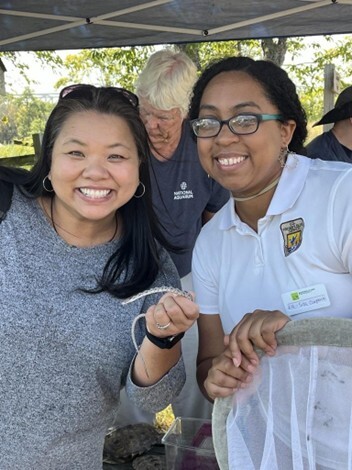
Photo: USFWS National Wildlife Refuge System Chief, Division of Visitor Services & Communications, Linh Phu (left) and USFWS Urban Wildlife Biologist Ela-Sita Carpenter, PhD (right)
Courtesy Photo
|
In response to community feedback, event planners introduced new amenities, including food options and a shuttle service between the Brooklyn Branch of the Enoch Pratt Free Library and Masonville, addressing barriers and boosting participation.
“Our main goal was to create an enjoyable and inclusive opportunity for the local community to experience nature here in Baltimore, learn about conservation and stewardship, and discover the benefits Masonville Cove’s restored campus offers year-round. ,” said MPA Outreach Coordinator Danielle Fisher. “We were also proud to see our WildSTEM interns receive a citation presented on behalf of the Governor Wes Moore, and we announced that Masonville Cove has been accepted into the National Park Service’s Chesapeake Gateway program.”
Also taking place was the National Aquarium’s 11th annual BioBlitz at Masonville Cove. Wildlife experts and community volunteers worked together to find, identify, and record plant and animal species that live at Masonville Cove’s 70 acres of water and 54 acres of restored wetlands. A total of 56 species were found by the over 200 participants.
Photo: Attendees had the opportunity to assist National Aquarium representatives with the release of turtles at Masonville Cove.
Photo by Swathi Ayyagari/National Aquarium
|
|
Breaking New Ground! Celebrating progress at the 2024 Cox Creek Open House
 |
|
On Saturday, October 19, 2024, MPA hosted its annual Open House at the Cox Creek Dredged Material Containment Facility (DMCF). As in previous years, the event featured facility tours, educational and informational tables on MPA projects, and community resources, including the Department of Public Works, the Key Bridge Rebuild Project, the Anne Arundel Bird Club, and more. A record turnout of 212 attendees from Anne Arundel County and Baltimore City enjoyed fishing, birding, games, and food.
The event also marked a special occasion. MPA's Director of Harbor Development, Holly Miller, joined by Congressman John Sarbanes, Executive Director of the Maryland Environmental Service Dr. Charles Glass, and representatives from the Cox Creek Oversight Committee, Scenic Rivers Land Trust, Senator Simonaire's office, and the Anne Arundel Bird Club, broke ground on the new Swan Creek Nature Trail, a 2-mile path which will be located adjacent to the Cox Creek DMCF in the Swan Creek Wetland area. The trail will feature outdoors classrooms and observation areas for birding.
|
|
"The Swan Creek Nature Trail will not only serve as a recreational outlet for our community but will also stand as a living example of how careful planning and environmental responsibility can come together. It is a beacon of environmental stewardship and innovation," said Dr. Charles Glass.
Photo Credit: Rockye Truelove, MPA
|
|
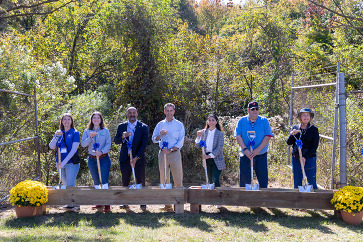 |
Photo: From Left to Right: Holly Miller, MPA; Erin Kilbane, Scenic Rivers Land Trust; Dr. Charles Glass, MES; Congressman John Sarbanes, Maryland’s Third Congressional District; Aysia Rodriquez, representing Delegate Brian Chisholm, District 31; Gary Gakenheimer, Cox Creek COC Chair; and Dawn Merino, Anne Arundel Bird Club.
|
|
|
These committee meetings are open to the public. Some meetings may be virtual, in-person, or hybrid. Please visit maryland-dmmp.com for details and access information for each meeting. For questions, please contact ecoport@marylandports.com.
DMMP Management Committee Meeting - November 6th at 10:00AM
World Trade Center Stanton Room
401 E Pratt St. - 20th Floor
Baltimore, Maryland, 21202
Mid-Bay Project Community Poster Session - November 6th at 4:30pm
Madison Volunteer Fire Department
1154 Taylors Island Road
Madison, MD, 21648
DMMP Innovative Reuse Committee Meeting - November 12th at 2:00 PM
Cox Creek Operations and Maintenance Complex
1000 Kembo Rd.
Baltimore, MD, 21226
Bay Enhancement Working Group - CAD Subcommittee - November 14th at 1:00 PM
Cox Creek Operations and Maintenance Complex
1000 Kembo Rd.
Baltimore, MD, 21226
DMMP Executive Committee Meeting - November 26th at 1:30 PM
Secretary's Board Room - Maryland Department of Transportation Headquarters
7201 Corporate Center Dr
Hanover, MD, 21076
DMMP Annual Committee Meeting - December 6th Time: TBD
MedStar Harbor Hospital
3001 Hanover Street
Baltimore, MD 21225
Bay Enhancement Working Group - CAD Subcommittee - December 12th at 1:00 PM
Cox Creek Operations and Maintenance Complex
1000 Kembo Rd.
Baltimore, MD, 21226
|
|
ECO Port Newsletter is the Maryland Department of Transportation Maryland Port Administration’s bi-monthly update of projects and programs that help the agency contribute to a thriving economy, environmental stewardship, and community partnerships. As always, we thank the many private sector businesses, government leaders, communities, and individual citizens who have helped make these achievements a reality. |
|
|
Jonathan Daniels, Executive Director
Maryland Port Administration
The World Trade Center
401 East Pratt Street, Baltimore MD 21202
1-800-638-7519 / www.marylandports.com
|
|
|
|
|