MHT Press Holiday Sale
Celebrate the season with the MHT Press Holiday Sale! Enjoy special savings on books that explore Maryland’s history, archaeology, architecture, and cultural heritage. Perfect for thoughtful gifts, classrooms, or cozy winter reading. Shop now through January 2 and don’t miss this limited-time offer.
|
Open Grant Rounds
Museum Assistance Program
The FY26 Museum Assistance Program grant round closes in just one week, on December 31, 2025! These grants will provide up to $20,000 in operational support to Maryland’s historical and cultural museums, helping cover essential costs like staff salaries, building maintenance, and utilities.
Nonprofits and local governments operating museums for 3+ years are all eligible for this grant program. Learn more on the program webpage.
Maryland Heritage Areas Program
The FY27 Maryland Heritage Areas Program grant round for capital and non-capital project grants opens Friday, December 19, 2025 for projects beginning in July 2026. Intent to Apply forms are due by Monday, February 2, 2026. Full applications are due by Tuesday, March 31, 2026. More information about the program, including eligibility, local heritage area contact information, and application requirements can be found on the program's grants webpage.
Historic Preservation Capital Grant Program
The FY26 Historic Preservation Capital Grant Program round opens on February 2nd, 2026. Currently, registration is open for webinars and workshops to help applicants program eligibility, requirements, and more. Upcoming dates include: January 9 (general overview webinar), January 15 (in-person workshop, Frederick), and February 12 (application webinar). For more information, visit the program webpage.
|
By Dr. Brenna Spray, MHT/MHAA Outreach & Communications Officer
Winter is often a season of quiet reflection, offering a chance to see Maryland’s built and cultural landscapes through a new lens and inviting “ah-ha!” moments at historic places across the state.
That shift in perspective is especially apparent when winter conditions bring overlooked details into clearer view. Subtle changes in topography may hint at former roadways or property boundaries, while foundations, walls, and other landscape features stand out more prominently as vegetation recedes. These conditions can also support archaeological methods that help identify buried features without disturbing the ground, such as ground-penetrating radar. For preservationists, winter provides valuable opportunities to observe, document, and better understand historic resources in new ways.
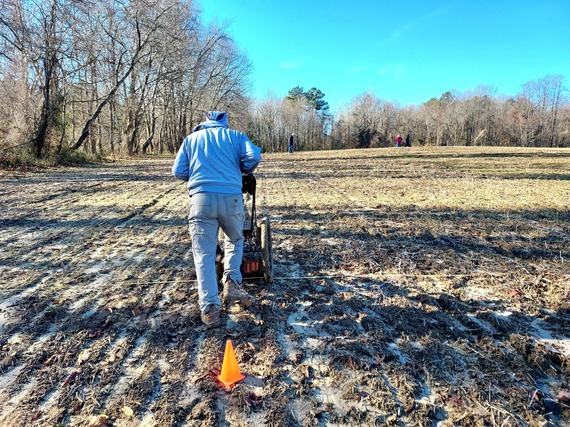 Ground-penetrating radar at Teague's Point in the winter
Historic buildings also tell winter stories of their own, with thick masonry walls, small window openings, chimneys, and early heating systems reflecting generations of adaptation to Maryland’s climate. These features speak not only to smart architectural design, but to the everyday experiences of the people who lived and worked in these spaces during the coldest months of the year. One example is the FY22 Historic Preservation Capital Grant Program project at the Stone House at Elk Landing (Cecil County). This capital project restored the late 18th-century stone structure’s exterior masonry and interior fireplaces, which included a rare exterior-corner fireplace that is vented at the eaves. For photos of the restoration process, including the corner fireplace, visit the Historic Elk Landing Foundation website.
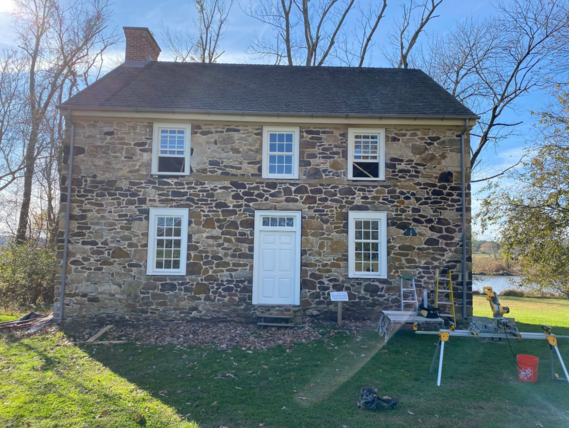 Photo Credits: Stone House at Elk Landing (Bathon Builders)
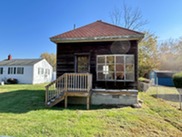
Winter is also a season of care and preparation, though preservation work does not move entirely indoors. While some activity may slow, research, planning, and documentation continue alongside ongoing fieldwork. Architectural researchers remain active in the colder months — often with a few extra layers — assisting with the documentation of historic resources. This winter, MHT's architectural researchers will be assisting with the documentation of a privately owned property slated for demolition on the Eastern Shore. At the same time, winter is when surveys are reviewed, grant projects are refined, historic contexts are developed, and long-term stewardship plans take shape across the state, preparing the groundwork for the year ahead.
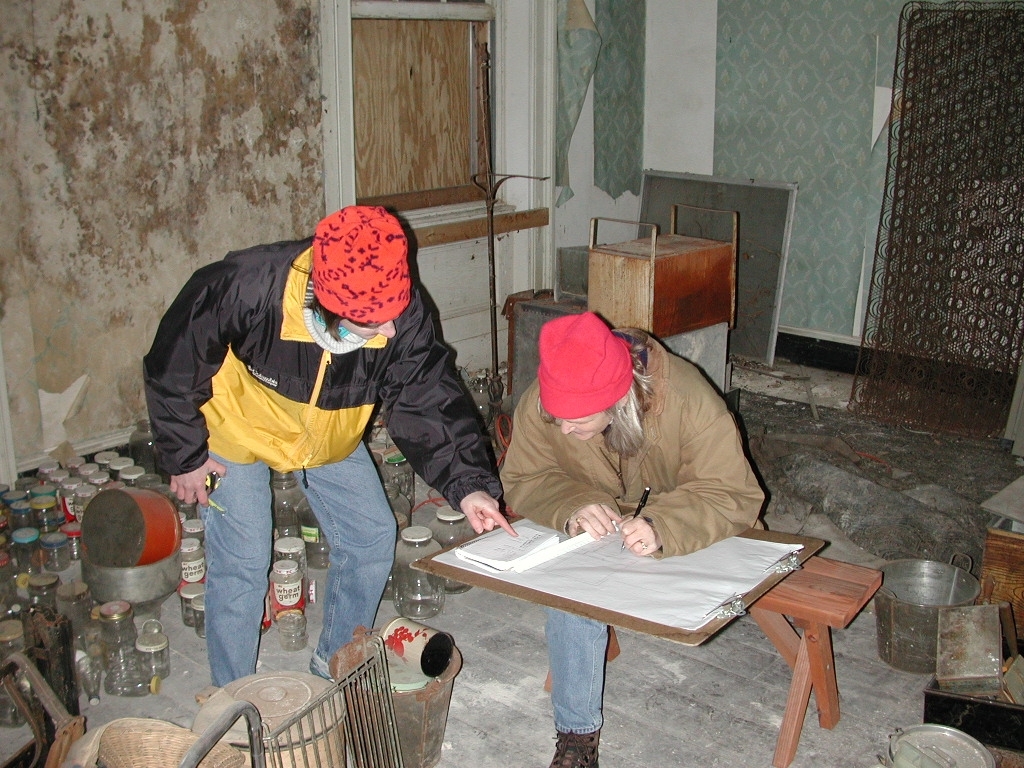 MHT architectural researchers documenting in the winter
Winter reminds us that historic places are not static. They endure changing seasons, weather patterns, and uses over time. Paying attention to how sites and buildings respond to winter conditions helps inform responsible maintenance, rehabilitation, and long-term preservation so that future generations can enjoy them too.
Maryland Heritage Areas Program Grants Review Panel
There is still time to apply (or nominate a colleague) for the Maryland Heritage Areas Program Grants Review Panel for the upcoming FY27 project grant round, but the deadline is approaching fast! Submit an application by Friday, January 9 for best consideration for the panel.
|
In Case You Missed It...
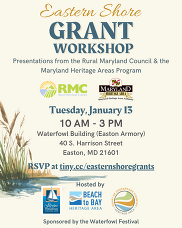
Eastern Shore Grant Workshop
Join the Rural Maryland Council and the Maryland Heritage Areas Program for a grant information session and workshop on Tuesday, January 13 from 10 AM to 3 PM. Hosted by the Stories of the Chesapeake Heritage Area, Heart of Chesapeake Country Heritage Area, and Beach to Bay Heritage Area is an opportunity to learn more about two state-level grant programs and hone your skills as a grant writer. This is a free event sponsored by the Waterfowl Festival, but registration is required.
|
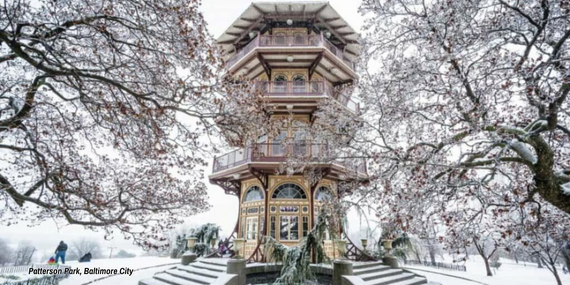
Latine History in the DMV and the Limits of the Federal Preservation System by Camilla Sandoval, Program Coordinator, Maryland Humanities
The Snallygaster and the Shadows of Fear: How Folklore Controlled Maryland’s Imagination by Dr. Brenna Spray, MHT/MHAA Outreach & Communications Officer
Honoring the Baltimore American Indian Center and Heritage Museum: A Legacy of Community and Culture by Jessica French, National Register Administrator

Reach Out!
There are many ways you can learn more about MHT, its programs, and the work it does. The latest news is updated regularly on our website. You can "like" and "follow" us on Facebook, Instagram, and YouTube or sign up for our e-blasts to have our quarterly newsletters and other preservation news delivered straight to your inbox! If you are interested in joining the team at MHT, check the most recent job listings.
|
|