-
The Biological Blueprint: In 1988, Allyn Howlett discovered the CB1 receptor, unveiling a physiological architecture that has always existed within us. This was the moment science began to catch up to human intuition.
-
Cellular Restoration: Beyond THC, the rising potential of CBG (the 'Mother Cannabinoid') represents the next frontier in non-intoxicating, precision wellness.
-
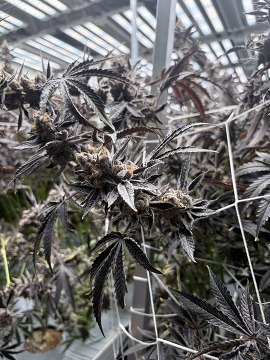
Nature’s Vacuum: As a hyperaccumulator, cannabis effectively draws toxins like lead and mercury from the soil. While good for cleaning polluted land, this makes the plant a powerhouse for phytoremediation, the process of using living plants to detoxify polluted soil effectively.
 OSE’s exclusive programming helps licensees navigate, build capacity, and thrive in Maryland’s evolving cannabis industry. Licensees, check your email and the Equity Exchange Slack for registration links, updates, session details, and replays.
Recap: Technical Assistance Listening Sessions
Last month, OSE hosted a series of Technical Assistance Listening Sessions with conditional and operational social equity licensees. We took the time to listen closely. The feedback was clear and consistent: capital access, compliance navigation, and operational readiness are the primary barriers. That clarity is directly shaping our next phase of work.
 The Substance Access Beneficiary Engagement System
Starting April 1st, a new CMS incentive allows model participants to reimburse Medicare patients up to $500 annually for hemp products as part of physician-supervised care. This is the first inclusion of a cannabinoid product in a federal incentive model, with larger cannabis reimbursement expansions planned for 2027. Learn more
Community Reinvestment and Repair Fund Updates
Kent County commissioners approved additional steps to move forward with spending from the Community Reinvestment and Repair Fund, directing cannabis tax revenue toward programs that support low-income communities impacted by past enforcement. The program awarded 10 large grants and five smaller grants, all approved by commissioners. Learn more
Baltimore County officials moved to direct CRRF funds toward communities disproportionately impacted by past cannabis enforcement, focusing on programs that support health, education, and economic opportunity. Learn more
Baltimore City's $35 million Community Reinvestment and Repair Fund is stalled due to a dispute over the Community Reinvestment and Reparations Commission's independence, with City Hall and the Commission planning a formal distribution plan and public hearing. Learn more
Washington County officials asked residents to help shape how CRRF funds are spent by launching a public survey gathering feedback on local priorities. Learn more
⚖️Capitol Sesh: Annapolis Policy Updates
Capitol Sesh tracks key bills moving through the Maryland General Assembly that could impact community funding, programs, and resources statewide. Below is a list of cannabis-related bills passed by both chambers of the Maryland General Assembly.
SB439 | Employment Discrimination – Fire and Rescue Public Safety Employees – Use of Medical Cannabis
Status: Passed Both Chambers – Pending Governor's Signature
Why This Matters: Addresses a key tension between workplace safety and lawful medical cannabis use. Establishing clear standards for fire and rescue personnel helps protect public safety while ensuring that certified medical patients are not unfairly penalized for legal treatment. A balanced approach advances equity in employment, reduces stigma, and aligns workplace policies with Maryland’s broader commitment to a fair and inclusive cannabis framework.
SB0594 | Cannabis – Advertising – Alterations
Status: Passed Both Chambers – Pending Governor's Signature
Why This Matters: Clear and fair advertising rules help equity licensees market their businesses competitively. Overly restrictive or unevenly applied advertising regulations can disadvantage smaller, community-based operators who rely on accessible marketing to build their customer base. Lowering social equity ownership requirement from 65% to 55% expands potential access to investment.
SB336 | Task Force on Responsible Use of Natural Psychedelic Substances – Extension and Membership
Status: Passed Both Chambers – Pending Governor's Signature
Why This Matters: Continuing the work of this task force supports evidence-based policymaking around emerging therapeutic substances. A thoughtful, research-driven approach helps ensure that any future regulatory framework prioritizes public health, safety, and equitable access, while creating opportunities for Maryland to lead in responsible innovation.
HB0622 | Cannabis – Licensees – Micro Dispensary Employees and Cannabis Agent Training Programs
Status: Passed Both Chambers – Pending Governor's Signature
Why This Matters: Expanding training pathways and clarifying workforce requirements strengthen the regulated cannabis market and support job creation. For micro dispensaries in particular, flexible and accessible training programs help reduce barriers to entry, promote compliance, and ensure that small and equity-focused businesses can build skilled teams and operate successfully. By extending the delivery access for current operators, the current medical cannabis delivery ecosystem can be preserved without disruption.
SB0054 | State Board of Veterinary Medical Examiners – Grounds for Disciplinary Action – Restrictions Status: Passed Both Chambers – Pending Governor's Signature
Why This Matters: This bill allows veterinarians to discuss cannabis-derived treatments without fear of discipline, supporting informed guidance, consumer safety, and the responsible integration of cannabis into animal care.
|