 Coming together for Maryland's environment
For the fourth year in a row, Maryland’s General Assembly delivered some important environmental victories in coordination with the Hogan administration. It was our best year yet for “green funding” to protect and restore the environment, including the Chesapeake Bay, our coastal bays, Deep Creek Lake and beyond. Governor Hogan’s proposed budget in January set the tone for and led the way to record levels of smart investing. The legislature also provided broad support for continuing to fight the causes of climate change and increasing preparedness and resiliency in our communities and passed specific bills to boost environmental stewardship and regulatory partnerships on matters ranging from septic tanks and water reuse to small ponds.
And this all happened in a bipartisan fashion – showing, as Governor Hogan said, that in Maryland we work together in a common sense way to get things done.
Funding for clean water and the Chesapeake Bay
The governor’s fiscal year 2019 budget invests a record $1.2 billion in state funds toward wide-ranging Chesapeake Bay restoration efforts, continuing the Hogan administration’s commitment to protecting Maryland’s most precious natural asset. With more than $4 billion toward restoration efforts since taking office, no governor in state history has invested more in their first four years.
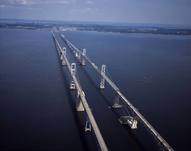 The record levels of funding for key Chesapeake Bay conservation and regulatory innovation programs includes $52.9 million for the Chesapeake and Atlantic Coastal Bays Trust Fund, marking the third year in a row that the Hogan Administration has fully funded Bay restoration efforts. The fiscal year 2019 budget marks the first time since 2008 that no funding for transfer tax programs, including Program Open Space, is diverted to the General Fund. In total, these programs receive $253 million, an increase of $67 million from the prior fiscal year.
|
The governor's budget, adopted by the General Assembly,
includes robust wastewater and drinking water grant and loan funding for MDE:
$306 million in the Water Quality Revolving Loan Fund, $32 million in the
Drinking Water Revolving Loan Fund, $70 million in Bay Restoration Fund
wastewater projects and $15 million for Bay Restoration Fund septic system
upgrades. The budget also provides $6 million for the administration’s Clean
Water Commerce Program for innovative nutrient and sediment reduction projects
and $8 million for MDE’s Energy and Water Infrastructure Program, which reduces
emissions and the cost of cleaning water by deploying energy efficiency and
renewable energy projects at water and wastewater treatment plants.
Maryland is a leader in fighting the causes of climate
change and increasing preparedness and resiliency
On April 5, the governor signed the Regional Greenhouse Gas
Initiative Extension Act (SB 290), which reaffirms Maryland’s strong commitment
to the multi-state, regional partnership combating climate change known as
RGGI. The new law prevents future administrations from withdrawing from RGGI
without legislative approval. Maryland is very active in and committed to RGGI.
We are proud of our role over the last year in strengthening, extending and
expanding the size and reach of RGGI. We are working with other member states
of RGGI to grow the program to include Virginia and New Jersey.
Earlier this year, the Governor committed Maryland to
participate in the U.S. Climate Alliance. In Maryland’s letter joining the
alliance, we made it clear that we intend to share our insights, experiences
and strategies in meeting and excelling beyond the requirements of the Paris
climate accord and the U.S. Environmental Protection Agency’s Clean Power Plan.
MDE also continues to oppose efforts to repeal and replace the federal Clean
Power Plan unless the replacement is as effective and enforceable as RGGI. We
view Maryland’s participation in the alliance as an opportunity to encourage
more states to adopt clean air standards and greenhouse gas goals and actions
as strong and aggressive as Maryland’s. MDE supported HB3/SB138, which requires
the Governor to report annually on the state’s participation in the alliance. The
legislation also prevents future administrations from withdrawing from the
alliance without legislative approval.
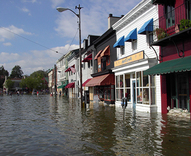 The General Assembly also passed legislation strengthening
state programs to manage sea level rise and coastal adaptation through
increased preparedness and resiliency in communities. HB1350/SB1006 expands the
applicability of Coast Smart siting and design criteria and strengthens
requirements included in the criteria. The legislation also requires the
establishment of plans and criteria relating to saltwater intrusion, hazard
mitigation and nuisance flooding. In its annual report, the Maryland Climate
Change Commission projected likely sea-level rise in Maryland between 2.2 and
4.1 feet with unrestrained growth in global emissions, and between 1.4 and 2.8
feet even if emissions are reduced to achieve the International Panel on Climate
Change mitigation scenario. This projection, coupled with the increasing
frequency of nuisance flooding in places such as Annapolis, underscores the
importance of addressing the causes of sea level rise and adapting to its
effects.
|
Environmental stewardship
HB1765 promotes the development of local Septic Stewardship
Plans and expands the Bay Restoration Fund to provide financial incentives to
promote septic pump-outs for homeowners. The legislation also provides
regulatory incentives for ensuring proper operation and maintenance of Best
Available Technology septic systems as well as regular pump-outs of all septic
systems. Much of the legislation is based on the Hogan Administration’s Septic
Stewardship Act introduced at the beginning of the year.
Providing incentives for local Septic Stewardship Plans will
help ensure that septic systems are properly operated and maintained and will
allow counties to prioritize septic pollution reductions. Providing incentives
for routine pumping of septic systems will help prevent their premature
failure. Delaying this service risks expensive repairs, as well as potential
impacts to the health of the public and the environment. Pumping out the
contents of a septic tank also removes some nitrogen that might otherwise
discharge to groundwater and eventually surface waters and the Bay.
SB496 bill allows homeowners to use graywater -- the
relatively clean waste water from baths, sinks, washing machines and other
kitchen appliances -- for residential purposes like household gardening,
composting, lawn watering, landscape irrigation and toilet flushing. MDE will
adopt regulations to implement the legislation and boost conservation. Properly
designed graywater recycling can safely manage and reduce wastewater quantities
and reduce overall water consumption. This not only has environmental benefits
but can also save money for ratepayers and for users of residential wells.
SB100 provides flexibility to establish regulatory
partnerships for safety at small low hazard ponds rather than through a
standard dam safety permit from MDE. The department intends to provide this
authorization to the Maryland Department of Transportation’s State Highway
Administration and to Baltimore City. By designating SHA and Baltimore City as
approval authorities for these small ponds, the efficiency of the permitting
process will be improved, and MDE’s Dam Safety Division will be able to
redirect resources toward more critical public safety responsibilities such as ensuring
the integrity of high- and significant-hazard dams.
Common sense, common ground
The 2018 Maryland General Assembly session clearly
underscored the value of bipartisanship and the priority Marylanders place on
the environment. While there were some
disappointments along the way, the legislature produced some solid results in
the end and built a foundation for another successful session next year. Working together, we can find common ground
on sensible solutions for continued environmental progress while greening and
growing Maryland’s economy.
|