|
|

SUMMER SUCCESS
As we
approach Labor Day, the time is right to share some news and views about a very
productive summer for us at the Maryland Department of the Environment and
around the state. This includes environmental progress on Chesapeake Bay restoration,
climate change, clean air and materials reuse and sustainability.
CLEAN WATER AND THE CHESAPEAKE BAY
In June,
Governor Hogan was elected by the members of the Chesapeake Bay Program -- six states, the District of Columbia, the U.S.
Environmental Protection Agency and the Chesapeake Bay Commission -- to chair
its Executive Council, which will be important in steering the discussion
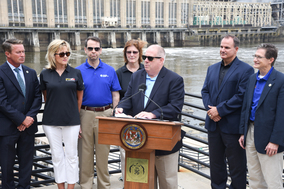
on Bay restoration strategies. In August, Governor Hogan convened his second Conowingo Dam Summit along the Susquehanna River. This is
a big step in preventing nutrient and sediment pollution to achieve our
aggressive Chesapeake Bay cleanup goals. The state's efforts will lead to
first-ever dredging of some of the 200 million tons of sediment built up behind
the Dam and beneficial reuse of the dredged material, along with important
pollution prevention projects upstream to reduce erosion and runoff.
 And,
speaking of the Conowingo Dam, we accepted public comments on the Proposed
Relicensing of the Conowingo Hydroelectric Project Application for Water Quality
Certification under
the Clean Water Act in advance of a public hearing we expect to hold in the
coming months. Maryland will use all available tools, including a potential
veto under the federal Clean Water Act, to protect the Susquehanna River and
Chesapeake Bay in the relicensing of the Conowingo Dam.
Photo: Executive Office of the Governor
On the same
day as the summit, Governor Hogan and I welcomed governors' water policy staff
and environment secretaries from 28 states for a two-day conference on
integrated and innovative water planning, management and financing. Governor
Hogan and Governor Jerry Brown (D-California) co-chair this important new effort to share best practices on "One
Water" strategies and collaborations with agriculture, natural resources,
energy and commerce.
Also in
August, Governor Hogan joined Baltimore City and County leaders in a ribbon-cutting
ceremony for one of the area's most important investments in water
infrastructure and watershed protection: Baltimore's Back River sewage
treatment plant headworks project to help prevent sewage backups into
buildings, streets and neighborhoods. MDE has been a consistent supporter,
providing financial assistance for the $400 million project and regulatory
oversight to ensure progress is being made for the Inner Harbor and the
Chesapeake Bay Region. The U.S. Environmental Protection Agency also approved Maryland’s $303 million plan to implement clean water projects
across the state.
We all know
the importance of clean water and a healthy Bay to our quality of life and Maryland’s
economy. That point was underscored at the start of the summer swimming season
with the release of our annual Healthy Beaches Progress Report, which found that Maryland beaches
were open for swimming with no health-based advisories nearly 99 percent of the
time in the summer of 2016. We’re still collecting information on this summer,
but we expect to see similar results.
CLIMATE CHANGE
On August 23,
Maryland made major news on the climate change front. Governor Hogan and
representatives from eight other states in the Regional Greenhouse Gas
Initiative (RGGI) announced a consensus agreement on a proposed plan to strengthen and
renew the "cap and trade" program through 2030. MDE's Air and
Radiation Administration and Maryland's Public Service Commission helped to
lead the effort to improve the environmental and economic ground rules and
continue to show the world how states can partner to combat climate change
through innovative and market-based programs. We also agreed to host the
regional/national stakeholder meeting Sept. 25 in Baltimore.
CLEAN AIR
While we continue to make progress in reducing
air pollution generated in Maryland, pollution that blows into Maryland from
upwind states continues to be a major problem. In June, Maryland was eIected by
its colleagues to chair the Ozone Transport Commission, a 13-state, regional collaboration created
under the federal Clean Air Act to control interstate smog. In July, Maryland notified the EPA that it intends to sue federal regulators for
their failure to act on a 2016 petition requiring power plants in five upwind
states to reduce pollution that significantly affects the quality of the air
that Marylanders breathe. EPA’s approval of the petition is critical to
protecting the health of Marylanders and is important to a healthy Maryland
economy. Maryland will use all available tools and strategies, including suing
EPA, to get clean air progress upwind and throughout the Chesapeake Bay region
|
Also in
July, Governor Hogan announced regulatory reforms that will save Maryland taxpayers
time and money, as well as protect the health of our environment, through
common sense changes to the state’s Vehicle Emissions Inspection Program
(VEIP). These targeted improvements for vehicle emissions testing increase
customer convenience, while maintaining our progress on air quality and the
Chesapeake Bay. |
|
 |
 MATERIALS REUSE AND SUSTAINABILITY
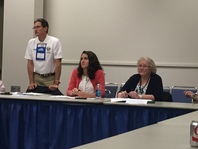
In August, MDE
hosted a very successful meeting at the Maryland Association of Counties summer conference with counties, businesses, agencies and other
stakeholders on the governor's new executive order on waste reduction, resource
recovery and sustainable materials management. Several businesses and waste
management organizations attended to learn more about rethinking product
design, packaging, reuse, recycling and resource recovery strategies. The new executive order is focused on getting to zero waste
through achievable and collaborative partnerships, including the beneficial
reuse of materials, from discarded glass to dredged sediment.
MOVING FORWARD AT MDE
Also this
summer, we realigned and renamed some organizations within MDE. In the spirit
of integrated “One Water” management, we are combining the Water Management and
Science Services administrations into a new Water and Science Administration. This partnership
will foster better customer service by providing a single administration
responsible for water planning, permitting, water quality and water quantity. I
believe this partnership will improve the Department’s ability to handle its
most important water decisions and bring necessary resources to our highest
water priorities for enhanced environmental results.
|
 We also made
revisions to some MDE office names to reflect current responsibilities more
accurately. The Air and Radiation Management Administration is now the Air and Radiation Administration. The Land Management
Administration is now the Land and Materials Administration, reflecting the range
of materials and substances covered, as well as Governor Hogan’s executive
order on Sustainable Materials Management. The Office of Emergency Preparedness
and Planning is now the Office of Emergency Preparedness and
Response, reflecting
the broader responsibilities of the team beyond planning. I am confident these
positive changes will help MDE succeed in its mission of protecting and
restoring the environment for the health and well-being of all Marylanders.
A FINAL THOUGHT
While
our mission is focused on Marylanders, our hearts and minds can’t help but focus
on broader needs and experiences beyond our borders. Family, friends and
colleagues in Texas and Louisiana are enduring catastrophic losses. Thoughts
and prayers go out to all impacted by Hurricane Harvey’s immediate devastation
and the inevitable suffering and environmental contamination in the weeks and
months ahead. I am sure our Emergency Preparedness and Response team can learn
from as well as share insights and resources with those involved in the
response and long-term recovery effort. May the remaining days of summer and
the rest of the year be as productive as the last few months, and may we always
remember those less fortunate than us.
|
|
|
• In the News
Baltimore Sun
Hogan
VEIP regs: Clean air, less hassle
The
Hogan administration isn’t backsliding on the notion that regulation of auto
emissions is of vital importance for the environment and public health, it is
merely recognizing that testing new cars after two years isn’t accomplishing
anything. Governor Hogan’s move saves motorists a small amount of money and
hassle, but more importantly, it conveys the message that the VEIP isn’t some
arbitrary exercise in officiousness.
Read
more
WBAL-TV
Piles
of sediment behind Conowingo Dam reach capacity
Mounting
scientific reports reveal piles of pollution trapped behind the Conowingo Dam
have reached capacity. "We have a continual leakage of nutrients and
sediments, which can undermine our important efforts to protect the Chesapeake
Bay," Secretary Grumbles said.
Read more
WJZ-TV
Maryland plans lawsuit against EPA under Clean Air Act
Republican Gov. Larry Hogan’s administration announced plans to sue the Environmental Protection Agency if the agency doesn’t respond to Maryland’s request to make sure power plants in neighboring states use pollution controls.
Read more
Baltimore Sun
In Maryland, rescuing food that might otherwise be wasted
On one end of this particular food chain are boxes of dinged-up tomatoes, spotty avocados and other perfectly edible yet rejected fruits and vegetables that pile up at the Maryland Wholesale Produce Market in Jessup. On the other end are the estimated one in four residents of Baltimore who live in food deserts, where lack of money or transportation limits their access to fresh, healthy fare beyond what little might be carried in their corner stores.
Matt Burke, at the wheel of a Kia with the back seat folded down, is helping to connect the chain.
Read more
• Air, Land, Water - Did You Know?
 |
|
MDE at the Maryland State Fair
State fair goers, be sure to stop by the MDE booth in the Miller Mosner building. There's a Rethink Recycling craft station for the kids, and more.
|
|
Watching our Waste
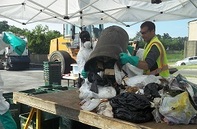
A recent study commissioned by MDE’s Land and Materials Administration found that nearly 70 percent of the waste Marylanders create could be diverted by composting, recycling or by donation. The 2016 Maryland Statewide Waste Characterization Study captured disposed waste at eight landfills and one transfer station across Maryland, including in Cecil, Carroll, Somerset, Charles, Calvert, Garrett and Washington counties and Baltimore City.
Read more
|
|
 |
 2017 Maryland Green Registry Awards
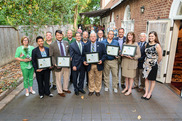
Five Maryland organizations received leadership awards during the eighth annual Maryland Green Registry awards celebration, held in partnership with the Registry, Annapolis Green and the U.S. Green Building Council Maryland.
The awards were presented by Maryland Department of the Environment Secretary Ben Grumbles to BD Diagnostics in Sparks, Hamilton Associates in Owings Mills, the Town of Emmitsburg in Frederick County, Harford County Public Schools, and Washington Gas. Winners were chosen based on their commitment to continuous environmental improvement within their facilities and the environmental results achieved to date. More information on each winner’s achievements are detailed on the Maryland Green Registry website.
Read more
|
• Have an Idea?
 Email the editor
We're always looking for ideas to make eMDE even better. Here's a chance to tell us what you think. Have some thoughts on what we can do better or things you'd like to see more of?An idea for a specific story? We want to hear from you. Contact us!
|
|
|
|