Celebrate International Dark Sky Week: April 13-20
International Dark Sky Week (IDSW) is a worldwide event that draws attention to the impacts of light pollution and celebrates the irreplaceable beauty of a natural night sky! Join the Office of Outdoor Recreation and the Maryland Department of Natural Resources and “Go Dark” to celebrate Maryland’s dark skies this April, just in time for Earth Day.
 Why is light pollution an important issue – and what can you do about it?
Life on earth is designed to follow Earth’s natural daily cycle of light and dark. Scientific evidence suggests that artificial light at night has negative and deadly effects on many organisms -- migratory birds face the threat of collisions, and disruptions to pollinator behavior hurts plant health. Artificial light at night also impacts human health and wellness, disrupting our natural circadian rhythm of sleep, hormone production, and other essential functions. As the nights get brighter, more and more people are losing their cultural and emotional connection to the night sky and the stars above. That’s why it’s important to learn more about the negative impacts of light pollution this International Dark Sky Week. Read on for more events, resources, and meaningful ways to connect with and protect Maryland’s night sky this April!
How Light Pollution Affects Maryland Wildlife
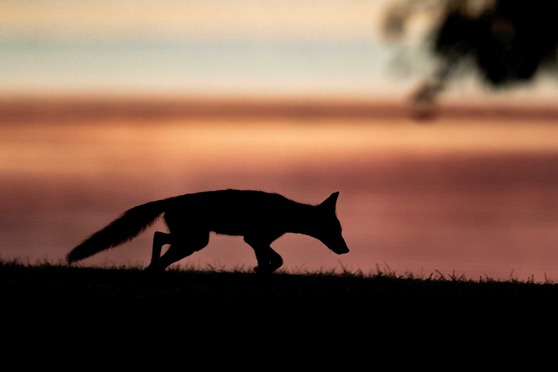 Sunset Stroll by Dane Madsen.
By Joe Zimmerman, DNR Science Writer
Light pollution, excessive human-produced light during the night, makes it harder to see the stars, but it’s also a hazard to wildlife, from birds to sea turtles.
April 13 marks the start of International Dark Sky Week, when scientists and activists remind people to help limit light pollution.
Due to the population density in the state, light pollution is significant in Maryland. Ambient light is the highest around cities, though even more remote sources of light can affect the surrounding nighttime environment. For many animal species in Maryland, light pollution can be a disruption—or a matter of life and death.
Birds are often the most affected by light pollution. Maryland is part of the major migration route called the Atlantic Flyway, and migrating birds are particularly at risk from light pollution. While we may think of many migrating birds as being active during the day, most songbirds and shorebirds are migrating at night, said Kevin Stohlgren, Maryland’s state zoologist.
“Light pollution is disorienting—it can cause birds to make collisions from reflections off of glass, or make birds lose energy on that important route,” said Stohlgren, of the Wildlife and Heritage Service in the Maryland Department of Natural Resources.
Up to 1 billion birds die from collisions with buildings every year in the U.S., and light pollution can cause migrating birds to veer off course into densely populated areas, where strikes are more likely to occur.
Because many collisions happen during migration months, groups including DarkSky International and the National Audubon Society encourage “lights out” events to limit nighttime light use during the spring and fall migrations. Lights Out Baltimore asks residents and businesses in Maryland’s largest city to turn off lights to protect birds, in addition to coordinating squads of volunteers to rescue injured birds.
Artificial light also disturbs bats. In addition to light pollution disrupting the foraging behavior of the nocturnal fliers, research has found that human-produced light limits habitat available to bats, including little brown bats and big brown bats, two species that live in Maryland.
For other animals, light pollution often acts as either an attractive or repellant force, drawing animals closer or causing them to leave an area. Many prey species might avoid well-lit areas entirely. But fish often come closer to light sources, where they can find more invertebrates to eat but are also more vulnerable to predators.
Many insects are attracted to light as well. Max Ferlauto, Maryland’s state entomologist, said light pollution disrupts feeding and mating for insects, especially moths and fireflies. Light also makes them easier prey for spiders and other predators. When home gardens are lit at night, it makes these areas less suitable for moths, which are important nocturnal pollinators.
Continue reading this article on the DNR website.
Stargazing under Maryland’s Darkest Skies – Outdoors Maryland
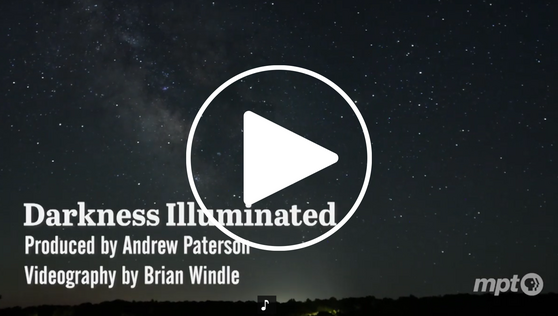 Watch the Outdoors Maryland segment on dark skies.
Dark Sky Recreation: Events on DNR Lands
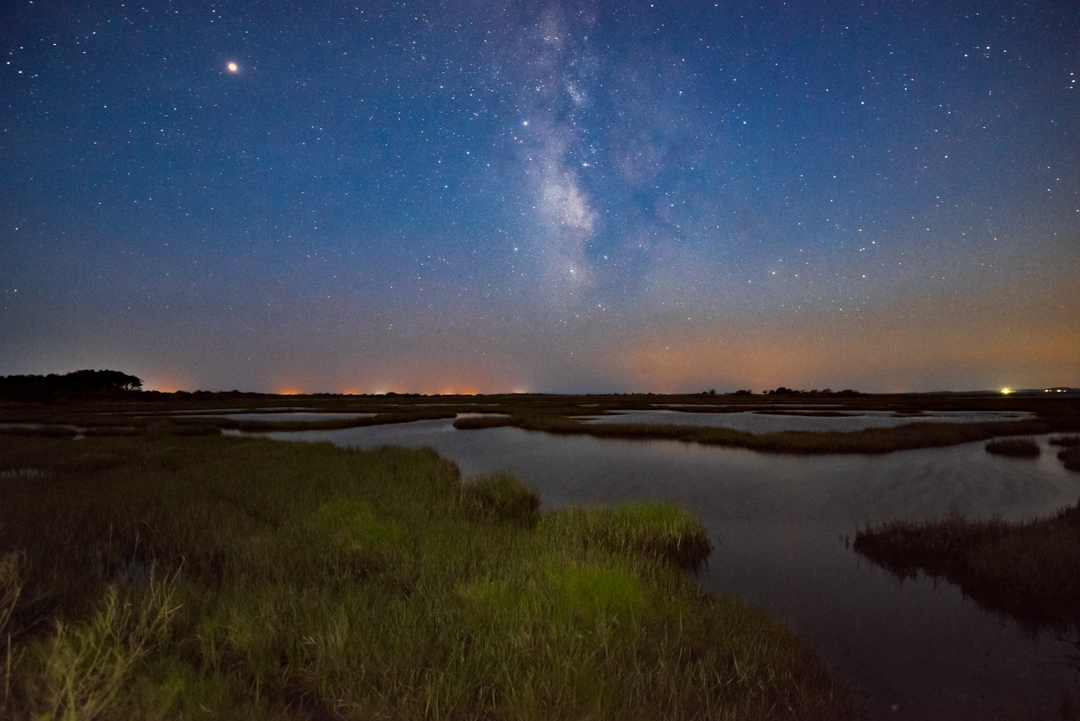 Marshy Milky Way by Matt Gautney. Submitted to the DNR Photo Contest in 2018.
Friday, April 17: Stargazing at Tuckahoe State Park
8:00 p.m. at the Campground Ballfield, Tuckahoe State Park
Celebrate International Dark Sky Week at Tuckahoe State Park by joining rangers and volunteers for a night of stargazing under a new moon! Bring warm clothes and a chair if desired. Meet at the Campground Ballfield. Contact mark.herring@maryland.gov for more information.
Want to experience the stars like never before? After-hours stargazing permits are available upon request at Tuckahoe State Park! Check out Tuckahoe’s Dark Skies webpage to learn more.
|
|
Friday, April 17: New Moon Night Hike at Sang Run State Park
7:30 p.m. at Sang Run State Park in Garrett County
Join a park ranger and Master Naturalist volunteer for a 1-mile guided hike, where we’ll discuss the new moon phase, listen for nocturnal wildlife, discover why dark skies are vital for both wildlife and people, and what Sang Run is doing to gain its certification as an International Dark Sky Place! Red light flashlights are required. Sturdy footwear and water are strongly encouraged. Rain will cancel the program. Meet at the Friends Store located at 3735 Sang Run Road, McHenry, MD 21541. The hike will begin at 8:00 PM. Questions? Contact Ranger Cricket Smith at ChristineN.Smith@maryland.gov.
|
|
 |
|
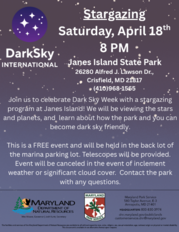
Saturday, April 18: Stargazing at Janes Island State Park
8 p.m. at the Marina Parking Lot, Janes Island State Park, Crisfield
Celebrate Dark Sky Week with a stargazing program at Janes Island, one of the premiere night sky viewing locations in the state. Janes Island is working towards recognition as an International Dark Sky Park. Come to view the stars and planets and learn how both you and the park can become dark sky friendly! Telescopes will be provided. This is a FREE event and will be held in the back lot of the marina parking lot. No registration required. The program will be canceled in the event of inclement weather or significant cloud cover. Contact the park at 410-968-1565 with any questions.
|
|
 |
Saturday, April 18: Crisis in Cosmology: The Hubble Tension
8:30-10:30 p.m. at Soldier’s Delight Visitor Center, 5100 Deer Park Road, Owings Mills
Join Westminster Astronomical Society Inc., in a lecture on one of the most intriguing puzzles in modern cosmology: The Hubble Tension. This phenomenon refers to the discrepancy between the rate of expansion of the universe as measured by different methods. Today we will delve into the methods used to measure the Hubble constant, explore the possible reasons for this discrepancy, and discuss the implications of our understanding of the universe. Rain or shine. Signup through webform encouraged.
|
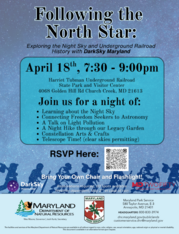
Saturday, April 18: Following the North Star: Exploring the Night Sky and Underground Railroad History
7:30 p.m. at Harriet Tubman Underground Railroad State Park and Visitor Center
Event is at capacity. If you are interested in joining the waitlist for this event, please call park staff at 410-221-2290 from Wednesday through Sunday, 10:00 a.m. to 4:00 p.m., to be placed on the waiting list.
|
|
 |
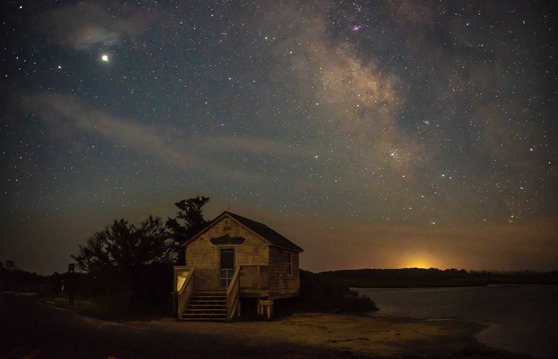 Assateague at Night by Rick Dove
Outdoor Recreation Spotlight: Starry Night Camping
Camping under a star-filled sky is a magical experience, and a great way to celebrate the night! Here are a few tips from Dark Sky International for creating your unforgettable stargazing adventure:
-
Check the weather: Clear skies are essential for stargazing, as too much cloud cover will block the light of the stars. Monitor the weather forecast and plan your trip for a time when skies are clear.
-
Timing is everything: The best stargazing conditions occur during a new moon or when the moon is below the horizon. Avoid full moons as the bright moonlight can obscure the stars. In the northern hemisphere, the Milky Way is highest in the summer sky late at night – and the middle of the night can provide some of the best views!
-
Download a star-finding app: Research celestial events like meteor showers, eclipses, or the visibility of specific planets to make the most out of your experience! Star maps or apps can help you identify constellations, planets, and other celestial bodies.
-
Be prepared to stay comfortable: Nights can get chilly, even in summer! Bring warm clothing, blankets, and sleeping bags suited for the season. For extra comfort while stargazing, bring a camping mat or other cushion to enjoy the view. Snacks and drinks can help you stay energized during long nights under the stars.
-
Minimize Light Pollution: If possible, set up camp away from other groups to avoid their lights interfering with your view. It takes approximately 30-45 minutes for human eyes to adjust to the darkness. When light is necessary, we recommend using a red headlamp or flashlight to preserve your night vision and avoid disrupting other nocturnal creatures. Check out this resource for making a DIY red flashlight at home!
Celebrate Global Astronomy Month this April and camp at some of the darkest skies across the state! Many DNR campsites are just beginning to reopen for the season in April and May. Learn more about the campsites at these public lands:
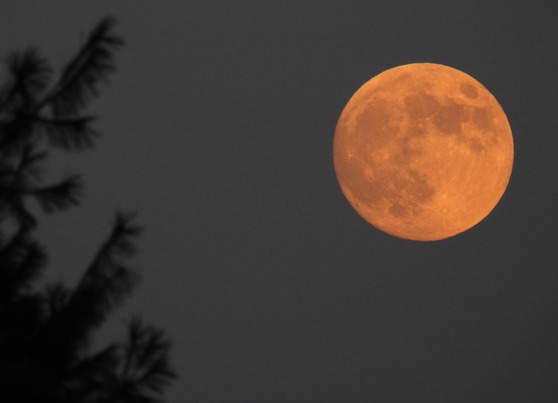 Full moon rising by Christopher Brown.
Celebrate Dark Skies at Home!
Whether you’re stepping outside to look up at the stars, observing nocturnal wildlife, or learning something new, there are many ways for families to explore and connect with the night sky! Try crafting your own telescope or read stories like Skywatcher by Jamie Hogan to discover the wonder of a dark sky and our responsibility to preserve it.
Curious about the dark sky in your backyard? Globe at Night, a citizen science project, has been active for more than 20 years and has helped generate real data that scientists use to measure the growth of light pollution nationwide. This simple and fun activity can be done anywhere using a smartphone! Learn more at www.globeatnight.org.
Does your home protect the night? Reducing light pollution at home creates safe spaces for nighttime pollinators and encourages appreciation of the night sky. Check out DarkSky’s Home Outdoor Lighting Assessment to learn more about the Five Principles of Responsible Outdoor Lighting at Night.
 DarkSky Maryland Events
We have worked with DarkSky Maryland, the local chapter of DarkSky International, to coordinate and promote a variety of events across the state! Check out the following events near you:
April 15: Stargazing at Quiet Waters Park
7:30 p.m. at Quiet Waters Park, Annapolis
Join DarkSky Maryland and the Hillsmere Stargazers Club for a special evening celebrating International Dark Sky Week and the new moon. Together, we’ll marvel at the night sky and learn how we can protect it from light pollution. Registration required for Stargazing at Quiet Waters Park.
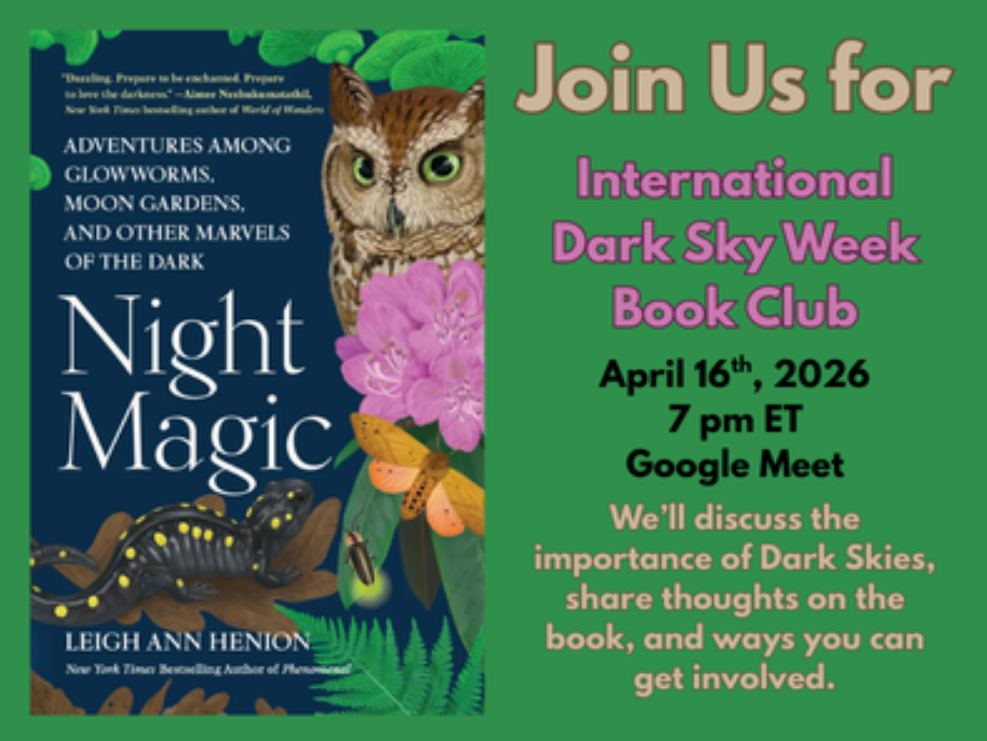 April 16: Virtual Book Club – “Night Magic” by Leigh Ann Henion
7 p.m. on Google Meet
Join DarkSky Maryland for a virtual book club meeting celebrating “Night Magic: Adventures Among Glowworms, Moon Gardens, and Other Marvels of the Dark” by Leigh Ann Henion! No matter where you are in the state, you are welcome to discuss the importance of dark skies in Maryland, share our thoughts on the novel, and learn how you can get further involved in the fight against light pollution. Learn more about Virtual Book Club - "Night Magic" by Leigh Ann Henion.
April 17: The Dark Side of Light: Planetarium Show
7 p.m., 7:45 pm at the Towson University Planetarium and Observatory
Plants, animals, and humans have all adapted to the natural cycle of day and night for tens of millions of years. The disruption of this cycle with artificial lighting at night has serious consequences, not only for our health but also the environment and the economy. Let’s take a look together at what is hidden under the term light pollution and what each of us can do about it. Learn more about The Dark Side of Light: Planetarium Show.
April 18: Go Dark! Live Planetarium Show at Montgomery College
7 p.m. at the Montgomery College Planetarium, Takoma Park
Go Dark! Celebrate International Dark Sky Week under the 30 foot dome of the state-of-the-art Digistar planetarium at Montgomery College. The Dark Sky movement is about more than what we can see in the night sky; it’s also about human health and thriving ecosystems. DarkSky advocate Robinne Gray will discuss the importance of safeguarding the natural darkness of night and local efforts in support of dark skies. Planetarium Director Carrie Fitzgerald will reveal the night sky above Takoma Park beyond the light pollution. Registration required for Go Dark! Live Planetarium Show at Montgomery College.
April 18: Havre de Grace Star Party
8:30 p.m. on the Promenade in Havre De Grace (by the Decoy Museum)
Bring your telescope, or look through one of ours! This event is co-hosted by the Harford County Astronomical Society and the Havre de Grace Green Team. Learn about the importance of dark skies and what you can do. Free and open to all ages! Learn more about the Havre de Grace Star Party.
More Events
|
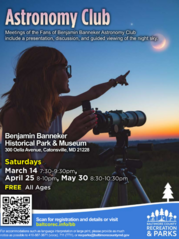
April 25: Fans of Benjamin Banneker Astronomy Club
8 p.m. at the Benjamin Banneker Historical Park & Museum, 300 Oella Avenue, Catonsville, MD
The Benjamin Banneker Historical Park and Museum is dedicated to telling the inspiring story of Benjamin Banneker, often considered the first African-American man of science. Banneker was a naturalist, mathematician, astronomer, and almanac author from Baltimore County. The Fans of Benjamin Banneker Astronomy Club provides opportunities to use professional telescopes, discuss astronomy in Banneker’s time, and learn about the night sky! This free program is for all ages. Registration is requested at baltcorec.info/bb. Additional Saturday program dates are available throughout the summer.
|
|
 |
Monthly: Blackwater Night Sky Tours
The Friends of Blackwater National Wildlife Refuge has installed a permanent astronomical telescope on the south lawn of the Blackwater NWR Visitor Center to offer night sky tours. Blackwater Night Sky Tours occur monthly during the period around the new moon, when the views of deep space objects are at their best. Night Sky Tours are free and open to the public. Learn more about Blackwater Night Sky Tours.
Now-December: Lights Out: Recovering Our Night Sky at the Museum of Natural History
The Smithsonian National Museum of Natural History’s special Lights Out exhibit has been extended to December 2026! In this exhibit, discover the beauty of the dark night sky where you can see the moon, a field of stars, and the Milky Way. Investigate how different animals are adversely affected by light pollution and what communities are doing to help. Explore the exhibit in person in Washington, DC or take the virtual tour from the comfort of your own home! Learn more about Lights Out: Recovering Our Night Sky.
 All Week: Participating Bookstore Displays
Local bookstores and libraries play a vital role in bringing communities together and inspiring curiosity! From books that explore the wonders of the night to titles about nocturnal ecosystems, six local Maryland bookstores have committed to supporting IDSW through thoughtful displays this April. Check out this webpage for the full list of participating bookstores.
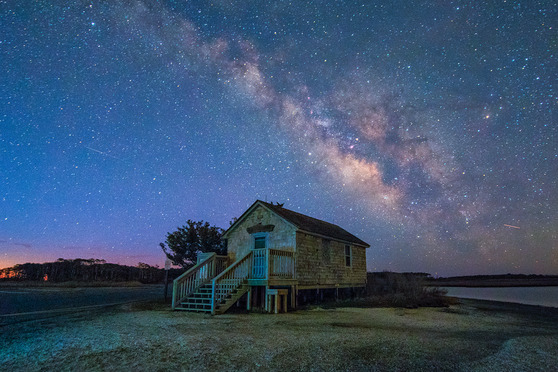 Milky Way at the Boathouse by Carol Ward
The Economic Benefits of Astrotourism
Just like outdoor recreation is an economic engine for the state of Maryland, astrotourism provides economic value for rural communities.
Astrotourism – or traveling for the sky’s wonders – has soared in the United States, especially in East Coast states like Maryland, as light pollution brightens the sky above our cities and suburban areas. Four out of five Americans can no longer see the Milky Way from their homes. Plus, light pollution has grown by an estimated 9.6% per year, meaning that more and more people are losing access to the stars.
Visitors who travel for dark-sky-dependent outdoor recreation, like stargazing, camping, night hiking, and astrophotography, are more likely to spend the night and use local services for lodging, food, gasoline, and other expenditures, all of which benefit the local economy. Park programs like telescope parties or new moon hikes can draw in more visitors to rural destinations like Western Maryland and the Eastern Shore, and some parks in Maryland are even undergoing the certification process to be recognized as International Dark Sky Places. Think about how your business can blend aspects of ecotourism, adventure travel, and astrotourism to celebrate Maryland’s dark skies this year.
Business Spotlight: “Midnight Moon Cookies” Special Ice Cream Flavor at Queen City Creamery
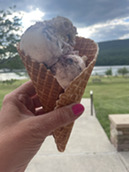
If you’ve ever stopped for ice cream on a sunny summer day at Rocky Gap State Park, you’re familiar with the local scoop shop, Queen City Creamery. You can get fresh frozen custard inside the Hawk’s Nest Cafe from Memorial Day to Labor Day each year.
Can’t wait for the summer? Queen City Creamery’s main location is featuring a special Midnight Moon Cookies flavor for International Dark Sky Week! The flavor is made with Blue Moon flavored frozen custard blended with chunks of cookie dough and Oreos. Stop by downtown Cumberland to get a sweet treat before your next starry night hike!
|
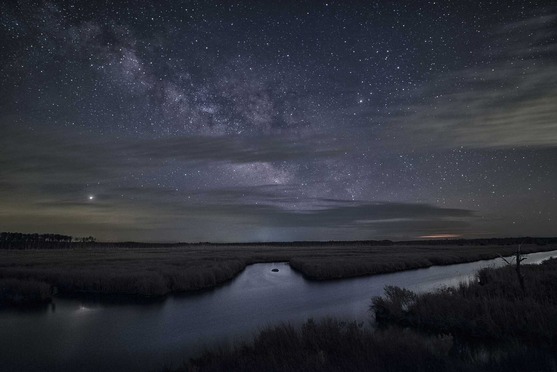 Parsons Creek Stars by Robert Fawcett
Explore Dark Skies Year Round
International Dark Sky Week is just one week out of the year aimed to get you thinking about light pollution and your place in the night. Connect with local groups near you to keep the conversation and momentum going to protect dark skies year round!
Keep in Touch!
Sign upto receive our newsletter by email.
Do you have something we should know about? Reach out to us at outdoorrecreation.dnr@maryland.gov.
Follow us on social media on Instagram, Facebook, and X!
Stay in the know by checking our Office of Outdoor Recreation website!
Don’t forget! There’s a new way to get your hunting and fishing license - check out Maryland Outdoors!
|