|
Baltimore City DPW Issues Regional Voluntary Water Restrictions Amid Low Reservoir Levels and Ongoing Drought Conditions
DPW Urges Residents and Businesses Across the City and Baltimore, Harford, Howard, and Carroll Counties to Conserve Water to Protect the Regional Water Supply
As the Baltimore region heads into the summer months, the Baltimore City Department of Public Works (DPW), in coordination with Baltimore, Harford, Howard, and Carroll counties, is issuing voluntary water restrictions due to low water levels in the City’s three reservoirs, which supply drinking water to 1.8 million people across Baltimore City and surrounding region. Residents and other water customers who use public water in the Baltimore region are urged to limit non-essential water use.
Rainfall levels across the region remain significantly below seasonal averages, and much of Maryland is currently experiencing moderate to severe drought conditions.
These voluntary restrictions apply to all customers throughout the Baltimore regional water system who receive public water service. Residents who rely on private wells are not affected by these restrictions but should consult their local county or municipal officials for any applicable guidance.
“To protect our regional water supply, we are urging residents and businesses across Baltimore City and Baltimore, Harford, Howard, and Carroll counties to use water wisely as we head into the summer months, when water demand typically increases,” said Mayor Brandon M. Scott. “By voluntarily conserving water now, we can take collective action to help preserve our regional water supply.”
These voluntary water restrictions are intended to reduce demand on the water system as the Baltimore region enters the high-demand summer season and help avoid the need for mandatory water use restrictions later if drought conditions persist. DPW will continue closely monitoring reservoir levels and drought conditions and will evaluate additional measures if conditions worsen.
DPW is currently seeing low water levels at Liberty and Prettyboy reservoirs. Prettyboy Reservoir is currently six feet below normal levels, while Liberty Reservoir is two feet below normal levels.
“DPW is closely monitoring conditions and will continue assessing rainfall totals and reservoir levels over the coming weeks and months,” said DPW Director Matthew Garbark. “We are urging everyone to be water wise this summer and take simple steps to voluntarily conserve water now to help ensure the long-term sustainability of our regional water supply.”
Recommended Water Conservation Measures
DPW and its regional partners request all residents and businesses to voluntarily reduce non-essential water use by:
- Repairing or replacing leaking faucets, hoses, and sprinklers
- Running only full loads in dishwashers and washing machines
- Turning off taps while brushing teeth or shaving and minimizing shower time
- Postponing lawn and garden watering
- Refraining from washing outdoor surfaces like sidewalks and driveways
- Avoiding car, boat, or equipment washing. If car washing is needed, go to an automatic car wash business that recycles wash water
The voluntary water restrictions do not apply to essential water uses such as drinking, cooking, or hygiene.
To conserve water, DPW is committed to doing its part by promptly repairing watermain breaks and system leaks and turning off public fountains. Residents are encouraged to help by reporting any signs of running water that may indicate a leak or watermain break.
Report a Watermain Break or Leak
For additional water-saving tips, please visit the Maryland Department of the Environment's website.
To protect the region’s water supply, flushing operations will still occur during the voluntary restriction period. This essential work: -Keeps your drinking water clean and fresh -Clears natural mineral deposits from pipes -Ensures hydrants are ready for emergencies
Potential Use of Susquehanna River as Backup Supply
If conditions worsen, DPW may draw from the Susquehanna River—typically used only during drought conditions. The Susquehanna flows from Cooperstown, N.Y., to Havre de Grace, Md. While the water is treated and safe to drink, residents may notice a slight change in taste or odor.
DPW will continue to monitor conditions and provide updates. The voluntary restrictions will be reassessed as the region progresses through spring and summer.
Stay Informed
For updates and additional water-saving tips, please follow Baltimore City Public Works on social media:
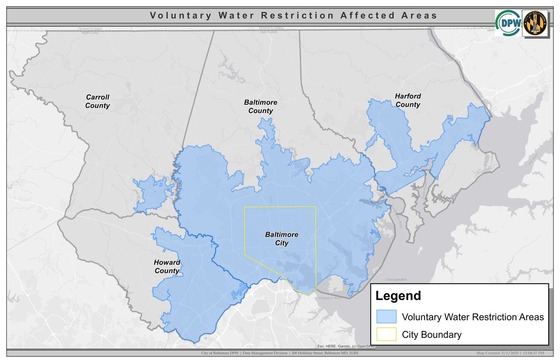
The map below shows the areas affected by the Voluntary Water Restriction. To determine whether your address is impacted, use the interactive map linked below or scan the QR code beneath the map.
|