Planning News
Chick Webb Memorial Recreation Center Ribbon Cutting
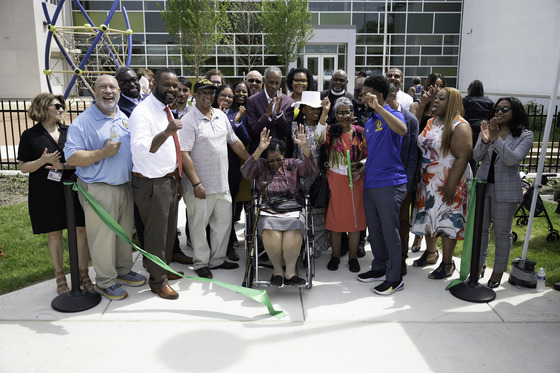 Chick Webb ribbon cutting including Webb family members Florence Rice and Mary Williams
DOP and CHAP staff were honored to attend the ribbon-cutting for the Chick Webb Memorial Recreation Center in East Baltimore on April 16. The renovations to this Baltimore City Landmark were approved by the CHAP Commission and this $17.5 million investment has resulted in a state-of-the art facility with a renovated historic building and swimming pool, a new gymnasium and other amenities.
The recreation center was originally donated by Baltimore's Black community to the City of Baltimore in 1947 to provide recreational facilities for Black East Baltimoreans, as the City had not built any for them. It was named in honor of William Henry "Chick" Webb, a drummer and jazz bandleader from East Baltimore who was nationally known as the “King of Swing.” Before his untimely death in 1939, he had promised his physician, Dr. Ralph J. Young, that he would play a series of benefit concerts to raise money for a recreation center for African Americans in East Baltimore. While Chick never got that chance, his protege Ella Fitzgerald and many others raised the funds, and named the recreation center in memory of Chick Webb.
The renovation of the Chick Webb Memorial Recreation Center highlights this important legacy, with an educational exhibit in the lobby that was designed in collaboration with community members and other stakeholders, the inclusion of a recording studio, and design details that reference Chick Webb's legacy, such as musical notes embedded in the playground, and a mural of Chick Webb on the side of the original recreation center. Even the building reflects his legacy, with interior railings that evoke sheet music, and the color scheme of the lobby's exterior glass pulled directly from Chick's drumkit.
Bravo to Baltimore City Recreation and Parks for sensitively renovating this community resource and historic Landmark to meet current recreational needs while honoring and celebrating its legacy!
Office of Sustainability Open House in June, Register Now!
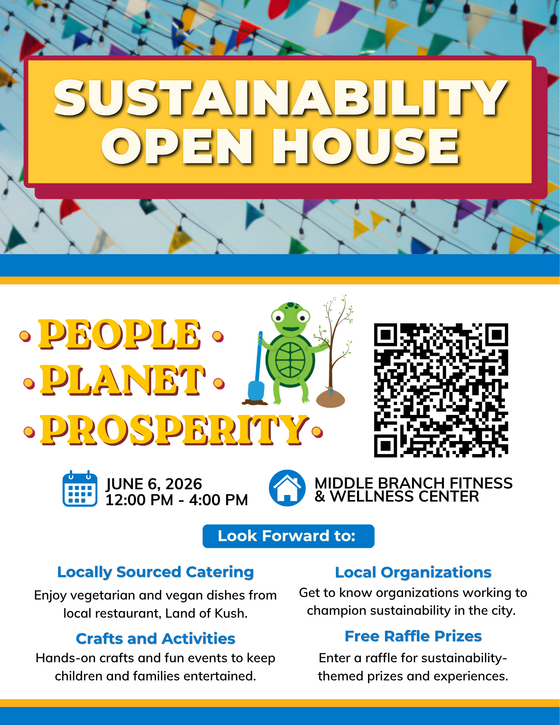 Mark your calendars for this year's Sustainability Open House on June 6th at the Middle Branch Fitness and Wellness Center! This Open House is an opportunity to gather and celebrate the incredible environmental efforts taking place across Baltimore City, while empowering individuals and communities to take meaningful action.
With over 30 tabling organizations and a full line-up of activities, demonstrations, and games -- community members will have opportunities to learn, engage, and act towards a more sustainable Baltimore.
For more information and to register, head to the link below!
https://www.eventbrite.com/e/sustainability-open-house-tickets-1985456185899
Learn more about the Capital Improvement Program in New CIP 101 Sessions - April Sessions
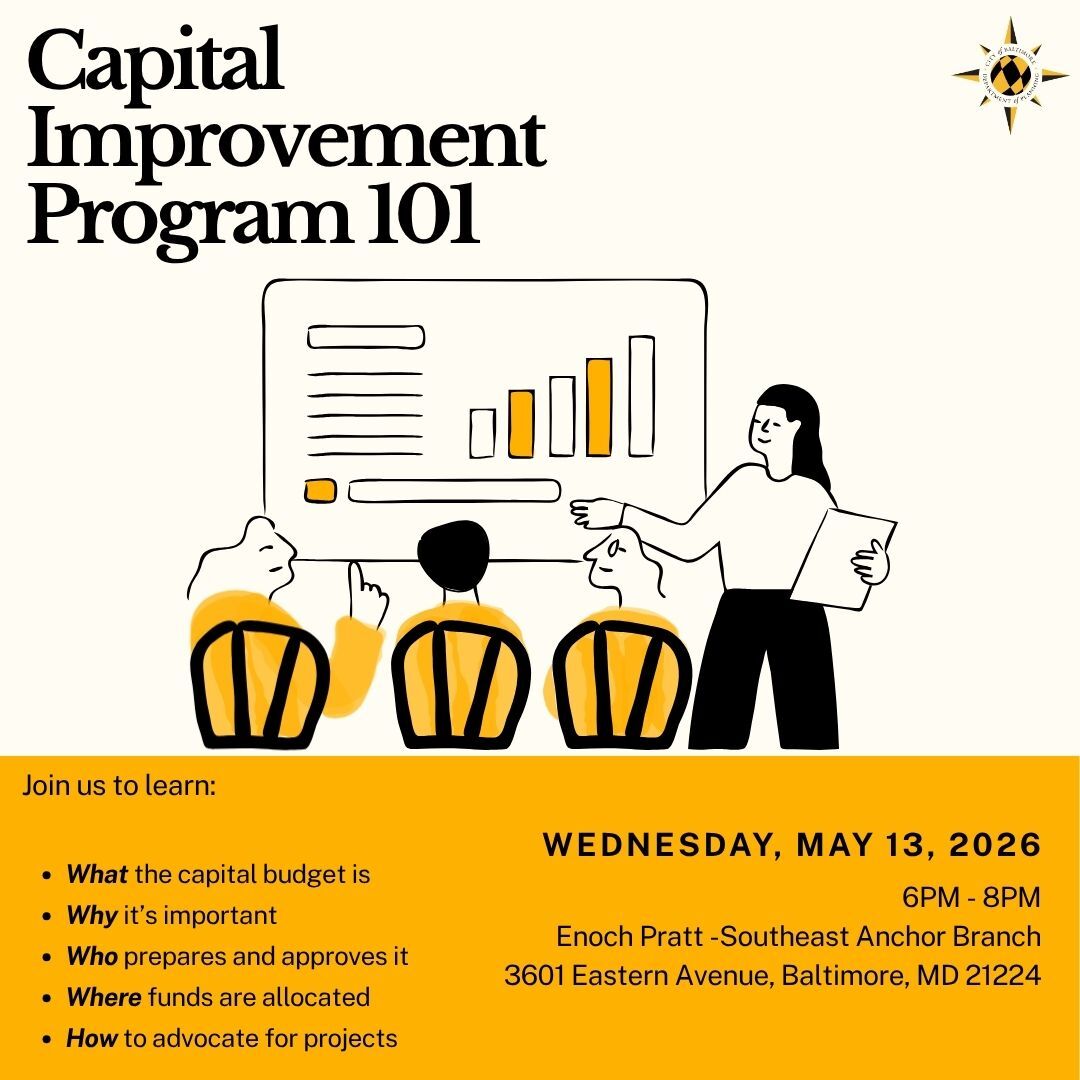
Join us for our May Session of our Capital Improvement Program (CIP) 101!!
These in-person sessions will focus on:
* What the capital budget is
* Why it’s important
* Who prepares and approves it
* Where funds are allocated
* How to advocate for projects
This session will have on-site Spanish interpreters.
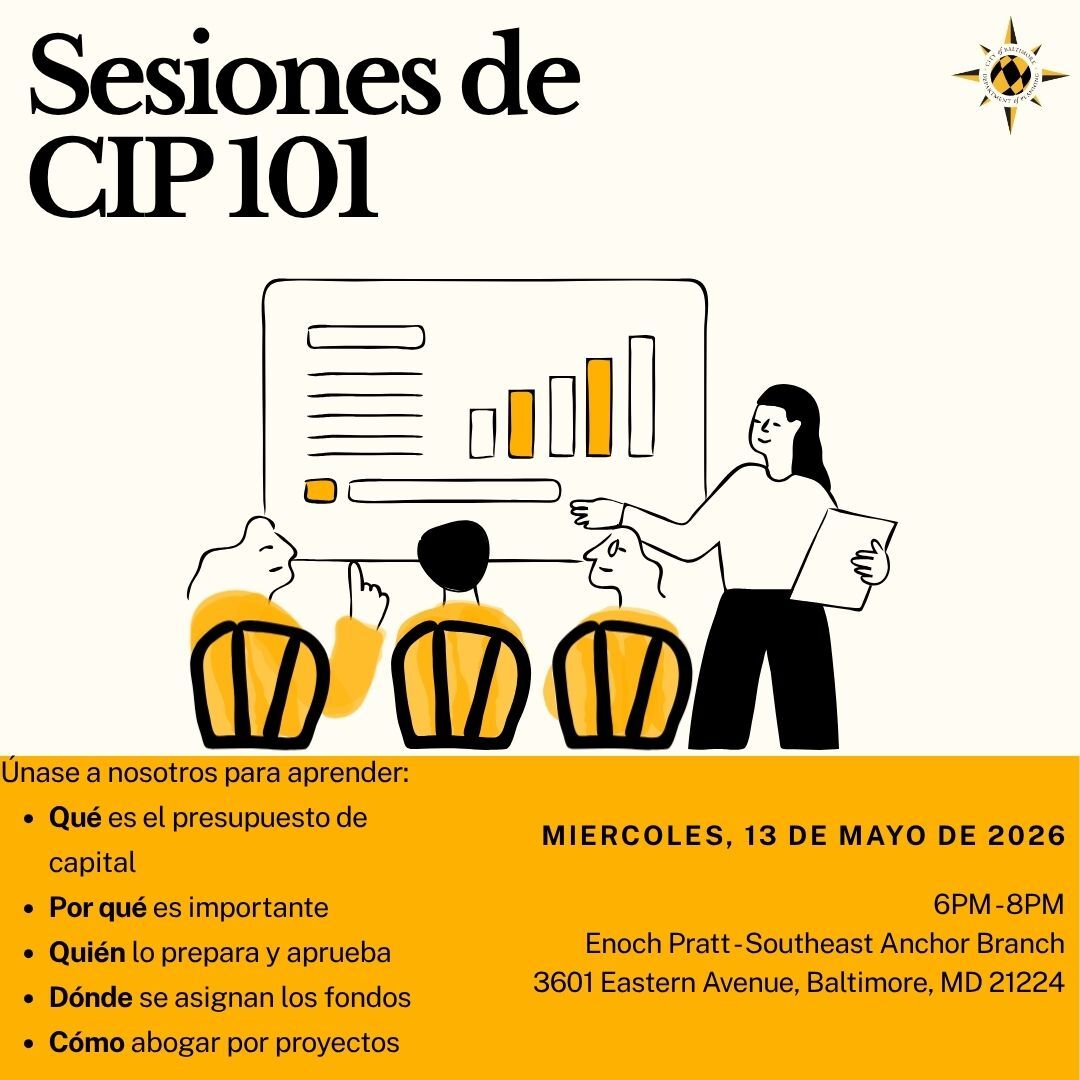
Únete a nosotros para nuestra sesión de mayo de CIP 101 (Programa de Mejoras de Capital 101)! Estas sesiones presenciales se enfocarán en:
* Qué es el presupuesto de capital
* Por qué es importante
* Quién lo prepara y aprueba
* Dónde se asignan los fondos
* Cómo abogar por proyectos
Aquí están los detalles de la sesión de mayo. ¡Esperamos verte allí!
Fecha: 13 de mayo de 2026
Hora: 6-8:00PM
Lugar: Enoch Pratt – Southeast Anchor Branch
3601 Eastern Avenue, Baltimore, MD 21224
Esta sesión contará con intérpretes de español en el lugar.
Food Policy and Planning Division 2025 B'More Fresh Reach and Impact Report Available Now
 The Food Policy and Planning team is excited to share our 2025 B’more Fresh Reach and Impact Report. The report highlights the impact of Online SNAP and our B’more Fresh nutrition incentive program, funded by the American Rescue Plan Act through December 2026.
Baltimore National Heritage Area Heritage Investment Grant Cycle Now Open
 The grant cycle is now open for the Heritage Investment Grant Fund (HIG), managed by the Baltimore National Heritage Area! Applications are due by June 1, 2026.
This federal funding opportunity supports non-profit organizations in funding small but strategic investments in cultural heritage tourism projects located within the Baltimore National Heritage Area boundary. Grant awards are available for up to $20,000 and require a dollar-for-dollar match, with up to 25% of the match allowed as in-kind support.
Eligible non-capital project categories include: Capacity-building support, Operating support, Historic preservation, Collections care and conservation, Heritage tourism events, Land, water, and environmental conservation (including archaeology), Recreational projects and trails programming, Education and interpretation, Marketing and outreach.
Eligibility Requirements:
Applicants must be nonprofit organizations in good standing with the Maryland Department of Assessments and Taxation or units of local government (Baltimore City) with the legal authority to enter into grant agreements. All projects must be located within the BNHA boundary.
Visit the BNHA website to learn more.
GAF Roofing Academy Offering Free Hands-On Training
The GAF Roofing Academy, in partnership with North American Trade Schools, is offering a specialized training and job placement support opportunity.
 
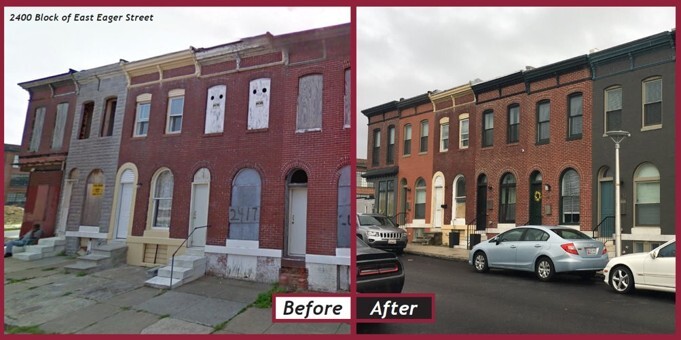
2400 block of East Eager Street after using CHAP's tax credit program
May is National Preservation Month, a time to celebrate the historic places that give our neighborhoods their unique character and tell the story of our city's past. From our iconic brick rowhomes and cobblestone streets to our repurposed industrial mills, Baltimore’s architectural heritage is a cornerstone of our community identity.
At the Department of Planning, preservation is not just about saving old buildings; it is an active, ongoing strategy for neighborhood revitalization, economic development, and sustainable growth.
The Role of CHAP in Preserving Our City
Leading this charge is the Commission for Historical and Architectural Preservation (CHAP). Established to safeguard the city's historical and cultural heritage, our CHAP division works diligently to integrate historic preservation into Baltimore's broader urban planning goals.
CHAP’s work touches neighborhoods across the city through several key initiatives:
-
Local Historic Districts and Landmarks: CHAP oversees 38 local historic districts and over 200 Landmarks, ensuring that exterior alterations, new construction, and demolitions respect the historic character of these neighborhoods and sites.
-
Historic Tax Credits: One of the most powerful tools for revitalization is the Historic Restoration and Rehabilitation Tax Credit. CHAP administers this program, which incentivizes property owners to invest in the rehabilitation of historic homes and commercial buildings, driving over $1.3 billion dollars in private investment back into our communities.
-
Designation and Research: The division designates local landmarks and districts, and reviews all national-level historic designations, ensuring that the diverse history of all Baltimoreans is officially recognized and protected. CHAP staff also contribute to community and neighborhood plans, conduct oral histories, and share the rich histories of Baltimore's neighborhoods and people.
Preservation as Progress
In Baltimore, historic preservation doesn't freeze buildings in amber; it allows us to thoughtfully update our built environment to meet the needs of current and future residents. As Director of Planning Renata Southard often emphasizes, honoring our historical assets provides the essential foundation for thoughtful, high-quality future design. By adapting existing structures for modern use, we also embrace one of the most effective forms of sustainable development, because the greenest building is often the one that is already built.
How You Can Celebrate This Month
Preservation Month is the perfect opportunity to explore the history in your own backyard. Here are a few ways to get involved:
-
Explore a Historic District: Take a tour of a historic district you haven't visited before.
-
Learn About Your Home: Research the history of your own property or neighborhood using guides from the Enoch Pratt Free Library or Preservation Maryland.
-
Investigate Tax Credits: If you are planning renovations on a historic property, reach out to CHAP staff to learn if your project qualifies for the Historic Tax Credit.
Baltimore’s history is woven into the places where we live, work, and play every day. This May, join us in recognizing the vital role that historic preservation plays in keeping our city vibrant, resilient, and uniquely Baltimore.
Spring Broccoli and Lemon Pasta Salad
May brings warmer weather and the transition into spring produce, a vibrant, crisp pasta salad is perfect for this time of year—whether it is for a quick weekday lunch or a weekend cookout.
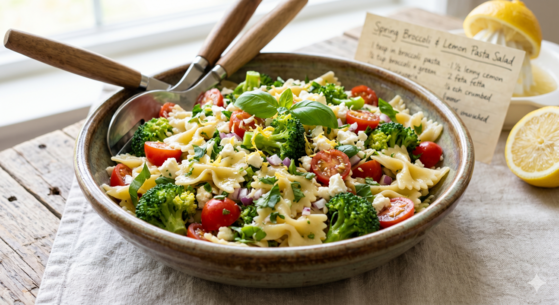
Here is a recipe for a Spring Broccoli and Lemon Pasta Salad that is refreshing, easy to make, and holds up beautifully in the fridge.
.
Prep time: 15 minutes | Cook time: 10 minutes | Yields: 6 servings
Ingredients
For the Salad:
-
1 lb short pasta (rotini, farfalle, or penne)
-
4 cups fresh broccoli florets, chopped into bite-sized pieces
-
1 cup cherry tomatoes, halved
-
1/2 cup red onion, finely diced
-
1/2 cup feta cheese, crumbled (or shaved parmesan)
-
1/4 cup fresh basil or parsley, roughly chopped
-
Optional protein: Grilled chicken, chickpeas, or toasted pine nuts
For the Lemon-Garlic Vinaigrette:
-
1/3 cup extra virgin olive oil
-
3 tbsp fresh lemon juice (about 1 large lemon)
-
1 tbsp Dijon mustard
-
1 tsp honey or maple syrup
-
2 cloves garlic, minced
-
Salt and freshly ground black pepper to taste
Instructions
-
Cook the Pasta: Bring a large pot of salted water to a boil. Cook the pasta according to the package instructions until al dente.
-
Blanch the Broccoli: During the last 60 seconds of the pasta's cooking time, carefully drop the broccoli florets directly into the boiling pasta water.
-
Drain and Cool: Drain the pasta and broccoli together in a colander. Rinse under cold water immediately to stop the cooking process and keep the broccoli a vibrant green. Shake off any excess water and transfer to a large mixing bowl.
-
Whisk the Dressing: In a small bowl or jar, combine the olive oil, fresh lemon juice, Dijon mustard, honey, minced garlic, salt, and pepper. Whisk or shake vigorously until the dressing is fully emulsified.
-
Assemble: To the large bowl with the pasta and broccoli, add the halved cherry tomatoes, diced red onion, and fresh herbs. Pour the dressing over the top and toss everything together until evenly coated.
-
Finish and Chill: Gently fold in the feta cheese. Taste and adjust the seasoning if necessary. For the best flavor, let the salad chill in the refrigerator for at least 30 minutes before serving so the pasta absorbs the vinaigrette.
Enjoy!
|