Planning News
WMAR-2 News Interviews Land Use and Urban Design Division Chief, Eric Tiso, About Ongoing Local Official Impersonation Scams
Land Use and Urban Design Division Chief, Eric Tiso, was interviewed on WMAR-2 News about ongoing scams where individuals are posing as Planning Commission members to elicit fraudulent fees from the public. Check out the interview using the link below.
Link: Scammers target permit applicants with fake approval fees
Celebrating 30 Years: A Farewell to Kyle Leggs
 On the evening of April 2, the atmosphere at The Rye Street Tavern was filled with warmth, laughter, and a touch of nostalgia as coworkers, neighborhood organization leaders, friends, and family gathered to celebrate the retirement of Kyle Leggs. After three decades of dedicated service to the Baltimore City Department of Planning, the event served as a powerful testament to the lives Kyle touched throughout his career.
The evening was defined by a series of moving tributes from those who worked alongside him in the trenches of urban planning and community advocacy as well as Councilman Bullock. Speakers highlighted Kyle's rare ability to balance complex capital budgets with the grassroots needs of Southwest Baltimore, always leading with the discipline of a retired Army Lieutenant Colonel and the heart of a public servant. Kyle was also presented with a Certificate of Recognition on behalf of Baltimore City and Mayor Scott.
The clear highlight of the night was a deeply moving speech from the brother of Racheal Wilson, who spoke on behalf of their family. He shared their profound gratitude for Kyle’s instrumental role in the opening of the park named in Racheal’s honor. His words served as a poignant reminder that Kyle’s work was never just about maps or zoning—it was about creating spaces for healing, remembrance, and community joy.
As Kyle transitions into his role leading the design of the National Desert Storm and Desert Shield Memorial in D.C., his Baltimore colleagues sent him off with a standing ovation. While he may be retiring from City Hall, the parks he helped build and the neighborhoods he championed stand as a permanent legacy of his 30-year journey.
Congratulations, Kyle, on a remarkable career and a well-deserved retirement!
Learn more about the Capital Improvement Program in New CIP 101 Sessions - April Sessions
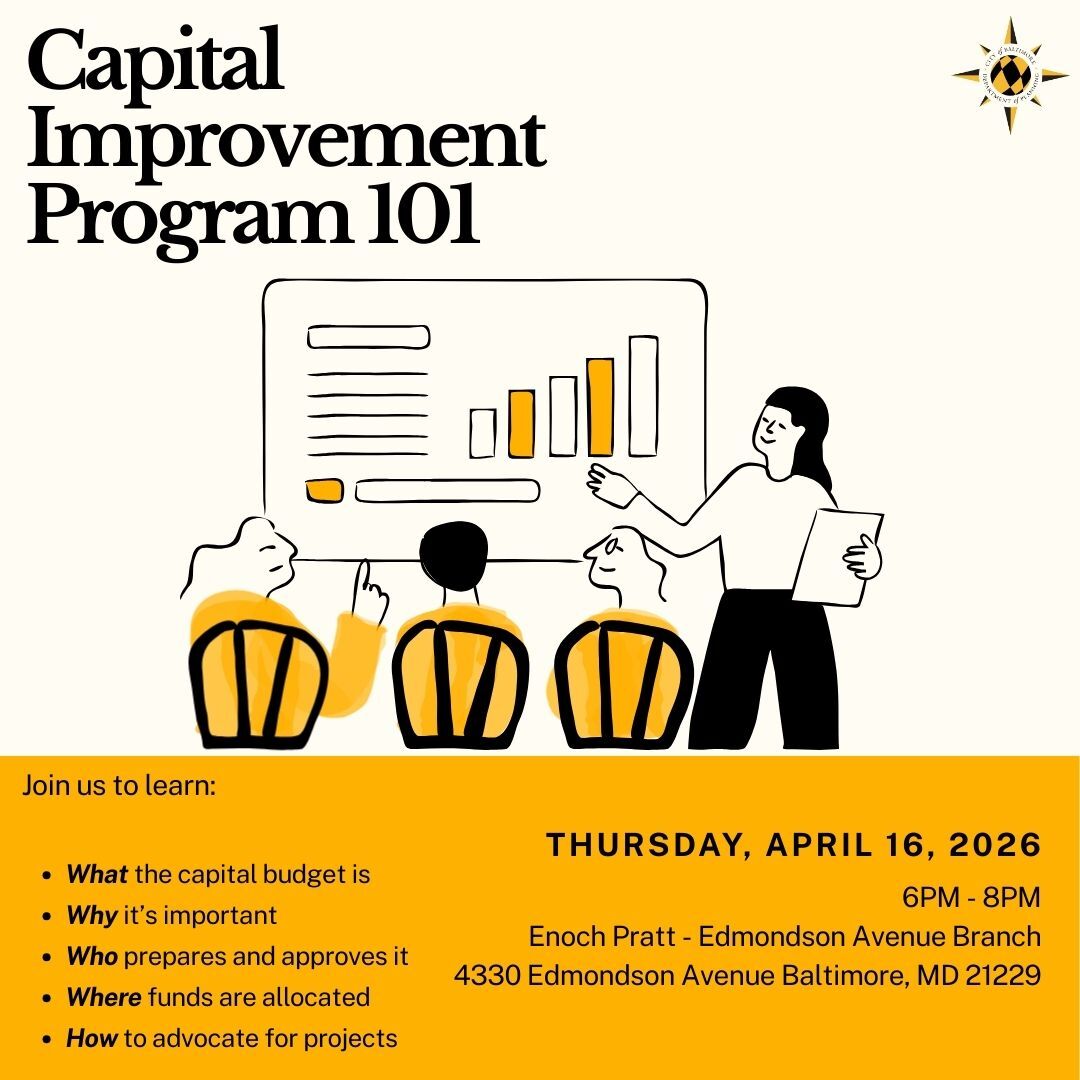
Join us to learn about the Capital Improvement Program (CIP) and its budget. Each year, the City plans spending on infrastructure and development, and we want to make sure residents know about this work, so that you all can help inform it moving forward. The CIP 101 sessions will cover the basics of what the CIP is, an overview of the budget, and allow time for questions. We are holding one session in each planning district and encourage you to attend!
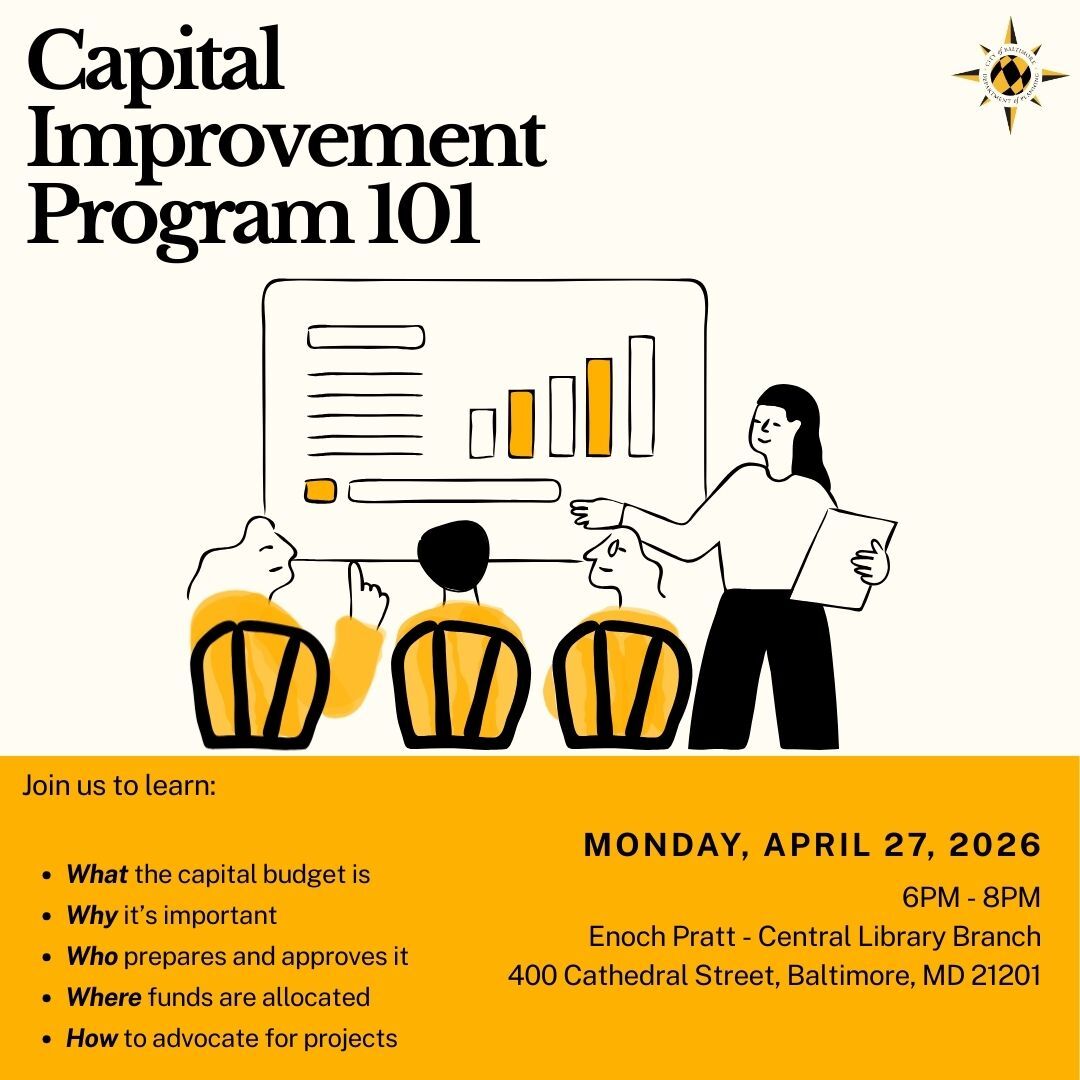
There will be two sessions in April (one reschedule from January due to inclement weather).
-
Enoch Pratt - Edmonson Avenue Branch (4330 Edmonson Ave., Baltimore, MD 21229) on Thursday, April 16, from 6:00PM - 8:00PM.
- Enoch Pratt - Central Branch (400 Cathedral St., Baltimore, MD 21201) on Monday, April 27, from 6:00PM - 8:00PM.
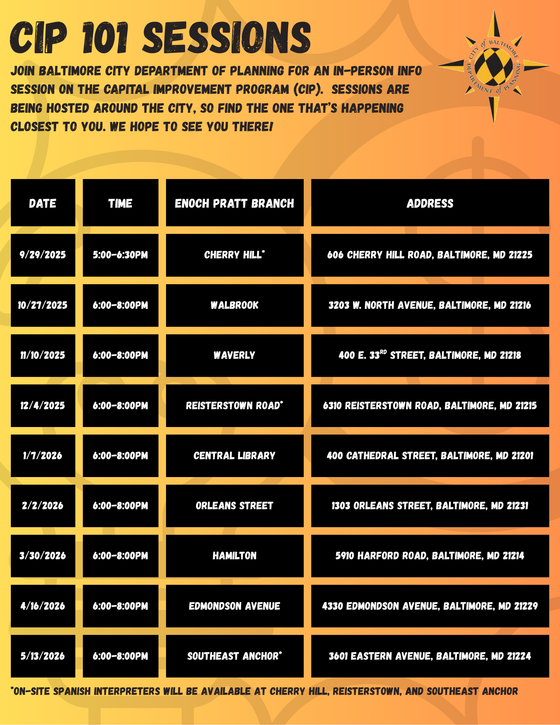
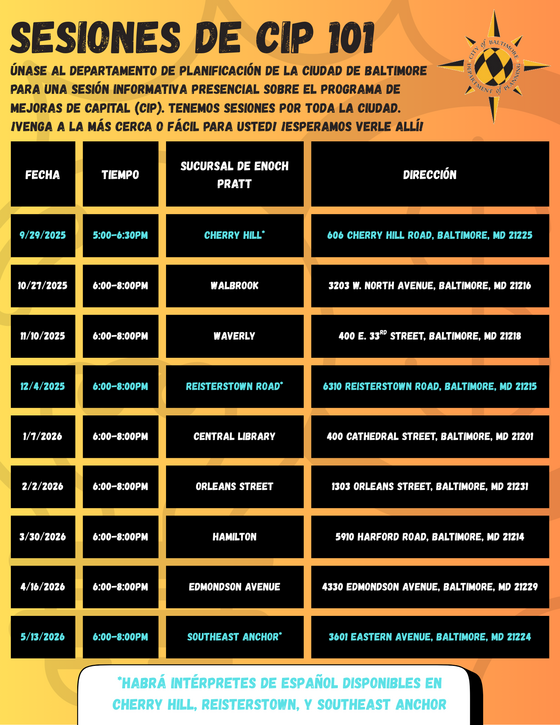
If you can't make the April sessions, take a look at the schedule below to find the session you can attend!
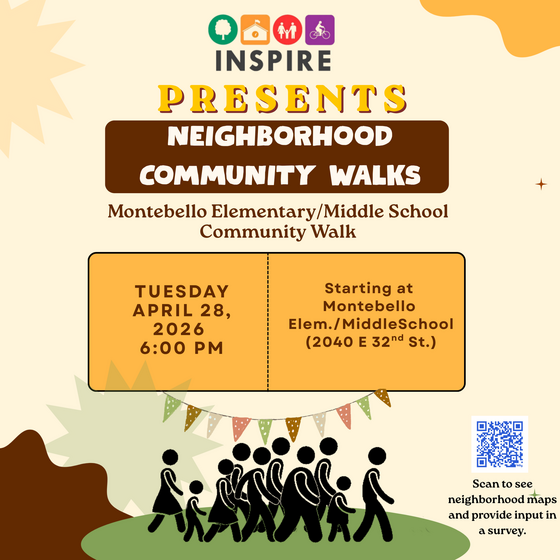
Upcoming Community Walk for the
Montebello Elementary/Middle School INSPIRE Plan
 Both the Billie Holiday/Katherine Johnson and Montebello INSPIRE planning processes had “Data Gallery” meetings in March that involved residents reviewing maps and graphs with information about the neighborhoods around the schools and there are surveys (linked below) to allow community members to see the maps shared at those meetings and to provide input, whether they attended the in-person meetings or not.
Additionally, both of these INSPIRE planning efforts have community walks in April.
The community walks are a way for people from all of the neighborhoods around the schools to walk around together and see issues and develop recommendations to be included in the INSPIRE Plan.
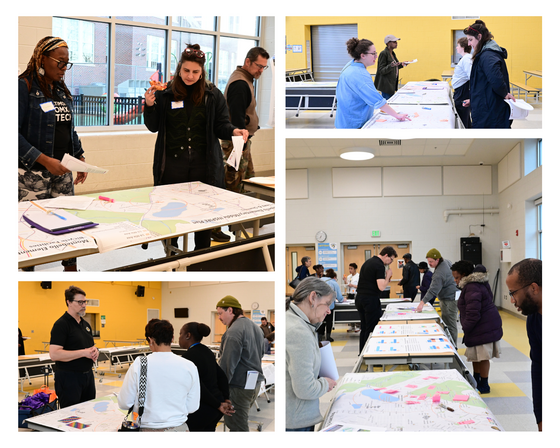 Montebello Data Gallery Meeting: Residents provided specific recommendations for community revitalization informed by the mapped data provided (housing typology and vacancy, traffic and crash data, street trees, street lights and more).
Meet our New Food Policy & Planning Intern

Arianna Nimocks, a second-year Johns Hopkins Bloomberg School of Public Health, Master of Science in Public Health (MSPH) Dietetics track student, joined the Food Policy and Planning Division for a two-month master’s dietetic practicum. For the culmination project for this program, Arianna was tasked with immersing herself in a project that directly addressed a public health nutrition issue, with the aim of pinpointing and resolving the underlying causes of health disparities. Through working with the Resident Food Equity Advisors (RFEA) program, Arianna accomplished this task exceedingly well by taking on a critical role in planning RFEA meetings, synthesizing sentiments from those meetings, while also attending outreach events and sharing about food resources with community members. After completing her MSPH, Arianna plans to become a dietitian and work with at-risk populations to improve health outcomes.
|
Maryland African American Heritage Preservation Program Announces FY27 Grant Workshops
 The Maryland Commission on African American History and Culture (MCAAHC) and the Maryland Historical Trust (MHT) will hold two in-person workshops and three virtual sessions to inform the public about available funding for capital grants through the American Heritage Preservation Program (AAHPP). The AAHPP provides grants to assist in the preservation of buildings, sites, or communities of historical and cultural importance to the African American experience in Maryland. This competitive program is funded through an appropriation from the Maryland General Assembly and is administered as a partnership between the MCAAHC and MHT. The AAHPP has an annual appropriation of $5 million. Grant awards range from $10,000 to $250,000.
Eligible applicants include nonprofit organizations and local government jurisdictions. Business entities and individuals may also apply for program grants when seeking funds for a preservation or development project that serves a high public purpose. There is no match requirement for this grant program.
The workshops are free to attend, but registration is required. The in-person workshops will be offered on April 14 in Calvert County and on June 4 in Annapolis. The virtual sessions will be offered on April 27, and May 19. Full details, including information on how to register, can be found on the AAHPP webpage.
Amtrak Accepting Applications for Community and Historic Preservation Grants
 On Monday, March 23, 2026, Amtrak began accepting grant applications for eligible projects as part of the $50 million Amtrak Community Investment Program (CIP). You can join their upcoming Applicant Information Session to learn about the submission process. This session is intended to prepare organizations to submit complete applications. For future updates on the CIP - Community Grants, sign up HERE.
The application for the Historic Preservation Grant Fund Administrator also opened Monday, March 23, 2026.
CIP - Community Grants Applicant Information Session:
-
Saturday, April 11, 2026 | IN PERSON | 10:00 am – 12:00 pm
- Coppin State University Science and Tech Center's Lecture Hall 120, 2500 W. North Ave, Baltimore, MD, 21216
-
Use parking lots C and CS with the entrance on North Ave Sign up here
Visit their website for more information about eligibility requirements, investment categories, evaluation criteria, application closing date, and more. For next steps, click here for their Quick Start Guide.
.
April is National Autism Acceptance Month, a time to celebrate the neurodiversity of our community and reaffirm our commitment to creating a city where every resident can thrive. In Baltimore, this month isn't just about awareness—it’s about the tangible ways we are planning, designing, and building a more inclusive "Charm City."
Why "Acceptance" Matters in Urban Planning
For the Department of Planning, fostering an inclusive environment means looking beyond the physical structures of our neighborhoods. It involves understanding how people with different sensory, social, and cognitive needs experience our public spaces.
True inclusion means:
-
Sensory-Friendly Design: Considering how lighting, noise, and "wayfinding" (signs and paths) can be adjusted to be more comfortable for neurodivergent residents.
-
Inclusive Play: Ensuring our parks—like the accessible playgrounds being championed across Maryland—offer equipment and quiet zones that allow children of all abilities to play together.
-
Equitable Access: Making sure that transit, housing, and community hubs are navigable and welcoming for individuals on the autism spectrum.
Local Roots and Resources
Baltimore is home to a vibrant network of organizations and individuals leading the way in neurodiversity. Groups like the Autism Society of Baltimore-Chesapeake and Itineris provide vital support and advocacy, reminding us that an inclusive city is a stronger city.
This month, several local institutions are offering sensory-friendly experiences that showcase what a "planning for all" mindset looks like in action:
-
Port Discovery Children’s Museum: A certified sensory-inclusive facility offering "Sensory Bags" and quiet spaces.
-
The B&O Railroad Museum: Hosting sensory-friendly days with adjusted lighting and sound.
-
The Walters Art Museum & BMA: Providing sensory kits and quiet rooms to ensure the arts are accessible to everyone.
Our Commitment
As we move forward with neighborhood revitalization and capital improvement projects, the Department of Planning remains dedicated to the principle of "Universal Design." This means planning with the most vulnerable or sensitive users in mind, which ultimately makes our streets, parks, and buildings better for everyone.
This April, we encourage you to learn more about the local resources available and to think about how we can all work together to make our neighborhoods more welcoming.
Looking for more information? Visit the Autism Society of Baltimore-Chesapeake or check out Pathfinders for Autism for local events and resources throughout the month of April.
Sensory-Friendly Recipe Ideas
Finding the right meal can be a challenge when navigating sensory sensitivities, but many recipes can be easily adapted to match specific preferences for texture, temperature, and predictability. Because every person's sensory needs are different, these ideas are grouped by texture profiles.
For "Crunch Seekers"
-
Baked Sweet Potato Fries: These offer a consistent, satisfying crunch. Slicing them thin and baking them at a high temperature ensures they stay crispy rather than mushy.
-
Veggie-Infused Chicken Nuggets: You can finely grate carrots or zucchini into ground chicken, then coat them in gluten-free breadcrumbs or crushed cornflakes for a familiar, high-crunch exterior.
For "Smooth and Creamy" Preferences
-
Hidden-Veggie Smoothies: Blending spinach, silken tofu, or cauliflower into a berry and banana smoothie provides nutrition without changing the smooth, uniform consistency.
- Pureed Butternut Squash Soup: This is naturally mild and creamy. You can blend in white beans or cooked chicken to add protein while maintaining a completely smooth texture.
For "Soft and Mild" Palates
-
Banana Oat Pancakes: Made with mashed bananas, eggs, and oats, these have a soft, predictable texture and a naturally sweet, mild flavor.
- Rice and Turkey Muffin Cups: Using a muffin tin helps create a predictable shape and size, which can reduce anxiety for those who prefer their food not to touch or vary in appearance.
Quick Tips for Meal Success
-
Deconstruct the Meal: If mixed textures are a trigger, try serving ingredients separately (e.g., plain pasta in one bowl, sauce in a small dipping cup).
-
Involve the Senses Early: Activities like washing vegetables or stirring can help someone get used to the smell and feel of ingredients before they are expected to eat them.
-
Focus on Presentation: Using divided plates ensures foods don't touch, which can be a significant comfort for many individuals.
|