Prepare Your Pipes for Winter: Cold Weather Tips from DPW
With snow approaching the Baltimore area and temperatures expected to drop, the Baltimore City Department of Public Works (DPW) urges residents to take steps to prevent pipes inside their homes from freezing. One crucial tip is to let faucets drip, as this keeps water moving through the pipes, reducing the risk of freezing and costly damage.
DPW reminds residents that the cold temperatures may impact residential water service lines and the City's water main infrastructure. Cold weather can harm water main infrastructure, especially during long periods of cold and repeated freeze/thaw cycles.
Water service lines and water meters can freeze when the temperature remains below 25 degrees for extended periods of time. Sub-freezing temperatures can also impact water mains, causing the ground to buckle and shift, resulting in broken water lines.
To monitor weather conditions, please visit the National Weather Service Baltimore-Washington webpage.
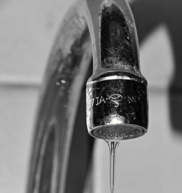
Let a Thin, Steady Stream Flow!
When temperatures drop below freezing, let a thin stream of cold water run from a basement faucet or a faucet located on the lowest level of your home to protect pipes inside your home.
The stream should be a continuous flow, about the thickness of a pencil lead. This water can be caught in a bucket and used later.
|
In addition, we urge residents to also consider these important tips to protect pipes inside their homes:
-
Keep Pipes Warm: Open cabinet doors to allow warm air to circulate around your pipes.
-
Disconnect Outside Hoses: Remove hoses from outdoor faucets and shut off water to outside spigots for the winter months to prevent freezing and potential damage.
-
Have Bottled Water on Hand: Power outages, frozen pipes, or water main breaks can disrupt water service. Keep a supply of bottled water available in case of emergency.
-
Check Your Sump Pump: Periodically test your sump pump. Frozen lines can lead to basement flooding, especially as snow and ice melt.
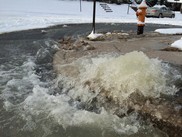
Water Emergencies
DPW maintains outdoor water lines up to and including the meter. Water lines running from the meter to the house, and internal plumbing, are the responsibility of the property owner.
For water emergencies in Baltimore City, please call 311, or call 443-263-2220 in our Baltimore County service area.
|
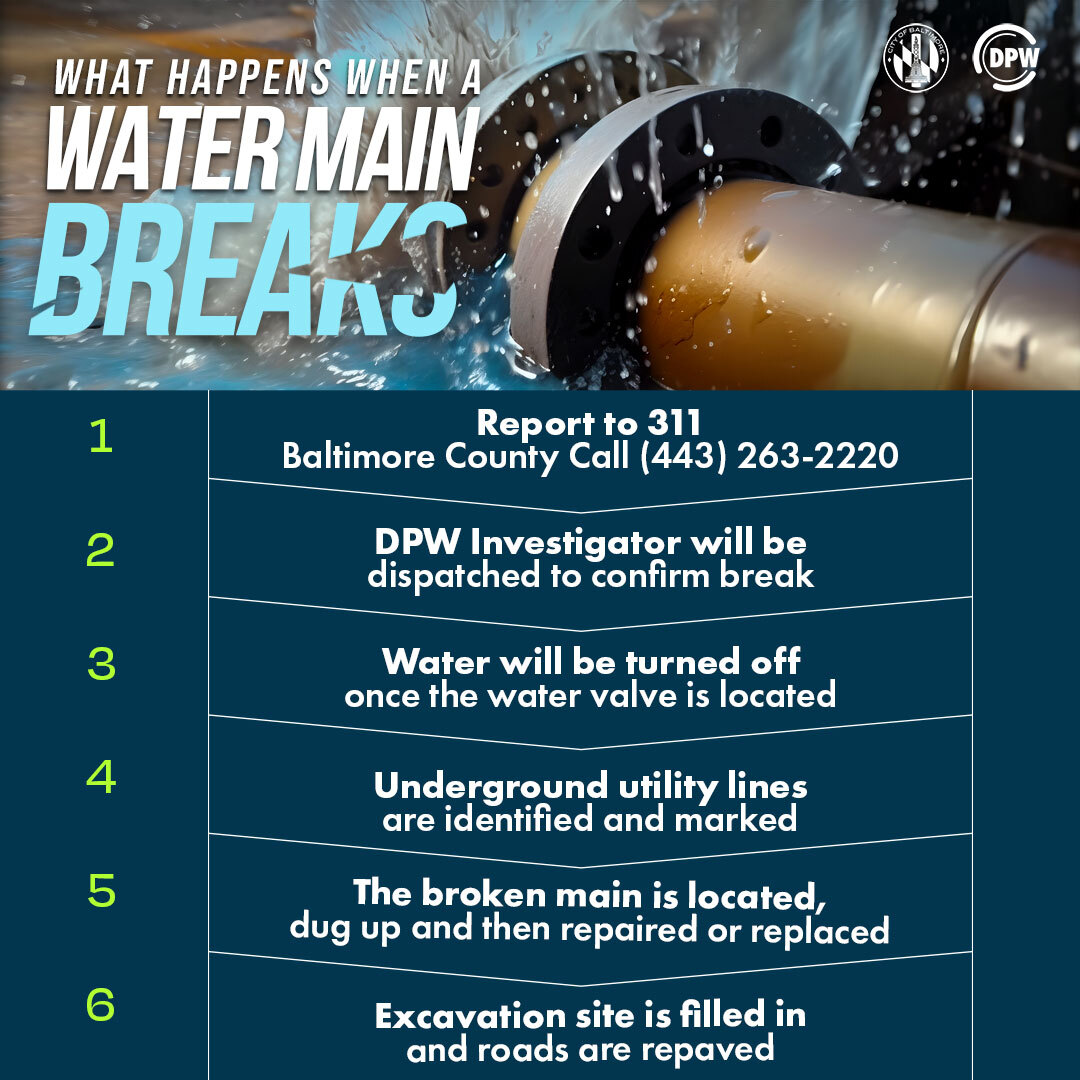
What Happens When a Water Main Breaks?
Although water main breaks happen throughout the year, winter can be harsh on infrastructure. Water mains break due to various factors, especially freezing and thawing conditions that can cause the ground to shift and put stress on the pipes. A history of previous breaks, pipe corrosion, soil conditions, and age contribute to water main breaks. Once service is restored, customers who have lost water service should allow water to run through a sink or tub faucet until it is clear.
|