|
Hypoxic Conditions Developing in Southern Cape Cod Bay Notice to Lobster Trap Fishermen and Other Interested Parties
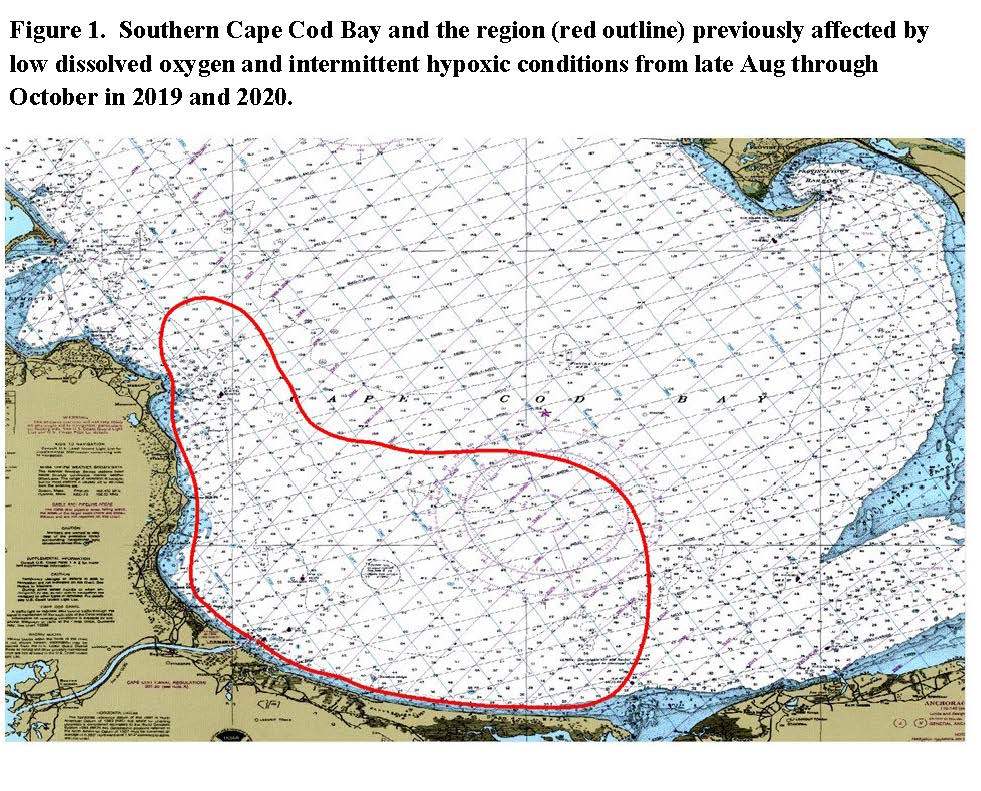
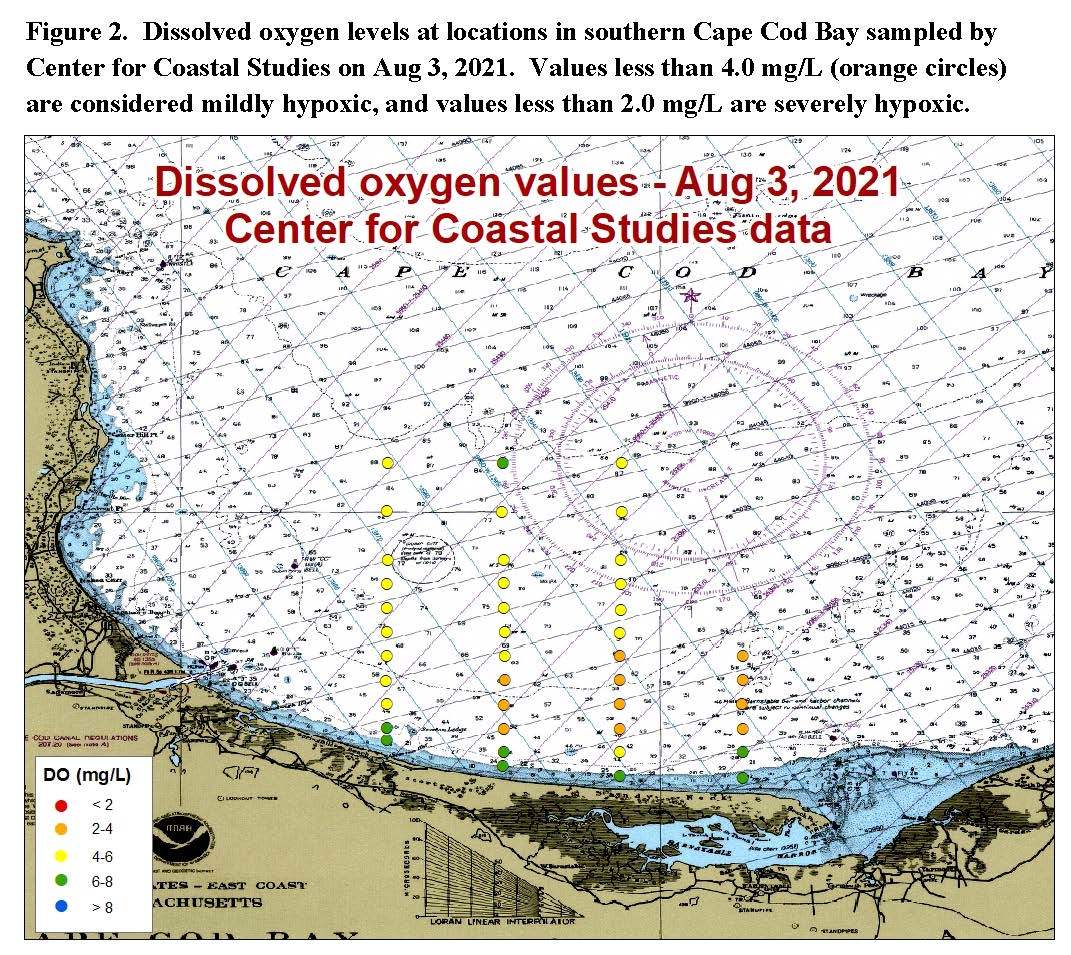
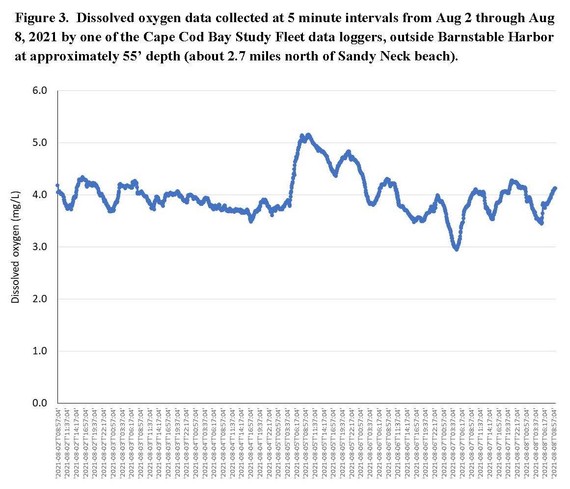
Preliminary data indicate that dissolved oxygen (DO) levels are decreasing at some locations in the southern portion of Cape Cod Bay, within the same region that experienced low DO and hypoxic conditions in 2019 and 2020 (Figure 1). Data collected by the Cape Cod Bay Study Fleet and by the Center for Coastal Studies show levels near the seabed of < 4.0 mg/L in several locations (orange circles in Figure 2); values less than 4.0 mg/L are considered mildly hypoxic, and values less than 2.0 mg/L are considered severely hypoxic. The Study Fleet data indicate that some locations have been varying at around 4 mg/L for about a week (Figure 3). No severely hypoxic conditions have been detected yet this summer, but the trends of declining DO we’ve observed are concerning. Many mobile bottom dwelling animals like lobsters will move to avoid hypoxic conditions when they can, but will die if stuck in traps and exposed to hypoxia for more than a few hours. DMF urges those lobster fishermen working in or near the area to be on the lookout for signs of hypoxia, which includes unusual amounts of lethargic or dead lobsters, crabs, or finfish in the traps. DMF recommends fishermen check traps frequently, and possibly consider moving gear out of the affected region to prevent trapping lobsters or crabs in hypoxic conditions.
DO conditions can change rapidly. High winds and waves can result in mixing of the water column and DO levels could improve as was seen in early September last year. However, it is difficult to predict exactly where or when hypoxic conditions will occur. We will continue to monitor the situation with the help of our partners at Center for Coastal Studies as well as members of the Cape Cod Bay Study Fleet. Please report unusual observations of lethargic or dead lobsters to Tracy Pugh at tracy.pugh@mass.gov.
For more information about the management of marine fisheries in Massachusetts, contact DMF at 617-626-1520 or visit our website at www.mass.gov/marinefisheries.
|
|
|
|