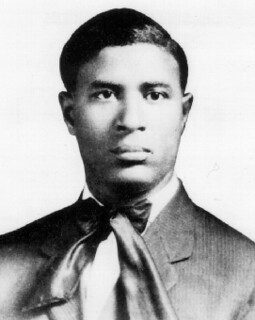
Baker Honors Black History Month: Garrett Morgan - The Inventor of the Gas Mask and the Traffic Signal
Garrett Augustus Morgan was born in Claysville, Kentucky, on March 4, 1877, to formerly enslaved parents. His mother was of Native American, Black and white descent and his father was half-Black and half-white. Garrett was the 7th of 11 children and would work on the family farm with his brothers and sisters while attending school. As a teenager, he left Kentucky and moved to Cincinnati, Ohio, in search of other opportunities.
Despite his formal education not exceeding past elementary school, he worked to give himself an education by hiring a tutor while living in Cincinnati, focusing on his studies in English grammar. In 1895, he moved to Cleveland, Ohio, working as a sewing machine repairman for a clothing manufacturer. He taught himself as much as he could about sewing machinery and experimenting with the process. Word traveled fast about his skillset, causing him to work for numerous manufacturing firms in the Cleveland area before he opened his own sewing equipment and repair shop in 1907.
In 1914, Garrett was awarded two patents for the invention of an early gas mask, the Safety Hood and Smoke Protector. He manufactured the mask and sold it nationally and internationally through the National Safety Device Company, or Nadsco, using a marketing strategy to avoid Jim Crow discrimination—what historian Lisa Cook calls "anonymity by dissociation." During this time, inventions were sold by conducting live demonstrations, and when demonstrating in the South, Garrett hired white public safety professionals to stage demonstrations for him. His newspaper advertisements also featured smartly dressed white male models.
New York City quickly adopted the mask, and, eventually, 500 cities followed suit. In 1916, a refined model of Morgan's gas mask was awarded a gold medal at the International Exposition of Sanitation and Safety and another gold medal from the International Association of Fire Chiefs. Unfortunately, Garrett would soon find himself on the opposite end of his new success.
On July 25, 1916, Garrett made national news for using his gas mask to rescue men trapped after an explosion in an underground tunnel located 250 feet under Lake Erie. No one had been able to reach the men causing 11 of the trapped men to die as well as 10 men who attempted to rescue them. Called six hours after the incident, Garrett and some volunteers, with the new "gas masks" brought two workers out alive and recovered the bodies of 17 others. Garrett personally gave artificial respiration to one of the men he rescued.
The national news contained photographs of him, and officials in a number of southern cities canceled their existing orders when they discovered he was Black. In 1917, the Carnegie Hero Fund Commission reviewed the reports of heroism displayed during the disaster. Based on news reports that downplayed Morgan's role, the Carnegie board decided to give the prestigious "Hero" award to a minor figure in the rescue effort who was white, rather than to Morgan. Morgan protested, but the Carnegie Institution said he hadn't risked as much as the other person had because he had safety equipment.
Some reports say the Morgan gas mask was modified and used in World War I after the Germans unleashed chemical warfare at Ypres on April 22, 1915, although there's no strong evidence for it. Despite Morgan's popularity in the United States, there were dozens of other masks on the market by then, and most used in WWI were of English or French manufacture.
Morgan was the first African American to purchase an automobile in Cleveland, and it was Morgan's experience while driving along the streets of that city that inspired him to invent an improvement to traffic signals. After witnessing a collision between an automobile and a horse-drawn carriage, Morgan took his turn at inventing a traffic signal. While other inventors had experimented with, marketed, and even patented traffic signals, Morgan was one of the first to apply for and acquire a U.S. patent for an inexpensive way to produce a traffic signal. The patent was granted on November 20, 1923. Morgan also had his invention patented in Great Britain and Canada.
Morgan died on August 27, 1963, at the age of 86. His life was long and full, and his creative energies were recognized both during and after his lifetime.
"If you can be the best, then why not try to be the best?" - Garrett Morgan
You can learn more about Garett Morgan by visiting Garrett Morgan: The Man Who Stopped Traffic | VPM, Who Made America? | Innovators | Garrett Augustus Morgan (pbs.org), Biography of Garrett Morgan, Inventor of the Gas Mask (thoughtco.com), or Garrett Morgan - Inventions, Traffic Light & Gas Mask - Biography.
|