 Free Family Membership to Kentucky Science Center
Did you know that families who receive SNAP or WIC benefits are eligible for a FREE one-year Community Access Membership to Kentucky Science Center?
Enjoy unlimited admission to Kentucky's largest hands-on science museum and inspire a lifetime of learning through interactive exhibits, science demonstrations, and family experiences.
To learn more or apply, visit: www.kysciencecenter.org/cam/
Kentucky is experiencing an ongoing measles outbreak. Thirty-two cases have been confirmed so far in 2026. Cases have been reported in Caldwell, Christian, Owen, Todd, Trigg, and Washington counties. Two people have been hospitalized. No deaths have been reported.
The United States is seeing more measles cases than it has in many years. Most cases have been in people who were not vaccinated against measles. In Kentucky, approximately two-thirds of the cases have been among children and teens ages 17 and younger.
Vaccination is the best protection
Measles is highly contagious, but it is preventable through vaccination. The measles, mumps, and rubella (MMR) vaccine is the best way to protect yourself, your family, and your community.
Children usually receive:
- A first dose at 12 to 15 months of age
- A second dose between ages 4 and 6
- Children and teens who have not received the recommended doses of MMR vaccine should receive catch-up vaccination as soon as possible.
Two doses of the MMR vaccine are 97% effective at preventing measles.
"If you or your child needs the MMR vaccine, we can help," said Connie Mendel, director of the Louisville Metro Department of Public Health and Wellness (LMPHW) and chief health strategist. "We provide vaccines for people without insurance, children whose insurance does not cover vaccines, and people who do not have a regular healthcare provider. We also accept most insurance plans. To schedule an appointment at our Immunization Clinic, call 502-574-5380.”
Why measles matters
"Measles is a highly contagious virus that spreads through the air and can cause serious health problems, especially in young children," said Dr. Kris Bryant, associate medical director for LMPHW and a pediatric infectious disease specialist with Norton Children’s. “It can make children very sick and can lead to serious complications, including pneumonia, seizures, and swelling of the brain. Measles can also weaken the immune system, making it harder for the body to fight other infections."
Talk with a trusted healthcare provider
"Measles is a dangerous illness and can be prevented by a vaccine that has been thoroughly studied and proven successful," said Mendel. "Parents want to make the best decisions for their children. If you have questions or concerns, talk with someone you’ve trusted to care for your child throughout their ages and stages - their pediatrician or healthcare provider. They can answer your questions, address your concerns, and help you make an informed decision."
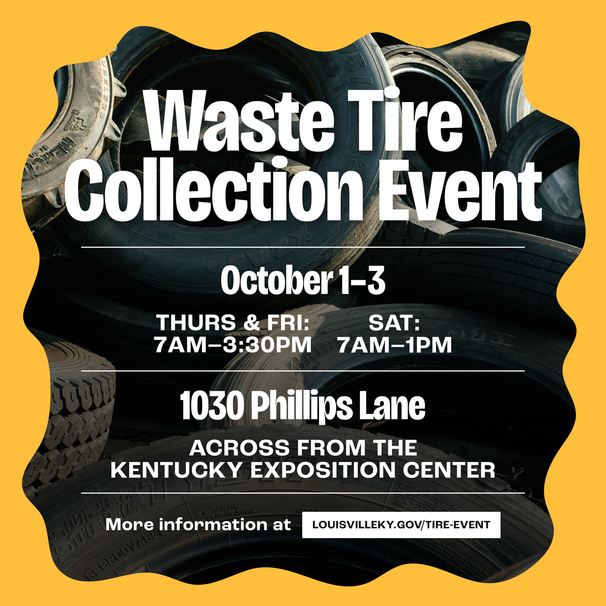 The Kentucky Energy and Environment Cabinet, Solid Waste Management Services, and the Waste Management District will be hosting a Waste Tire Collection Event in Louisville on October 1-3, 2026, and we're requesting your assistance in helping spread the word to your community contacts.
Event website: https://louisvilleky.gov/events/waste-tire-collection-event
Event Details 📅 October 1, 2, & 3, 2026 ⏰ Thursday & Friday, 7:00 a.m. - 3:30 p.m. ⏰ Saturday, 7:00 a.m. - 1:00 p.m. 📍 1030 Phillips Lane, Louisville, KY (across from the Kentucky Exposition Center)
Who Can Participate? Any Kentucky resident or business may participate, with the exception of tire retailers, scrap/salvage yards, and recycling facilities.
Accepted Tires
- Tires on or off rim
- Passenger vehicle, light truck, and truck tires
- Tractor and farm implement tires
- Bicycle, motorcycle, golf cart, and ATV tires
Not Accepted
- Foam-filled tires
- Calcium-filled tires
- Off-road construction tires
- Rubber tracks
- Solid tires with or without press-on rims
- Tires generated outside Kentucky
- Tires from tire retailers, scrap/salvage yards, or recycling businesses
Please note that tires must be separated by type prior to arrival.
Please see the following message from the Metropolitan Sewer District regarding updated language on MSD bills.
Dear Community Stakeholder,
I wanted to share a brief update regarding a terminology change that may prompt questions from constituents and customers.
Beginning with bills issued after September 1, the charge previously labeled Consent Decree Surcharge is now labeled Infrastructure Surcharge in the MSD section of Louisville Water bills.
Importantly, this is not a new charge. Only the name has changed.
The updated terminology more clearly reflects the purpose of the fee, which supports infrastructure improvements that help maintain a reliable, efficient, and environmentally sound wastewater and drainage system. These investments include projects required to meet federal and state environmental regulations, including those outlined in MSD's consent decree with the EPA.
To help answer questions, MSD has added a new FAQ to our rate increase webpage that explains the change:
Understanding Louisville MSD Rate Increase FAQs
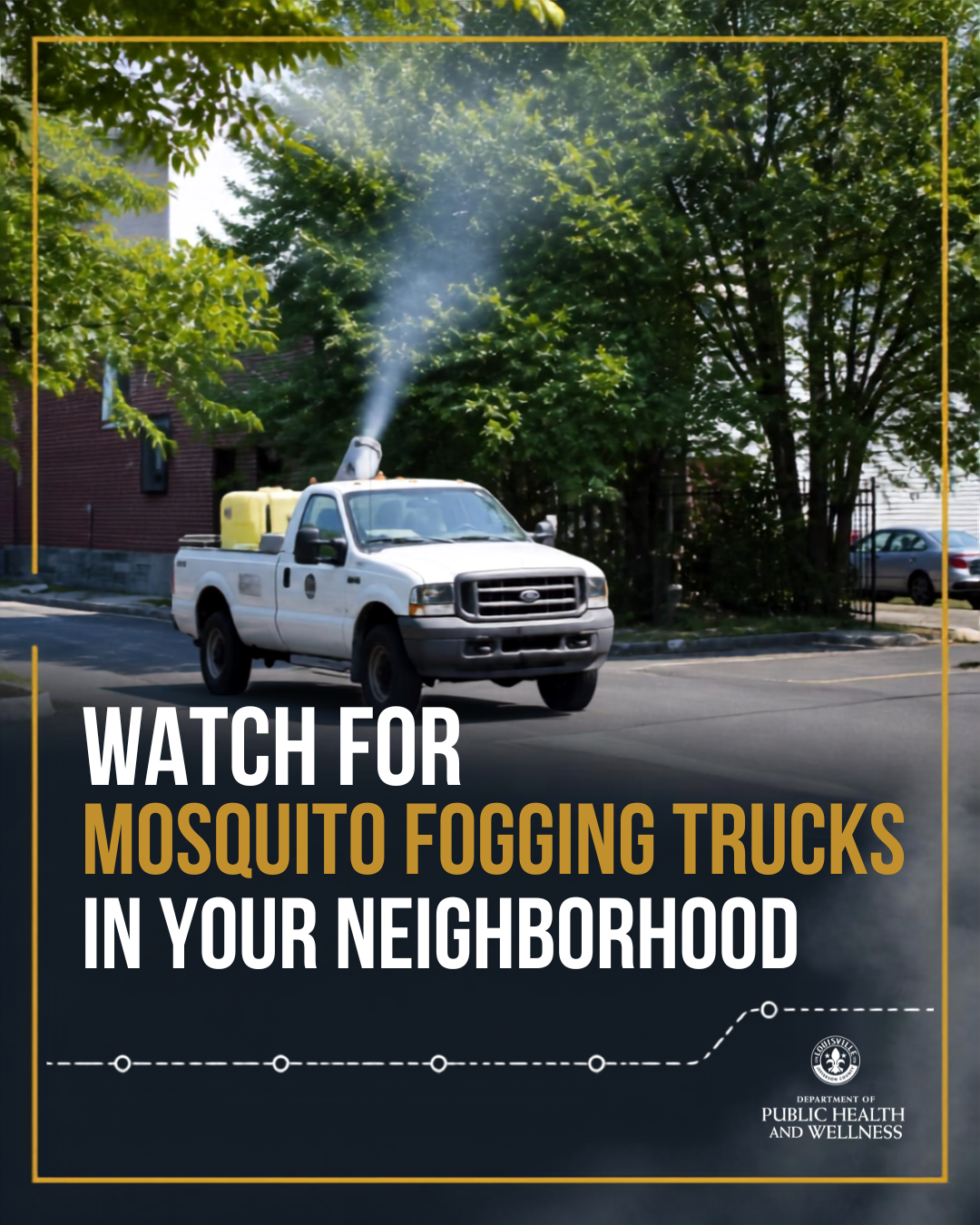
Louisville Metro Department of Public Health and Wellness (LMPHW) is conducting mosquito fogging in neighborhoods where mosquitoes carrying West Nile virus have been found. Fogging helps reduce mosquitoes and lower the risk of illness.
Mosquitoes carrying West Nile virus have been found in monitoring traps in at least 25 neighborhoods this summer. Jefferson County recorded 12 human cases in 2025, and two cases so far this year.
Fogging takes place during the early morning or evening hours when mosquitoes are most active and bees and other pollinators are inactive. The insecticide used for mosquito control is approved by the U.S. Environmental Protection Agency and the Kentucky Department of Agriculture and is applied in very small amounts.
"Warm weather helps mosquitoes thrive, so mosquitoes carrying West Nile virus may continue to be found in any neighborhood,” said Chief Health Strategist and director LMPHW Connie Mendel. “We encourage everyone to take steps to protect themselves and their families from mosquito bites. Use an EPA- registered repellent if you’re going to be outdoors. Help prevent mosquitoes around your home by getting rid of standing water.”
When a fogging truck is in your area
What to do
- Keep children away from the fogging truck.
- Go inside and remain indoors while the fogging vehicle is in the neighborhood.
- Bring pets inside.
- Close windows and doors.
- Keep air conditioning running if you use it.
- Don’t tailgate or follow the fogging truck while fogging is in progress.
Is it safe?
- The fogging mist is used in very small amounts.
- It has a very low risk to people and pets when used as directed.
- The product used, Zenivex, breaks down quickly and does not stay in the environment for long.
Stay informed
- Visit the department's website to see current mosquito fogging areas and maps and prevention resources.
- For fogging updates call the Mosquito Fogging Hotline at 502-574-6641.
- Report mosquito concerns to Metro311 by dialing 311 or 502-574-5000.
- To be alerted by text message when mosquito fogging occurs in your neighborhood, opt-in for LENSAlerts with your cell phone. Text “LENSALERT” to 67283 to start receiving fogging notifications in your area.
You are receiving this email because you have signed up for the e-News or have contacted my office for assistance. If you would like to be removed from this communication please click the below "Unsubscribe" link.
PLEASE feel free to copy any of this information for use at your meetings or in your newsletters! |