|
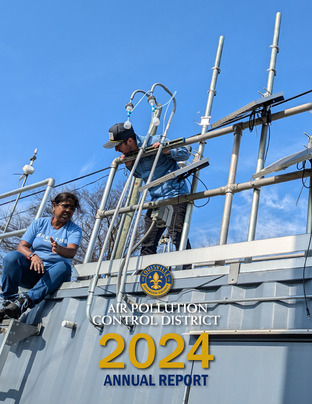
The Louisville Metro Air Pollution Control District (APCD) has released its annual report, which provides an update on local air quality and highlights the work of Louisville’s local air pollution control professionals.
“The work to protect Louisville’s air makes our city healthier, improves our quality of life, supports our economy, and so much more,” said Rachael Hamilton, director of the Louisville Metro Air Pollution Control District. “Our staff continue to find innovative ways to build on our area’s progress and collaborate with a community that is fiercely committed to improving our air quality and our environment.”
The air quality update covers Louisville’s status with national air quality standards, Air Quality Index (AQI) values, local emissions data, odors, and more.
Local emissions of toxic air pollution from industrial sources continue to drop, with an over 85% reduction since the local Strategic Toxic Air Reduction (STAR) program was passed in 2005, and a 97% reduction in emissions of STAR’s highest priority compounds (based on the latest data from US EPA’s Toxics Release Inventory).
Using a newly updated AQI, Louisville saw 169 “Good” air quality days, 183 “Moderate” days, 12 days that were “Unhealthy for Sensitive Groups” (USG), and one Unhealthy day in 2024. This is a reduction in USG days compared to 2023 and more “Good” days than any year in which all current pollutants were measured.
Other highlights from the report:
- APCD and partners began work on the Rubbertown Air Toxics & Health Assessment project, with the project’s air monitoring study set to begin in the spring.
- APCD continued to expand its air monitoring network and support low-cost air sensor research and use, including installation of a sensor at Alberta O. Jones Park that provides real-time air quality data to the community.
- The city saw an over 25% reduction in resident reports of odors compared to 2023 and amended APCD’s Agreed Board Order with Louisville MSD to provide further transparency and structure as their work to address odor issues continues.
- 27 local businesses and organizations signed up as Air Quality Action Partners, making commitments to provide air quality alerts to over 7,000 local employees and take steps to improve local air quality.
|