 Friday, January 31, 2025

You can order a free test
for Radon Awareness Week
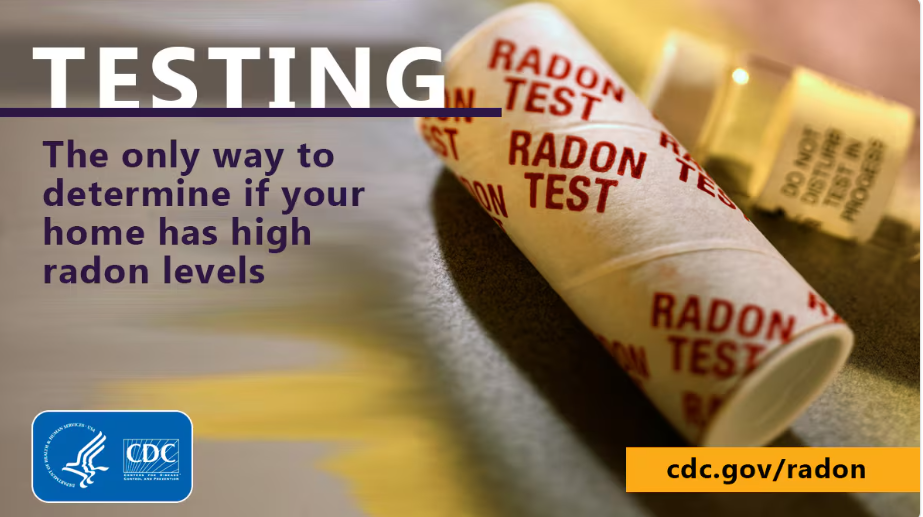 Radon Awareness Week is Jan. 27-31. Radon is the second-leading cause of lung cancer in the United States. According to estimates from the U.S. Environmental Protection Agency (EPA) and the Surgeon General’s office, radon is linked to over 20,000 lung cancer deaths annually.
The challenge with radon exposure is that there are often no immediate symptoms, meaning health issues may take years to manifest. The only reliable method to assess whether you and your family are at risk of radon exposure is to have your home tested. Be sure to order your free radon test kit.
Closed-house conditions
- Make sure all exterior doors and windows are closed 12 hours prior to testing.
- All exterior doors and windows are to remain closed during the entirety of the test.
- Regular entry/exit of your home is permitted
- Learn about ways to test your home
How radon enters your home
Radon is a naturally occurring gas that results from the radioactive decay of uranium. This element can be found in rocks, soil, and, in certain instances, groundwater. Due to its many sources, individuals can be easily exposed to radon. Exposure may occur through inhaling outdoor air, being indoors in buildings and homes, or through ingestion via food and water. It can infiltrate buildings through cracks, exposing occupants to radiation that may cause significant health issues. The Centers for Disease Control (CDC) outlines various pathways through which radon can enter buildings:
- Cracks in solid floors and walls
- Construction joints
- Gaps in suspended floors
- Gaps around service pipes
- Cavities inside walls
- The water supply
For more information, please visit our radon website. You can also watch a WDRB interview about the importance of radon testing in your home.
Take healthy steps to protect
yourself, others from norovirus
 Norovirus is the leading cause of vomiting and diarrhea, and foodborne illness in the United States. Often referred to as the "stomach flu" or "stomach bug," it is important to note that norovirus is not related to influenza, which is caused by the flu virus. Instead, norovirus triggers acute gastroenteritis, resulting in inflammation of the stomach and intestines.
Most individuals affected by norovirus typically recover within one to three days, but they can continue to transmit the virus for several days after their symptoms subside.
Signs and symptoms
A person usually develops symptoms 12 to 48 hours after being exposed to norovirus.
-
Most common symptoms: Diarrhea, vomiting, nausea, stomach pain
-
Other symptoms: Fever, headache, and body aches
How it spreads
Norovirus spreads very easily and quickly in different ways. You can get norovirus by:
-
Having direct contact with someone with norovirus, like caring for them, sharing food or eating utensils with them, or eating food handled by them.
-
Eating food or drinking liquids that are contaminated with norovirus.
-
Touching contaminated objects or surfaces and then putting your unwashed fingers in your mouth.
You can still spread norovirus for two weeks or more after you feel better.
Prevention
Norovirus spreads easily, but there are measures you can take to safeguard yourself and those around you, including:
- Wash your hands well and often.
- Cook shellfish thoroughly and wash fruits and vegetables.
- Clean and disinfect contaminated surfaces.
- Wash laundry in hot water.
- Stay home when sick for 2 days (48 hours) after symptoms stop.
-- Source: The U.S. Centers for Disease and Control
Family Health Centers provide
HIV treatment services and other resources
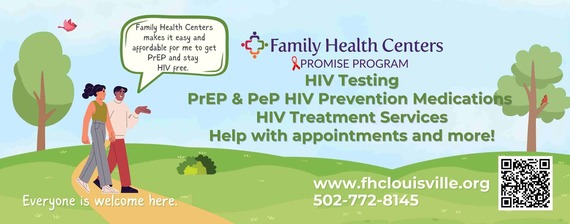 The Family Health Centers - Promise Program provides HIV treatment services, PrEP and PeP prevention medications, and Patient Navigators who will help you stay on track with your care and stay healthy.
The navigators can assist you in connecting with a FHC PrEP provider or HIV care, provide resources to help cover your medication costs and help you obtain health insurance, if necessary.
For more information, please visit the program's webpage or call (502) 772-8145.
Make a difference in public health
 Do you want to enhance the health and wellness of everyone in our city? If so, we'd love for you to join our committed team.
Visit our Metro job opportunities webpage to learn more about this role and various career opportunities in public health. You can also scan the QR code.
For more information, please email LMPHWCareers@louisvilleky.gov.
|