 Friday, September 20, 2024

September is National Infant
Mortality Awareness Month
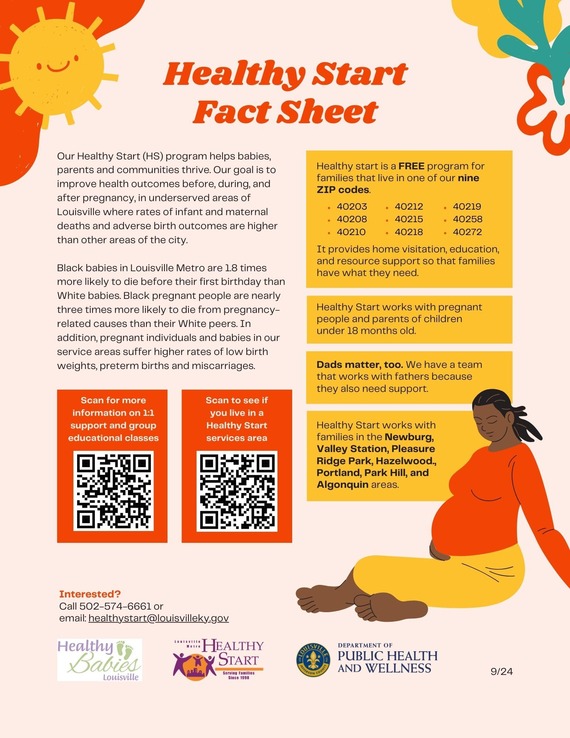 September is National Infant Mortality Awareness Month, and the Louisville Metro Department of Public Health and Wellness' Healthy Start program is continuing to improve health outcomes for parents and reduce infant mortality rates by working with those who are pregnant and families with children 18 months and younger.
Black infants have the highest mortality rate in Jefferson County. Black babies are 1.8 times more likely to die before their first birthday than White babies. Black women are nearly three times more likely to die from pregnancy-related causes than their White peers.
Through virtual and in-person visits, Healthy Start’s staff of community health workers, nurses, and a social worker connect Healthy Start participants to prenatal care, doulas, food assistance, emergency supplies, transportation to care, housing navigation, and other health care services as well as critical social supports. The Healthy Start program also educates families on labor and delivery, breastfeeding, car seat safety, safe sleep practices, parenting style, and much more. Families get consistent education throughout pregnancy and after delivery, until the baby is 18 months.
Healthy Start is available to pregnant women, parents and caregivers who live in Jefferson County ZIP codes 40203, 40208, 40215, 40218, 40219, 40258, and 40272 which include the areas of Newburg, Valley Station, Pleasure Ridge Park, and Hazelwood. The program also provides services to families living in neighborhoods in the ZIP codes of 40210 and 40212 which include the Portland, Park Hill, and Algonquin areas.
To learn more about Healthy Start, please visit our website.
Order your free COVID-19
tests at the end of September
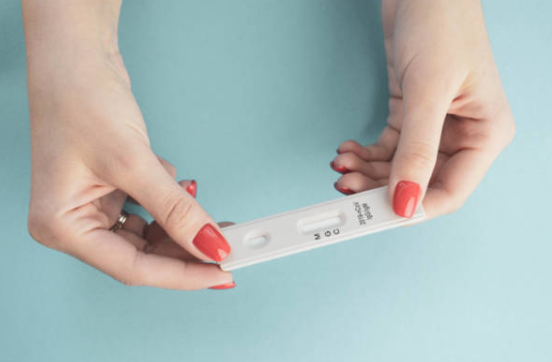
COVID-19 testing can inform you whether you have the virus, enabling you to take appropriate actions such as seeking treatment to minimize the risk of severe illness and taking steps to lower your chances of spreading the virus to others.
The COVIDtests.gov program distributed over 900 million tests directly to American households. The U.S. government continues to make COVID-19 tests available to uninsured individuals and underserved communities through existing outreach programs.
-
If you have an expired COVID-19 test kit, don’t throw it away. Your test kit may have a U.S. Food and Drug Administration approved extended expiration date. Use this link to find out if your home test kits can still be used past the original expiration date.
-
Free COVID-19 home tests at community centers – Our community centers are still active in this program. You can visit Louisville Metro Department of Public Health and Wellness (LMPHW) COVID-19 testing webpage to find the nearest center to pick up free home tests. We also provide flyers in several languages.
You can also contact a HRSA-funded health center or ICATT location near you to learn how to access low- or no-cost COVID-19 tests provided by the federal government.
-
Coming soon: All U.S. households may order up to four (4) additional COVID-10 test kits, at no charge, at www.COVIDTests.gov.
Get vaccinated
The CDC recommends everyone ages 6 months and older receive an updated 2024-2025 COVID-19 vaccine to protect against the potentially serious outcomes of COVID-19 this fall and winter, whether they have ever previously been vaccinated with a COVID-19 vaccine. Data continue to show the importance of vaccination to protect against severe outcomes of COVID-19 and flu, including hospitalization and death. LMPHW provides COVID and flu vaccines. Call 502-574-5380 to schedule an appointment.
To learn more about the current vaccines, visit the CDC's COVID-19 webpage.
Learn more about who we are and what we do
Mosquitoes test positive for West Nile virus
in the Highlands, West Shively
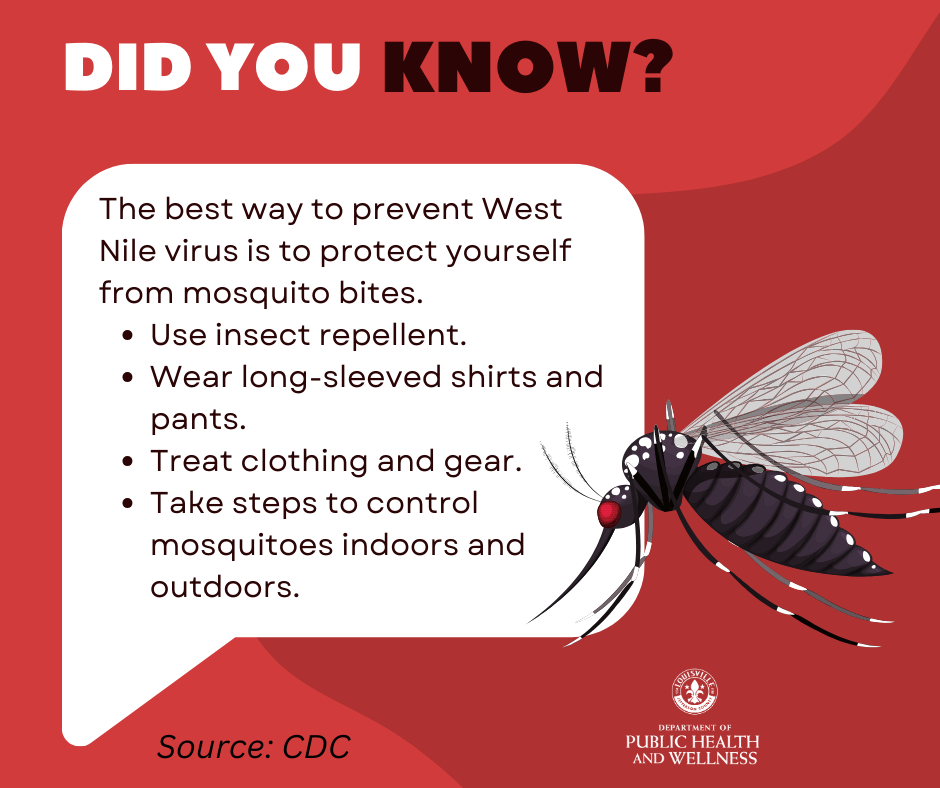 The Louisville Metro Department of Public Health and Wellness (LMPHW) has found mosquitoes infected with West Nile virus in surveillance traps in the neighborhoods of the Highlands and West Shively. To help prevent infection and reduce the mosquito population, mosquito fogging was recently completed in ZIP codes 40204 and 40215.
So far this year, no confirmed human cases of West Nile have been reported in Jefferson County.
In many cases, individuals infected with the West Nile virus experience no symptoms or only mild ones. However, fewer than 1% of those infected may suffer from severe neurological conditions such as encephalitis or meningitis. While these serious illnesses can affect individuals of any age, those over 60 are at the highest risk. Additionally, people with certain health issues—such as cancer, diabetes, hypertension, or kidney disease, as well as organ transplant recipients—are also more susceptible to severe complications.
Avoid mosquito bites
- Use insect repellents when you go outdoors. Repellents containing DEET, picaridin, IR3535 and some oil of lemon eucalyptus and para-menthane-diol products provide longer-lasting protection. To optimize safety and effectiveness, repellents should be used according to the label instructions. More information about insect repellents can be found here.
- When weather permits, wear long sleeves, long pants, and socks when outdoors. Mosquitoes may bite through thin clothing, so spraying clothes with repellent containing permethrin or another EPA-registered repellent will give extra protection. Don't apply repellents containing permethrin directly to skin. Do not spray repellent on the skin under your clothing.
- Take extra care during peak mosquito biting hours of early morning and dusk. Be sure to use repellent and wear protective clothing from dusk to dawn or consider avoiding outdoor activities during these times.
Prevent mosquito breeding grounds.
- Install or repair screens on windows and doors to keep mosquitos outside.
- Help reduce the number of mosquitoes around your home by emptying standing water from flowerpots, gutters, buckets, pool covers, pet water dishes, discarded tires and drain birdbaths on a regular basis.
To check if your area will be fogged visit the department’s website or call the mosquito hotline, 502-574-6641. To make a complaint about mosquitos in your neighborhood call Metro311 by dialing 311 or 502-574-5000.
|