|


Who We Are
At the heart of our community, the Louisville Metro Human Relations Commission Department stands as a beacon of fairness, justice, and inclusivity. We’re committed to ensuring that every member of our community has the right to work, live, and thrive without facing discrimination. Our dedicated team investigates claims of illegal discrimination, striving to protect the rights and dignity of all residents. Our efforts extend to supporting entrepreneurs from diverse backgrounds, providing certification with Metro, and fostering an environment where businesses can flourish regardless of who owns them. Join us in our journey to champion equality, celebrate diversity, and empower our community. Together we can create a brighter, more inclusive future.
Human Relations Commission News

Fair Rights Friday
February 16, 2024
9:00am-12:00pm
South Central Regional Library
7300 Jefferson Blvd, Louisville, KY
An in-person event held at the South Central Library in which the Investigation and Intake Units meet with Louisville residents who want to know their fair employment and fair housing rights. Come meet the HRC team to learn more about your protections under Federal and Local statutes.
|
LGBT Discrimination in the Workplace Event
March 26, 2024
9:30am-11:30am
Louisville Central Community Center
1300 W Muhammad Ali Blvd
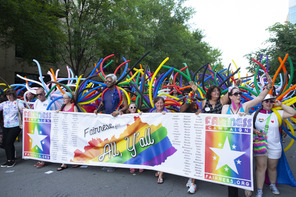
The HRC is collaborating with Queer Kentucky for our Joint Innovation Collaboration event with the EEOC and the KY SBDC in Louisville to provide presentations regarding personal pronoun sensitivity and discrimination in the workplace for the LGBT community. We urge Human Resource managers, business owners, and Diversity, Equity & Inclusion (DEI) staff to attend and participate in this great opportunity to empower and educate the community and their businesses.
|
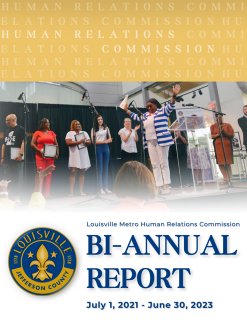
HRC Bi-Annual Report
Our Bi-Annual Report has released with updated information and data from July 1, 2021 - June 30, 2023 that highlight the responsibilities and achievements of the Human Relations Commission in Louisville Metro. We invite you to read our report and get connected with the "Civil Rights Arm" for Louisville Metro Government as we work towards a community built on unity, understanding, and equal opportunity.
Click Here to Access the 2021-2023 Report!
|
|
|
United States Census Bureau Data
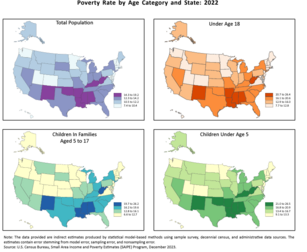
In Kentucky, the poverty rate by age reaches the highest levels in half the categories. The Total Population Poverty Rate reached 14.3 to 19.2 in 2022 with 16.1 to 20.6 under age 18, 19.7 to 26.2 ages 5 to 17, and 21.0 to 26.5 in Children under age 5.
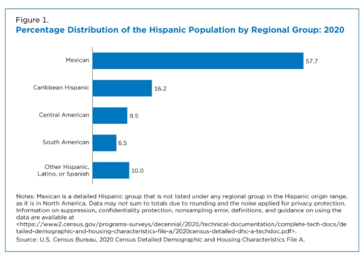
The Hispanic or Latino population reached 62.1 million in the 2020 Census, increasing by over 11.6 million since the 2010 Census. In 2020, the Mexican population reached 35.9 million, 58% of the nation’s overall Hispanic population, down from 63% in 2010. The Mexican population was three times larger than the Caribbean Hispanic population, the largest regional group at 16.2% (Figure 1). The Caribbean Hispanic regional group includes the Cuban, Puerto Rican, Dominican and Other Caribbean Hispanic responses populations.
Martin Luther King, Jr. Day infographics to honor 50th Anniversary
|
|
Business Certification with Louisville Metro Government

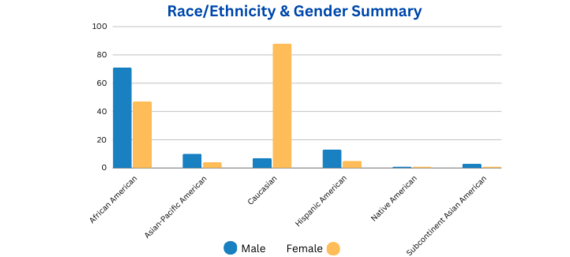
The Human Relations Commission certifies diverse-owned businesses that are at least 51% owned and operated by minorities, women, LGBT+, veterans, and people with disabilities. Certification offers greater public visibility to business owners belonging to socially disadvantaged groups, and inclusion in a public database helps companies registered with Louisville Metro to find diverse contractors to satisfy equity goals in contracting and procurement.
HRC certifies all kinds of businesses, from bakeries and catering services, to graphic design and construction. Learn more about what business certification can do for your business at https://louisvilleky.gov/government/human-relations-commission/contract-compliance-program.
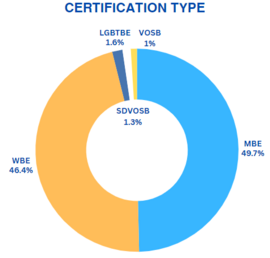
As of January 2024, here is the data on the current vendors certified with Louisville Metro.
|
|
Certified Vendor Spotlight
JJC Maintenance LLC
Patricia Kim is the dynamic force behind JJC Maintenance LLC, a certified vendor with Louisville Metro. JJC is dedicated to delivering top-notch cleaning and janitorial services, emphasizing effective communication and ensuring the cleanest and most efficient working environments for clients. Patricia notes that certification with Louisville Metro has significantly impacted JJC's operations, enhancing credibility and unlocking new contract opportunities. Since certification, JJC has expanded its services, securing numerous contracts and experiencing remarkable revenue growth, surpassing yearly goals, and achieving financial success.
Being part of the certified vendor program has streamlined JJC's application process and fostered networking opportunities. Accreditation with other organizations has opened doors to collaborations, contributing to JJC's success and growth. Notable contracts include professional floor maintenance with Metro Government, janitorial contracts with MSD, TARC, and UofL. JJC's commitment to diversity, equity, and inclusion is evident in inclusive hiring practices, supplier diversity efforts, and community engagement. Patricia envisions JJC not only promoting its own growth but also inspiring and supporting other businesses. Through giving back to the community and mentoring entrepreneurs, JJC aims to contribute to the overall well-being of the community as a certified vendor committed to excellence, diversity, and community impact.
Aspiring vendors, take the next step – join the Louisville Metro certified vendor program and unlock new opportunities for growth and success!
|
|
Community News
Preserving Communities: The HBNO - A Bold Step Against Displacement
Louisville's groundbreaking "Anti-Displacement Fair Housing Ordinance" (HBNO), introduced in August 2023, is a pioneering response to the displacement and gentrification disproportionately affecting Black communities in the metropolitan area. The ordinance mandates a rigorous assessment for development projects in historically Black neighborhoods to prevent the direct or indirect displacement of existing residents. Failure to pass the assessment results in the denial of financial incentives and the prohibition of construction on publicly owned land. It prioritizes current residents and small business owners, supporting city programs like down-payment assistance, home repair, and small business assistance.
Championed by the Louisville Tenants Union and the Historically Black Neighborhood Assembly (HBN), the ordinance has garnered significant community support with 1,500 petition signatures, backing from 50 allied organizations, and co-sponsorship by Metro Council members. The Homeless and Housing Coalition of Kentucky underscores the ordinance's importance in protecting West Louisville residents from structural racism in the housing market. Jessica Bellamy, of the Smoketown Neighborhood Association, emphasizes that the ordinance prevents the city from supporting projects that would increase living costs in historically Black neighborhoods. Learn more here and support the preservation of historically Black neighborhoods in Louisville.
This Quarter in Civil Rights History
 January
 1, 1863 – Emancipation Proclamation
President Abraham Lincoln's Emancipation Proclamation took effect on January 1, 1863. This historic decree declared all slaves in Confederate-held territory to be forever free. While it didn't immediately free all enslaved individuals, it marked a crucial step toward the abolition of slavery and set the stage for profound changes in civil rights.
January 23, 1964 – 24th Amendment Ratified
On this day, the 24th Amendment to the United States Constitution was ratified, prohibiting the use of poll taxes in federal elections. This constitutional amendment addressed a discriminatory practice that had disenfranchised many African American voters, particularly in the Southern states.
February
February 19, 1942 – Executive Order 9066
President Franklin D. Roosevelt signed Executive Order 9066, authorizing the forced relocation and internment of Japanese Americans during World War II. This dark chapter in U.S. history highlights the violation of civil rights in the name of national security and serves as a poignant reminder of the importance of safeguarding individual liberties.
February 1, 1960 – Greensboro Sit-In
Four African American college students initiated a sit-in at a segregated Woolworth's lunch counter in Greensboro, North Carolina. This act of peaceful protest against racial segregation sparked a wave of similar demonstrations across the Southern United States. The Greensboro sit-in is recognized as a catalyst for the direct action phase of the civil rights movement.
March
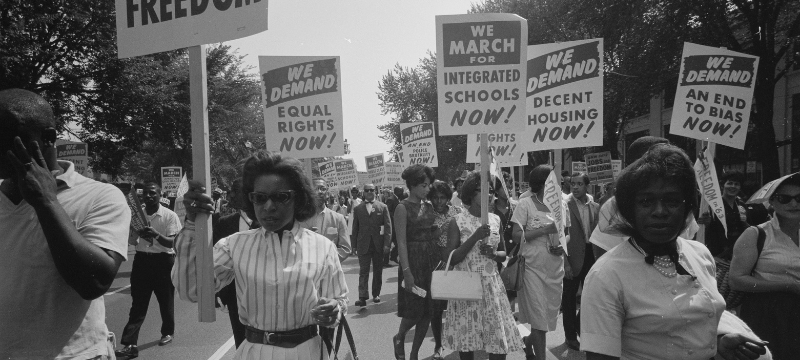
March 5, 1964 – March on Frankfort
Modeled after the 1963 March on Washington, the March on Frankfort put pressure on Kentucky policymakers to support the Kentucky Civil Rights Act bill proposed to the Kentucky General Assembly in 1964. On March 5th, 1964, 10,000 people came to march on Frankfort, the capital of Kentucky, where laws are made. Local Kentuckians planned and organized the march and they were joined by Dr. Martin Luther King Jr
The Kentucky Civil Rights Act was signed into law January 27th, 1966 by Governor Edward T. Breathitt. Martin Luther King Jr. called it the strongest and most comprehensive civil rights bill passed by a Southern State. Kentucky led the South by being the first to pass a significant civil rights law prohibiting discrimination based on race, national origin, color, and religion. The March on Frankfort played a vital role in the passage of this new law.
March 26, 1964 – Brown v. Board of Education
In a landmark decision, the U.S. Supreme Court ruled in Brown v. Board of Education that state laws establishing separate public schools for black and white students were unconstitutional. This groundbreaking decision struck down the "separate but equal" doctrine, challenging institutionalized racial segregation and paving the way for desegregation efforts across the nation.
March 7, 1965 – Bloody Sunday in Selma
On this fateful day, civil rights activists, including John Lewis, led a march from Selma to Montgomery, Alabama, advocating for African American voting rights. The march was met with brutal violence on the Edmund Pettus Bridge, an event that became known as Bloody Sunday. This tragic incident galvanized support for the Voting Rights Act of 1965, a pivotal legislation in securing voting rights for all Americans.
Community Events

2024 Dr. Ralph de Chabert Trustees I.E. Awards
Date: June 19, 2024
Nomination Deadline: February 29, 2024
Time: 5:00pm - 8:00pm
Location: 1300 W. Muhammad Ali Blvd
On June 19, 2024 the Dr. Ralph De Chabert Trustees of Inclusive Equity Awards is being held at the Old Walnut Street Family Strengthening Center to honor six individuals/companies for their advancement of inclusion and equity in our community. To nominate a champion of diversity, equity, and inclusion click here.
|
|
|
|
|
|