|
Please click here to translate this bulletin. |
|
|
January 5, 2024
Louisville Accelerator Post

|
|
This issue focuses on the priority area of Public Health Contingencies, which received $36.5 million in ARP funding. These projects have focused mostly on COVID-19 response and mitigation as well as the current and future mental, physical, and emotional health of the city. This is to better ensure quality care for all citizens of Louisville/Jefferson County. |
|
Project Spotlight: Public Health
The Louisville Accelerator Team, through the American Rescue Plan funding and Louisville Metro Government, has partnered with many agencies across the city to provide public health and wellness services to its citizens. From providing daycares with personal protective equipment during the pandemic to making our homes healthier with Lead Free Louisville, these agencies are working diligently to improve the health and quality of life for Louisvillians.
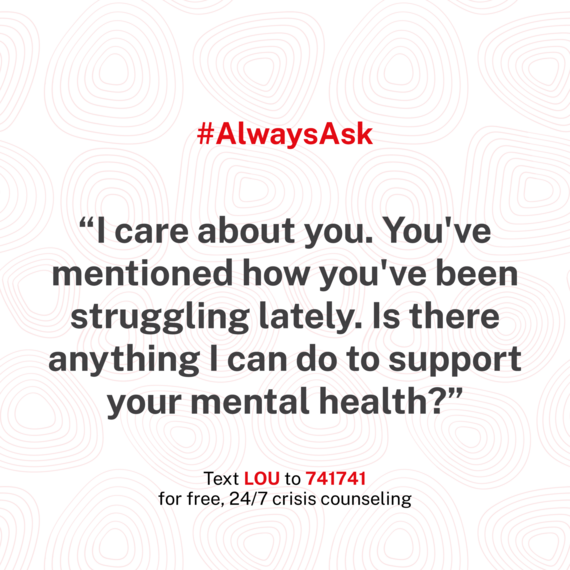 #AlwaysAsk
|
|
|
Residential Services for Substance Abuse and Addiction
The COVID-19 pandemic contributed to many root causes of addiction, including unemployment, stress, anxiety, and social isolation, combined with a reduction in access to behavioral health services. A decline in travel and international trade contributed to an increasingly deadly local drug supply tainted by fentanyl. Louisville Metro Public Health and Wellness (LMPHW) has been at the forefront of Louisville Metro Government’s response to the substance use epidemic and proposes to fund additional overdose prevention, expanded treatment support, residential treatment services, and recovery housing.
These projects provide support to organizations that serve people experiencing barriers to service. The overdose prevention efforts allow community partners to distribute lifesaving tools directly to residents, while the supportive services hub provides organizations a shared space to serve high-risk populations.
The supportive services hub provided harm reduction resources including NARCAN, safe injection supplies, drug counseling, wound care, HIV and hepatitis C testing, and referrals to treatment for behavioral and physical health needs.
The recovery housing provided housing to people in early recovery who were experiencing, or at risk of homelessness. These services increased access to residential treatment for substance use disorder for underserved populations, including residents who were incarcerated, underinsured, and/or experiencing homelessness.
LMPHW has partnered with local nonprofit organizations with expertise in harm reduction, homeless services, and substance use disorder treatment. Social Practice Lab was contracted to operate the supportive services hub. Its expertise is in harm reduction and collaborative approaches to addressing complex health issues. The supportive services hub was funded through October 2023.
|
|
|
Mental Health Wellness Programs within the Immigrant Communities
The Office for Immigrant Affairs serves as a liaison between the community partners and the Louisville Metro Department of Public Health and Wellness (LMPHW) to assist in implementing the projects in order to develop awareness of mental health resources and provide mental wellness support.
The grassroots efforts of Immigrant and Refugee serving organizations coordinated
through the office of Immigrant Affairs have yielded a promising foundation for mental
health and wellness promotion in the community. In the aftermath of the Covid-19
Pandemic, and the midst of unprecedented and shocking episodes of community
violence, Americana World Community Center, Somali Community of Louisville, and See
Forward Ministries, have focused their efforts on key areas of mental health support to
combat these challenges. Community outreach focusing on targeting mental health
de-stigmatization, facilitating language access in mental healthcare, and a coordinated
referral process, have reached over 450 people in person, and over 750 individuals since the beginning of the program.
The community partners assisting with the program are:
• Americana Community Center: They are a long-standing nonprofit organization serving immigrant and refugee communities of Louisville that provides a wide range of activities aimed at providing support beyond initial refugee resettlement.
• See Forward Ministries: They are a community outreach program geared toward several African communities via digital media and some face to face interactions.
• Somali Community of Louisville: A direct community outreach program geared toward Somali families with primarily face to face interactions.
This is helping to mitigate trauma from the social and economic unrest resulting from the COVID-19 Pandemic.
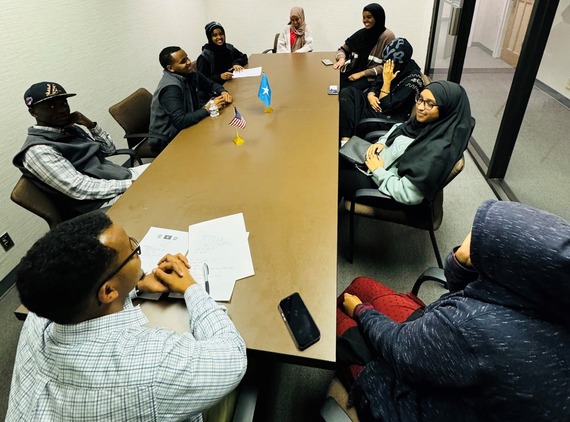 Mental health wellness meeting at Somali Community of Louisville
|
|
|
COVID-19 Response: Substance Abuse Services
Louisville Metro Public Health and Wellness (LMPHW) has partnered with the Kentucky Harm Reduction Coalition to provide Naloxone (NARCAN) to organizations and individuals working to provide overdose prevention outreach. The Coalition’s expertise is in engaging, educating, and empowering those in the substance use disorder community. In addition, Louisville Recovery Community Connection (LRCC) also supported the distribution of Naloxone.
LRCC serves people who use drugs and people in recovery for the past three years. Outreach and Naloxone distribution was targeted to the zip codes that have experienced the most overdoses and overdose fatalities. These neighborhoods are disproportionately home to residents of color, residents with low incomes, and residents with limited access to services. The target zip codes were 40202, 40203, 40204, 40207, 40208, 40210, 40211, 40212, 40213, 40214, 40215, 40216, 40217, 40218, 40219, 40258 and 40272.
Demographic data for zip codes is available here: https://data.census.gov/cedsci/advanced. Outreach and education are targeted to an audience ranging from people who use drugs, family members of people who use drugs, local businesses, and concerned neighbors. Training was done in person in the community. Each training at minimum, included information on how to identify and respond to an overdose, including how to administer Naloxone. Other content included how to reduce the risk of overdose while using drugs, what harm reduction resources are available in the community, and what types of treatment and other services are available.
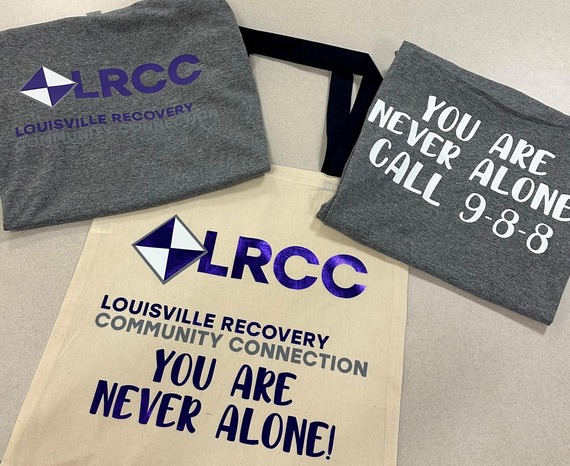 Louisville Recovery Community Connection (LRCC) Mental Health Awareness Supplies
|
|
Project Spotlight: Suicide Prevention |
|
 |
|
Since the start of the COVID-19 pandemic the state of Kentucky has seen an increase in concerns related to mental health, such as anxiety, depression, and suicide. The Suicide Prevention Project supports the development and implementation of (1) a local suicide fatality review board; (2) a comprehensive community suicide prevention plan; (3) a suicide prevention communications campaign; and (4) an online mental health resource database.
|
The Suicide Prevention Project supports the development and implementation of (1) a local suicide fatality review board; (2) a comprehensive community suicide prevention plan; (3) a suicide prevention communications campaign; and (4) an online mental health resource database.
This project will use a community-oriented approach that will begin with a comprehensive needs assessment to evaluate Louisville’s current suicide prevention infrastructure, including available programs and services, messaging, and community capacity. The needs assessment will involve stakeholders from high-risk groups and behavioral health providers.
|
|
|
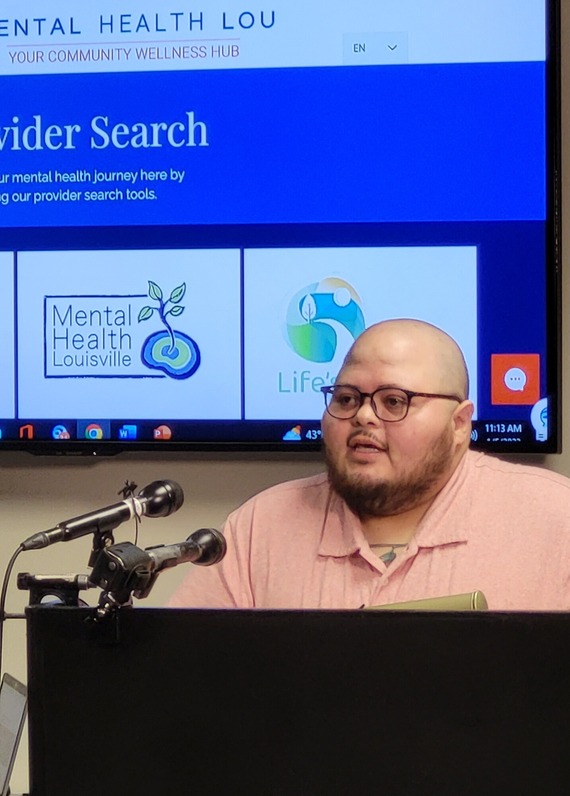 Mental Health Lou (www.mentalhealthlou.com) Press Conference
|
|
|
As this assessment is being conducted, the project will launch a suicide fatality review board that will investigate and collect data on every local death by suicide, to inform efforts and strategies. The project will then develop a community communications campaign to promote specific actions for suicide prevention. This will be integrated into the citywide comprehensive plan, along with other insights gained from stakeholder engagement and
fatality review analysis.
This effort aims to change local narratives around suicide and suicide prevention to ones that promote, hope, connectedness, social support, resilience, treatment, and recovery. The intended outcome of the project is to decrease the number of deaths by suicide, suicide attempts, and hospitalizations related to self-harm, by five percent within 5 years. The project specifics are being developed and will be implemented through 2024.
|
|
|
You can learn more about suicide prevention and Mental Health Lou, by visiting:
|
|
|
If you or someone you know is struggling with suicidal thoughts, you can
reach the 988 Suicide and Crisis Lifeline by phone at 988, or online at:
|
|
Contact the Louisville Accelerator Team:
745 W. Main Street
Louisville, KY 40202
(502) 574-5280
Hours: 8 a.m. to 5 p.m.
|

|
|
|
|
|
|