Medicaid Coverage Changes
With the end of the federal Public Health Emergency on May 11, 2023, flexibilities have ended, and all states are resuming their regular processes for renewing individuals’ Medicaid coverage. Based on data from 28 states and the District of Columbia, Kaiser Family Foundation reports that more than 1.6 million people have been disenrolled from Medicaid as of July 5, 2023. Many of these people may still be eligible for Medicaid but lost coverage because they didn’t return forms (or either they or the state made other mistakes). It is crucial to make sure everyone covered by Medicaid knows:
- Over the next 12 months, everyone with health care coverage through Medicaid or the Children’s Health Insurance Program (CHIP) will need to renew their coverage.
- What they need to do to avoid losing coverage if they are still eligible.
- Other options for coverage if they are no longer eligible for Medicaid or CHIP (such as the Affordable Care Act (ACA) Marketplace or employer-sponsored coverage), and how to find help navigating them.
Every Medicaid beneficiary needs to receive these important messages:
-
UPDATE your contact information with your state Medicaid agency NOW.
-
RESPOND to the Medicaid renewal form when it comes in the mail. If you don't, you may lose your coverage even if you are still eligible.
-
PARENTS should respond even if you are not eligible or are enrolled in other coverage. Your children could still be eligible for coverage.
-
CONNECT WITH RESOURCES THAT CAN HELP: If you lose Medicaid coverage and think you may still be eligible, there are programs that may be able to help you appeal the denial of Medicaid coverage or find other insurance. State protection and advocacy systems and legal advocacy organizations funded under the Older Americans Act may be able to help with appeals. Disabled people of all ages can also contact the Disability Information and Access Line (DIAL) for assistance, and older adults can contact the Eldercare Locator to find local assistance.
-
CHECK OTHER OPTIONS: If you are no longer eligible for Medicaid, you should check to see if you can get coverage through your employer or through the Affordable Care Act Marketplace at healthcare.gov. Older adults and people with disabilities who are eligible for Medicare can also find assistance through their State Health Insurance Assistance Program (SHIP). SHIP is a national program that offers one-on-one assistance, counseling, and education to Medicare beneficiaries of all ages, their families, and caregivers to help them make informed decisions about their care and benefits.
 |
Intergenerational Trauma Among Elders
How Common is Trauma Exposure Among Older Adults? The Nurses’ Health Study II found that more than 80% of women ages 53–74 experienced at least one traumatic event in their lifetime. And 10.5% of those women met the criteria for lifetime PTSD.
Other studies have found that among older adults the prevalence of trauma exposure was greater among men, perhaps as a result of more men experiencing active military service in the armed forces.
What Is Intergenerational Trauma? Intergenerational trauma refers to the transmission of trauma experiences and their psychological and physical effects across generations. When individuals experience traumatic events such as war, genocide, natural disasters or systemic oppression, the impact can extend beyond their own lifetimes and affect their descendants in long-lasting and sometimes unexpected ways.
Cumulative Effects of Trauma (Direct and Intergenerational) Cumulative exposure to traumatic events contributes to higher levels of post-traumatic stress in older adults. These exposures can include exposure to violence in childhood or adulthood, other forms of trauma and intergenerational trauma.
Substantial research has demonstrated a dose-response relationship between exposure to traumatic events and the development of PTSD symptoms. A dose-response relationship for PTSD describes a relationship between exposures and post-traumatic stress disorder symptoms. “Dose” can be measured in the number of traumatizing experiences, the duration of traumatic events and the intensity of the experiences.
This dose-response relationship holds for older adults as well as for younger cohorts. The effects of intergenerational trauma should be considered when evaluating the possible impact of trauma on the mental health of older adults.
The lifetime effect of trauma, including the intergenerational transmission of trauma, traumatic events in childhood and traumatic experiences during adulthood can combine and manifest as the symptoms of PTSD.
Can the Effects of Trauma Appear Late in Life? In general, it does not seem that an individual would be completely asymptomatic and then suddenly manifest symptoms as an older adult related to intergenerational trauma or traumatic events that occurred in the distant past.
A more likely scenario is that people are often able to successfully practice avoidance as they are building a career or raising a family. It does not mean that the symptoms totally disappeared, but the individual may have been successful in avoiding significant stress. At retirement, however, the individual has more time to ruminate and fewer distractions to keep difficult memories at bay. Symptoms that just weren’t expressed before retirement can come to the fore after retirement.
Psychological stresses at an older age can contribute to bringing symptoms to the surface. The death of a spouse, grief over the loss of meaning that can accompany retirement, shrinkage of friend and family networks, physical limitations and other stressors can make it more difficult to manage symptoms that may have been on a low flame during an earlier period of life.
PTSD, Dementia, and Delayed-onset PTSD PTSD appears to be a significant risk factor for developing dementia, and advanced age is associated with delayed-onset PTSD. Some research suggests that older adult combat veterans may be particularly vulnerable to delayed-onset PTSD. It is likely that the processes are intertwined. PTSD increases the risk for dementia, and dementia, in turn, increases the risk for delayed-onset PTSD.
The symptoms of dementia can overlap with post-traumatic stress symptoms. Hyperarousal, anger, and other symptoms can result from PTSD or dementia. For older adults, especially older adults with cognitive impairments, it can be easy to assume (mistakenly, in cases where PTSD is a factor) that the symptoms are purely dementia-related.
Shouldn’t Age Diminish the Effect of Intergenerational Transmission of Trauma and Other Traumatic Events? It would be a mistake to assume that a disorder that erases memories and reduces capacity for self-reflection will also diminish the power of traumatic memories. The triggers associated with PTSD are largely unconscious. When the brain responds to a trigger, it responds as if the traumatic event is taking place in the present.
An older person in a memory care facility may respond to food as though famine was present in their lives today (even though it may be an intergenerational transmission of the memory of famine) or to being gently restrained as though they are being assaulted in the present (even though they are reacting to a memory of a parent or grandparent being imprisoned or deported). Social and cognitive impairments can make it more difficult for the older person to manage those intense feelings.
Recommendations for Professionals Treat Elders Standard practice should include assessment for trauma history, including intergenerational trauma, and PTSD symptoms. Psychotherapies for late-life PTSD seem to be efficacious with cognitively intact older adults (although there is a dearth of randomized control studies).
Staff working directly with patients should be made aware that symptoms of depression (mood changes, diminution of cognition, loss of interest in activities, blaming others, detachment) may be the result of unresolved trauma.
Staff should work to cultivate a safe, supportive environment where patients can open up about traumatic experiences, or the traumatic experiences of their parents. By helping patients talk about trauma, professionals can better identify and address PTSD when it is present. Identification of PTSD in older adults is a key step to providing effective treatment for PTSD.
Dr. Fabiana Franco, PhD, DAAETS, FAAETS, is a clinical psychologist in New York City and former clinical professor of Psychology at The George Washington University. She is a founding member and president of the Trauma Special Interest Group of the New York State Psychological Association and co-chair of the Intergenerational Transmission of Trauma and Resilience Group at the International Society for Traumatic Stress Studies. Dr. Franco holds a Level II Certification in Complex Trauma from the International Association of Trauma Professionals and Fellowship and Diplomate Credentials with the American Academy of Experts in Traumatic Stress and the National Center for Crisis Management.
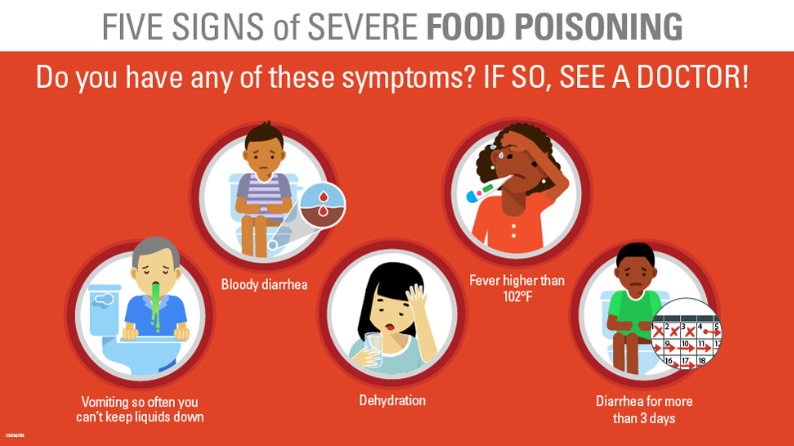 When dining out, choose an eatery that keeps food safety as its main dish. Feast your eyes on these tips to protect yourself from food poisoning while eating out.
-
Check inspection scores. Check a restaurant’s score at our health department’s website, or look for it when you get to the restaurant.
-
Look for certificates that show kitchen managers have completed food safety training. Proper food safety training can help improve practices that reduce the chance of spreading foodborne germs and illnesses.
-
Look for safe food-handling practices. Sick food workers can spread their illness to customers. If you can see food being prepared, check to make sure workers are using gloves or utensils to handle foods that will not be cooked further, such as deli meats and salad greens.
-
Order food that’s properly cooked. Certain foods need to be cooked to a safe internal temperature. This includes meat; seafood; chicken, turkey, or other poultry; and eggs. If a restaurant serves you undercooked meat, poultry, seafood, or eggs, send it back to be cooked until it is safe to eat.
-
Avoid lukewarm food. Cold food should be served cold, and hot food should be served hot. If you’re selecting food from a buffet or salad bar, make sure the hot food is steaming and the cold food is chilled. Germs that cause food poisoning grow quickly when food is in the danger zone, between 40°F and 140°F.
-
Refrigerate your leftovers quickly. Refrigerate leftovers within two hours of when the food was prepared (or an hour if the food is exposed to temperatures above 90°F, like a hot car or picnic). Eat leftovers within three to four days. Throw them out after that time.
If you think you have food poisoning, file an online foodborne illness report or call us at 502-574-6650.
 Hepatitis A is a viral liver disease, usually spread from person-to-person through the fecal-oral route or by consuming contaminated food or water. Hep A is highly contagious and hard to contain once an outbreak starts. Fortunately, two preventative measures can protect against the virus.
Symptoms of hepatitis A can include fever, fatigue, abdominal pain, dark urine, light-colored stools, joint pain, and jaundice, or yellowing of the skin and eyes. Children under the age of 6 usually show no symptoms, which makes childcare environments prime locations for the virus to spread. For adults, symptoms can range from mild illness that lasts a few weeks to severe illness that can last for months. However, there are things you can do to help protect against the virus.
The first is vaccination. The CDC recommends children receive their first vaccine at 12 months and a second dose at 23 months for lasting protection. For adults who have never been vaccinated, the CDC recommends a combination of hepatitis A and B vaccines in a three-dose series.
The second thing you can do to prevent hepatitis A is practice good hand hygiene. Thoroughly wash your hands with soap and warm water after using the bathroom and before handling food.
Adult and child hepatitis A vaccines are available at our clinics. Check with your insurance provider for details on how they cover vaccines or visit our Immunizations website to see if you or your child are eligible for a free vaccine. Appointments can be scheduled by calling 502-574-5380.
August Activity Calendar
Here are some virtual highlights for August:
-
Health Condition Programs – Arthritis
Humana Neighborhood Center is located at 1918 Hikes Ln, Suite 101.
To view the full August calendar click HERE
Now Hiring
Age-Friendly Louisville (AFL) and the Trager Institute is seeking an energetic, community-minded individual to 15 hours a week to assist in volunteer engagement, advocacy, and implementation of our newest strategic initiatives with our community partners.
Responsibilities may include:
- Assist AFL leadership to implement the new strategic plan.
- Assist with monthly leadership meetings and a few community building events.
- Recruit volunteers and update the volunteer database
- Develop agenda and create calendar invites with agenda, minutes and zoom invites for leadership meetings and focus meetings.
- Increase awareness of AFL via media/social media.
- Other duties as assigned.
For more information or to apply, click HERE
Planet Fitness Summer Passes for Teens
Until August 31st, teens aged 14 to 19 can work out for FREE all summer long! The Planet Fitness franchise is also holding a contest that could lead to grants for several area high schools and individual scholarships. For more information Click Here

PROCESS TECHNICIAN TRAINEE
REVENUE & COLLECTIONS MANAGER
ASSISTANT DIRECTOR- FACILITIES
FACILITIES SUPPORT SPECIALIST
AUTOMATION CONTROLS SUPERVISOR 23-131
AUTOMATION CONTROLS SUPERVISOR 23-132
____________________________________________________________________________________
HTTP://WWW.LOUISVILLEMSD.ORG/Careers




 In only a few weeks, Jefferson County Public Schools (JCPS) students begin a new school year. When your children are up to date on their vaccines, they’re protected against infectious diseases like whooping cough, chicken pox, measles, hepatitis A and B, flu and other viruses that can quickly spread.
|
Every JCPS student is required by the state of Kentucky to have a current immunizations certificate on file within two weeks after starting school. If your child isn’t up to date on vaccines, we can help.
The Louisville Metro Department of Public Health and Wellness provides vaccines for individuals aged 2-months or older, including adults. We also provide vaccines to people without insurance or a medical home, as well as for children whose insurance or doctor does not cover vaccines. We also accept most insurance plans. There is a $10 administration fee for each vaccine, but no one will be turned away if they are unable to pay.
Vaccines are given by appointment at our Newburg and Dixie clinics. Our Newburg clinic will remain open until 7 p.m. every Tuesday for the next four weeks.
If you have questions about health requirements for JCPS students, call 502-485-3387. To make a vaccine appointment at one of our clinics, call 502-574-5380. Language assistance is available.
Visit our website for more information on vaccines.
|
 |
 |
|
|
Tri Louisville is Kentucky's largest Sprint and Olympic triathlon! Tri Louisville is set in a beautiful venue, giving participants the ability to see downtown from an unparalleled perspective.
Conquer the Ohio River and transition to a fully closed bike route through the Skyline. Throw the running shoes on and race through Waterfront Park! Tri Louisville consists of Sprint, Olympic, Aquabike, Duathlon, and Relay divisions. This is a must do signature regional event!
Sign up to participate here.
1301 River Rd., Louisville KY 40202
|
|

With so many great upcoming events this year, you don't want to miss out! Don't worry, we'll give lots more info as we get closer to the date. For now, mark your calendar and get ready for your favorite events!
FridayFest at Highview - August 4th, at Highview Park
Seven Sense Festival - August 4th & 5th, at Headliner's Music Hall
Fox Fest 2023 - August 5th, at The Fox Den: Billiards, Bites, & Brews
The Tyler Gerth Memorial 5K - August 5th, Big Four Lawn
Molly Malone's Highlands Celebrating 25 Years - August 11th to 13th, Molly Malone's Highlands
The Big Stomp - August 18th & 19th, at 8401 Dawson Hill Rd.
Brew at the Zoo with Wine and Food Too! - August 25th, at the Louisville Zoo
WorldFest - August 31st through September 4th, at the Belvedere
Hike, Bike & Paddle - September 4th, at the Waterfront Park Great Lawn
 UPCOMING HOME GAMES
Louisville City FC - Saturday, July 29th, 8 p.m. versus Indy Eleven at Lynn Family Stadium
Racing Louisville FC - Saturday, August 19th, 7:30 p.m. versus Angel City FC at Lynn Family Stadium
Louisville Bats - Versus Omaha Storm Chasers at Louisville Slugger Field:
- Tuesday, August 1st, 6:35 p.m.
- Wednesday, August 2nd, 6:35 p.m.
- Thursday, August 3rd, 6:35 p.m.
- Friday, August 4th, 7:15 p.m.
- Saturday, August 5th, 7:15 p.m.
- Sunday, August 6th, 1:05 p.m.
 |
|
Various nights now through September
|
Visit beautiful Colonial Gardens this summer during the Summer in the Gardens series!
This week features music by Pat Younger & The Palo Verde on the Patio on July 28th from 6 to 9p.m. Then enjoy KRM Live at Colonial Gardens on July 29th from 7 to 8:30 p.m. There are several more to enjoy on the patio the rest of the summer as well as great bands and performers all summer long at Iroquois Amphitheater!
To view the full list of performances at Summer in the Gardens, click here.
818 W. Kenwood Dr., Louisville, KY 40214
|
|

-
Bardstown Road Market: Every Saturday from 9 a.m. to 12 p.m. Located at 1722 Bardstown Rd.
-
Beechmont Open Air Market: Every Saturday until the end of September from 8 a.m. to 12 p.m. Located at the corner of Southern Pkwy and Wellington Ave.
-
Beulah Farmer's Market: Every Saturday from 9 a.m. to 1 p.m. Located at 6704 Bardstown Rd.
-
Douglass Loop Market: Every Saturday until December 16th from 10 a.m. to 2 p.m. Located at 2005 Douglass Blvd.
-
East End Farmers Market: Every Tuesday from 4:30 to 7 p.m., and every Saturday from 2:30 to 5 p.m. Located at 13060 Factory Ln.
-
Eastwood Village Council Farmers Market: Every Saturday from 8 a.m. to 12 p.m. Located at the Beckley Creek Park North Paddling Access Lot.
-
Gray Street Market: Every Thursday until the end of October from 10:30 a.m. to 1 p.m. Located at 502 E. Gray St.
-
Jeffersonville Farmers Market: Every Saturday from 9 a.m. to 12 p.m. Located at The Big Four Station.
-
Jeffersontown Farmers Market: Ever Saturday from 8 a.m. to 12:30 p.m. Located at 10434 Watterson Trail.
-
Norton Commons Farmers Market: Every Sunday until November 12th from 12 to 4 p.m. Located at 6301 Moonseed St.
-
Phoenix Hill Nulu Farmers Market: Every Tuesday from 3 to 6 p.m. Located at 1007 E. Jefferson St.
-
The Riverside Farmers Market: Every Sunday from 10 a.m. to 1 p.m. Located at 7410 Moorman Rd.
-
St. Matthews Farmers Market: Every Saturday through September from 8 a.m. to 12 p.m. Located at 4100 Shelbyville Rd.
-
Westport Road Baptist Market: Every Saturday through October from 9 a.m. to 1 p.m. Located at 9705 Westport Rd.
 What better way to explore AroundLou than on the streets? With warm weather and sunshine lighting your path, check out these fun, local walking tours and take a chance on discovering something new!
Louisville Ghost Walk - Tours depart every Friday night at 6:45 p.m. beginning the second weekend in May and continuing until the first weekend in November.
Louisville Food and History Walking Tour of NuLu - Every Friday and Saturday at 1 p.m.
Whiskey Row Walking Tour - Tours are available Thursday through Saturday at 11 a.m. sharp and on Sundays at 1 p.m.
|