August OADC Newsletter

Having trouble viewing this email? View it as a Web page.

ISSUE NUMBER 74 • August 2023 

Office for Aging and Disabled Citizens: A Division of Resilience and Community Services

Translate to other languages

translation-graphic

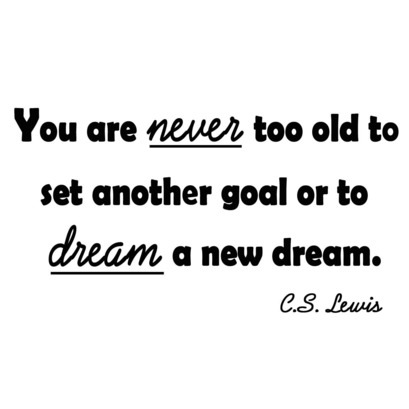
august quote

CMS

Medicaid Coverage Changes 

With the end of the federal Public Health Emergency on May 11, 2023, flexibilities have ended, and all states are resuming their regular processes for renewing individuals’ Medicaid coverage. Based on data from 28 states and the District of Columbia, Kaiser Family Foundation reports that more than 1.6 million people have been disenrolled from Medicaid as of July 5, 2023. Many of these people may still be eligible for Medicaid but lost coverage because they didn’t return forms (or either they or the state made other mistakes). It is crucial to make sure everyone covered by Medicaid knows:

  • Over the next 12 months, everyone with health care coverage through Medicaid or the Children’s Health Insurance Program (CHIP) will need to renew their coverage. 
  • What they need to do to avoid losing coverage if they are still eligible.
  • Other options for coverage if they are no longer eligible for Medicaid or CHIP (such as the Affordable Care Act (ACA) Marketplace or employer-sponsored coverage), and how to find help navigating them.

 Every Medicaid beneficiary needs to receive these important messages:

  • UPDATE your contact information with your state Medicaid agency NOW.
  • RESPOND to the Medicaid renewal form when it comes in the mail. If you don't, you may lose your coverage even if you are still eligible.
  • PARENTS should respond even if you are not eligible or are enrolled in other coverage. Your children could still be eligible for coverage.
  • CONNECT WITH RESOURCES THAT CAN HELP: If you lose Medicaid coverage and think you may still be eligible, there are programs that may be able to help you appeal the denial of Medicaid coverage or find other insurance. State protection and advocacy systems and legal advocacy organizations funded under the Older Americans Act may be able to help with appeals. Disabled people of all ages can also contact the Disability Information and Access Line (DIAL) for assistance, and older adults can contact the Eldercare Locator to find local assistance.
  • CHECK OTHER OPTIONS: If you are no longer eligible for Medicaid, you should check to see if you can get coverage through your employer or through the Affordable Care Act Marketplace at healthcare.gov. Older adults and people with disabilities who are eligible for Medicare can also find assistance through their State Health Insurance Assistance Program (SHIP). SHIP is a national program that offers one-on-one assistance, counseling, and education to Medicare beneficiaries of all ages, their families, and caregivers to help them make informed decisions about their care and benefits.

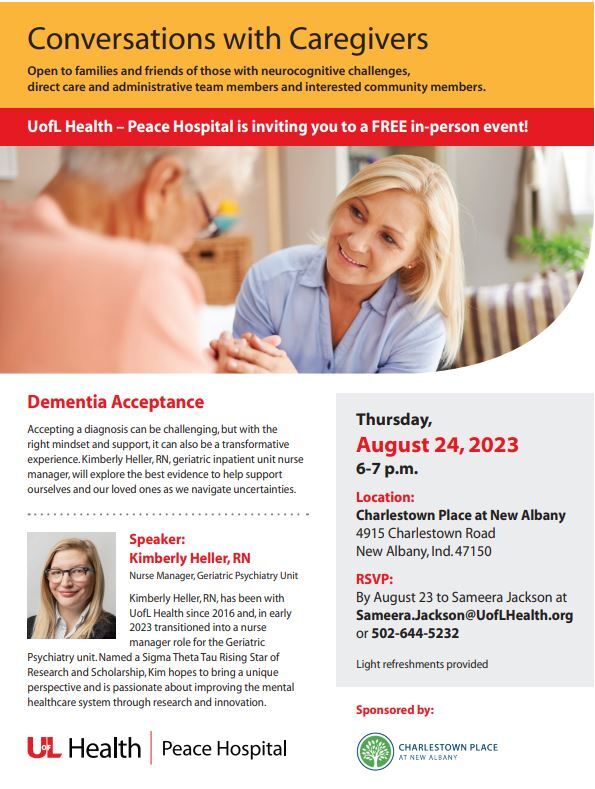
Conversations with Caregivers 

Conversations with Caregivers

Thursday, August 4th 
6:00-7:00pm EST

Charlestown Place 
4915 Charlestown Road
New Albany, In 47150

For more information contact Sameera at 502.644.5232 or HERE 


ASOA

Intergenerational Trauma Among Elders

How Common is Trauma Exposure Among Older Adults?
The Nurses’ Health Study II found that more than 80% of women ages 53–74 experienced at least one traumatic event in their lifetime. And 10.5% of those women met the criteria for lifetime PTSD.

Other studies have found that among older adults the prevalence of trauma exposure was greater among men, perhaps as a result of more men experiencing active military service in the armed forces.

What Is Intergenerational Trauma?
Intergenerational trauma refers to the transmission of trauma experiences and their psychological and physical effects across generations. When individuals experience traumatic events such as war, genocide, natural disasters or systemic oppression, the impact can extend beyond their own lifetimes and affect their descendants in long-lasting and sometimes unexpected ways.

Cumulative Effects of Trauma (Direct and Intergenerational)
Cumulative exposure to traumatic events contributes to higher levels of post-traumatic stress in older adults. These exposures can include exposure to violence in childhood or adulthood, other forms of trauma and intergenerational trauma.

Substantial research has demonstrated a dose-response relationship between exposure to traumatic events and the development of PTSD symptoms. A dose-response relationship for PTSD describes a relationship between exposures and post-traumatic stress disorder symptoms. “Dose” can be measured in the number of traumatizing experiences, the duration of traumatic events and the intensity of the experiences.

This dose-response relationship holds for older adults as well as for younger cohorts. The effects of intergenerational trauma should be considered when evaluating the possible impact of trauma on the mental health of older adults.

The lifetime effect of trauma, including the intergenerational transmission of trauma, traumatic events in childhood and traumatic experiences during adulthood can combine and manifest as the symptoms of PTSD.

Can the Effects of Trauma Appear Late in Life?
In general, it does not seem that an individual would be completely asymptomatic and then suddenly manifest symptoms as an older adult related to intergenerational trauma or traumatic events that occurred in the distant past.

A more likely scenario is that people are often able to successfully practice avoidance as they are building a career or raising a family. It does not mean that the symptoms totally disappeared, but the individual may have been successful in avoiding significant stress. At retirement, however, the individual has more time to ruminate and fewer distractions to keep difficult memories at bay. Symptoms that just weren’t expressed before retirement can come to the fore after retirement.

Psychological stresses at an older age can contribute to bringing symptoms to the surface. The death of a spouse, grief over the loss of meaning that can accompany retirement, shrinkage of friend and family networks, physical limitations and other stressors can make it more difficult to manage symptoms that may have been on a low flame during an earlier period of life.

PTSD, Dementia, and Delayed-onset PTSD
PTSD appears to be a significant risk factor for developing dementia, and advanced age is associated with delayed-onset PTSD. Some research suggests that older adult combat veterans may be particularly vulnerable to delayed-onset PTSD. It is likely that the processes are intertwined. PTSD increases the risk for dementia, and dementia, in turn, increases the risk for delayed-onset PTSD.

The symptoms of dementia can overlap with post-traumatic stress symptoms. Hyperarousal, anger, and other symptoms can result from PTSD or dementia. For older adults, especially older adults with cognitive impairments, it can be easy to assume (mistakenly, in cases where PTSD is a factor) that the symptoms are purely dementia-related.

Shouldn’t Age Diminish the Effect of Intergenerational Transmission of Trauma and Other Traumatic Events?
It would be a mistake to assume that a disorder that erases memories and reduces capacity for self-reflection will also diminish the power of traumatic memories. The triggers associated with PTSD are largely unconscious. When the brain responds to a trigger, it responds as if the traumatic event is taking place in the present.

An older person in a memory care facility may respond to food as though famine was present in their lives today (even though it may be an intergenerational transmission of the memory of famine) or to being gently restrained as though they are being assaulted in the present (even though they are reacting to a memory of a parent or grandparent being imprisoned or deported). Social and cognitive impairments can make it more difficult for the older person to manage those intense feelings.

Recommendations for Professionals Treat Elders
Standard practice should include assessment for trauma history, including intergenerational trauma, and PTSD symptoms. Psychotherapies for late-life PTSD seem to be efficacious with cognitively intact older adults (although there is a dearth of randomized control studies).

Staff working directly with patients should be made aware that symptoms of depression (mood changes, diminution of cognition, loss of interest in activities, blaming others, detachment) may be the result of unresolved trauma.

Staff should work to cultivate a safe, supportive environment where patients can open up about traumatic experiences, or the traumatic experiences of their parents. By helping patients talk about trauma, professionals can better identify and address PTSD when it is present. Identification of PTSD in older adults is a key step to providing effective treatment for PTSD.

Dr. Fabiana Franco, PhD, DAAETS, FAAETS, is a clinical psychologist in New York City and former clinical professor of Psychology at The George Washington University. She is a founding member and president of the Trauma Special Interest Group of the New York State Psychological Association and co-chair of the Intergenerational Transmission of Trauma and Resilience Group at the International Society for Traumatic Stress Studies. Dr. Franco holds a Level II Certification in Complex Trauma from the International Association of Trauma Professionals and Fellowship and Diplomate Credentials with the American Academy of Experts in Traumatic Stress and the National Center for Crisis Management.


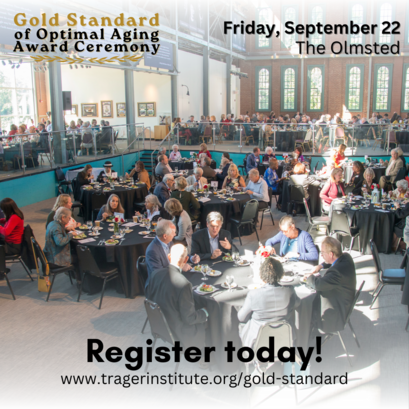
Gold Standard of Optimal Aging Award Ceremony

Gold Standard Award

Join us at the Gold Standard of Optimal Aging Award Ceremony to honor older adults who live engaged and fulfilling lives. Organized annually by the UofL Trager Institute, this event aims to foster an age-friendly culture within our community. Consider becoming a sponsor, or simply come celebrate with us. For more information, visit www.tragerinstitute.org/gold-standard.

Friday, September 22nd 
11:30am-1:30pm EST

The Olmstead
3701 Frankfort Ave

To Register, Click HERE


HNC

August Activity Calendar

Here are some virtual highlights for August:


Humana Neighborhood Center is located at 1918 Hikes Ln, Suite 101.

To view the full August calendar click HERE


AFL

Age- Friendly Louisville

Now Hiring

Age-Friendly Louisville (AFL) and the Trager Institute is seeking an energetic, community-minded individual to 15 hours a week to assist in volunteer engagement, advocacy, and implementation of our newest strategic initiatives with our community partners.

Responsibilities may include:

  • Assist AFL leadership to implement the new strategic plan.

  • Assist with monthly leadership meetings and a few community building events.

  • Recruit volunteers and update the volunteer database

  • Develop agenda and create calendar invites with agenda, minutes and zoom invites for leadership meetings and focus meetings.

  • Increase awareness of AFL via media/social media.

  • Other duties as assigned.

For more information or to apply, click HERE 


Centerwell

CenterWell Activity Center Calendars

  • To View the Outer Loop Schedule Click HERE
  • To View the South 2nd Street Schedule Click HERE

Everyone is welcome!


Recipe of the Month 

Creamy Vegan Corn Chowder

recipe of the month

Upcoming Education & Events

Age Friendly Louisiana

All domain workgroup meetings have been postponed until further notice

.........................
Louisville Metro Triad
aloha

TRIAD goes Hawaiian...come dressed in your favorite island attire. Enjoy games, door prizes and fun!

IN-PERSON TRIAD Meeting

August 8th, 2023

Lunch & In-Person Networking 11:30am

Meeting 12:00-1:00pm

 LOCATION 

Our Mother of Sorrows Cafeteria

770 Eastern Parkway

Louisville, Ky 40217

Please RSVP HERE or Call 502.574.5092

Lunch Provided by:

Arcadia

..........................

UofL Peace Open House

UofL Peace Hospital Open House & Networking

Thursday, August 3rd 
11:00am-2:00pm EST

2020 Newburg Rd
Lourdes Conference Room

RSVP to Lisa HERE

........................

Housing Resource Center

Partnerships to Increase Housing Stability Through Assistive Technology, Home Modifications, & Repairs

Although 40% of American households include someone who needs accessibility features to live independently, most homes in the U.S. do not have those features. Increasing a person’s access to home modification and repair services and assistive technology (AT) can decrease their risk of living unhoused or in an institution. Join the Housing and Services Resource Center (HSRC) for a webinar to explore the role of home modifications, AT, and home repairs in promoting accessible, stable housing and learn how service providers can join forces to increase access to them. Participants will learn about:

  • The connection between accessibility and housing stability.
  • Federal programs that provide related funding and services. 
  • How to develop partnerships that improve service coordination.
  • Types of organizations that could be effective partners.

Monday, August 7th 
1:00-2:00pm EST

To Register, Click HERE

.........................

NCBA

Lung Cancer and Its Effects on the Black Community

Learn about lung cancer, its determinants and/or deterrents to quality care in the Black community, and some best practices for prevention the disease.

Thursday, August 10th 
1:00-2:00pm EST

To Register, Click HERE

.........................

AARP

Shred Event

Every 2 seconds, someone’s identity is stolen, but you can take steps to protect yourself. Join us to fight back against fraud!

AARP will have on-site shredding trucks available from 9:00am to 12:00 noon to shred your sensitive documents. Shredding services, provided by Shred-It, are free of charge and open to the public. Here’s what you need to know: 

  • Onsite shredding of all sensitive documents
  • Paper shredding only 
  • Business shredding is not permitted 
  • All empty containers must be taken back by owner 
  • There is a 4-box limit!
  • Registration is required

Saturday, August 12th 
9:00am-12:00pm EST 

AARP Kentucky State Office
10401 Linn Station Road

To Register, Click HERE

.........................

detac

DETAC Webinar on Evaluating Employment Outcomes in Diverse Communities

ACL awards CCE grants to help increase and enhance collaborations across systems to create a seamless experience for youth with intellectual and developmental disabilities (I/DD) as they transition between school and work in the community. The Virginia and Texas CCE grantees focus on youth with I/DD in racially minoritized communities and limited English-speaking households. Both grantees are conducting internal evaluations of their grants to track progress toward outcomes. Evaluation is an integral part of ensuring the efficacy of employment programs in the CCE grant. In this webinar, participants will hear from the Virginia and Texas CCE grantees on evaluation strategies they can apply to their own programs.

Monday, August 14th 
4:00-5:00pm EST 

To Register, Click HERE

.........................

ICDR

Interagency Committee on Disability Research (ICDR) August Lunch & Learn Webinar: Participatory Action Research with People with Disabilities

Please join us for the Interagency Committee on Disability Research (ICDR) August Lunch & Learn webinar. Dr. Fabricio E. Balcazar Professor, Disability and Human Development and Director, Center on Capacity Building for Minorities with Disabilities Research, Disability and Human Development at the University of Illinois at Chicago, will discuss strategies for participatory action research with people with disabilities. At the end of the presentation, there will a 15-minute question-and-answer session with the audience. The audience will include a wide range of ICDR stakeholders, federal interagency partners, researchers, practitioners, disability organizations and ICDR Committee members.

Wednesday, August 16th 
12:00-1:00pm EST

To Register, Click HERE 

.........................

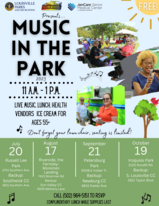
Music in the Park

Music in the Park

Live Music, Lunch, Health Vendors, Ice Cream for Ages 55+

Thursday, August 17th
11:00am-1:00pm EST 


Riverside, The Farnsley-Moreman Landing
7410 Moorman Rd

Call 502.964.5151 to RSVP


.........................

Engaged

Physical Fitness and Social Engagement: Strategies, Activities and Partners

Join engAGED: The National Resource Center for Engaging Older Adults for a webinar focused on physical fitness and social engagement. During the webinar, YMCA of the USA, the National Council on Aging and the National Recreation and Park Association will spotlight strategies for ways organizations can use physical activity as a hook to promote and encourage social engagement among older adults. Speakers will also share examples of potential partners for collaboration at the local level.

Thursday, August 24th 
1:00-2:00pm EST

To Register, Click HERE

.........................

Dementia Webinar

Memory Connections: Helping Families Navigate Their Dementia Journey with a Menu of Program Options

Memory Connections, an ACL-funded initiative through Senior Services Inc. in North Carolina, is a multi-faceted project that offers support, creativity, education, and engaging activities for people living with dementia and their caregivers. Because Hispanic Americans and African Americans are more likely to develop Alzheimer’s disease or a related dementia than White Americans, the project includes a specific focus on reaching out to these populations. In this webinar, participants will learn how Senior Services Inc. and their partners Novant Health, Atrium Health Sticht Center, Winston-Salem State University Occupational Therapy Department and the Maya Angelou Center for Health Equity are working together to create a unique continuum of dementia care. Presenters will highlight the Maya Angelou Center for Health Equity's Caregiver College, a week-long program that educates African Americans about Alzheimer’s disease and related dementias. Caregiver College graduates apply their newly acquired knowledge by delivering presentations to their social groups, churches, family members, friends and business connections.

Tuesday, August 29th
3:00-4:00pm EST

To Register, Click HERE 

........................

Americorps

Volunteer Possibilities for Boomers and Beyond

This special informative program is open to all adults 55 years and older to come explore the many ways your talents, skills and interests can be shared to help others, meet new people, have fun and produce positive community change.  In addition, while volunteering, this free membership program offers additional benefits!”

Thursday, August 31st
11:00am-12:30pm EST

Southwest Regional Library
9725 Dixie Hwy

For more information, contact Chris at 502.574.1530

.........................

Alli Woosley

Alli Woosley

OADC Coordinator

Louisville Metro Government

Department of Resilience & Community Services

The Edison Center

701 West Ormsby Street, Suite 201, Louisville, KY 40203

502.574.5092

allison.woosley@louisvilleky.gov 


You can now get text reminders for TRIAD and links to the OADC newsletter on your phone by clicking the seal below and simply entering your phone number!

Louisville Jefferson County