2026 Kansas Immunization Conference
Pre-Conference: May 19
General Session: May 20
Wichita Marriott
Mark your calendars for the 2026 Kansas Immunization Conference.
If a provider has publicly funded vaccine nearing expiring, it may be eligible for redistribution to another Vaccines for Children (VFC) or Vaccines for Adults (VFA) provider to prevent waste, as long as the cold chain can be maintained throughout transport.
The Kansas Immunization Program (KIP) maintains a Vaccine Redistribution List of publicly funded vaccines available for transfer between VFC and VFA providers. Vaccines may be added to the list.
Redistribution process and requirements:
- The vaccine has at least 90 days and no more than 365 days remaining before expiration.
- Vaccines must be in full boxes.
- The Regional Immunization Nurse or Nurse On-Call must be notified prior to any transfer to ensure appropriate transport protocols can be met.
- Once the vaccine is transferred, notify KIP so the redistribution list can be updated (e.g., doses reduced or removed).
- Providers must notify Vaccine@ks.gov of any changes in the number of doses available for redistribution.
- Doses must be electronically transferred in KSWebIZ and must be included on both providers’ monthly inventory reconciliation reports.
Additional information:
- Provider locations placing vaccine on the Redistribution List are responsible for any doses that expire before being accepted by another VFC or VFA provider.
- Providers interested in receiving short-dated vaccine should contact the provider listed on the Redistribution List (Primary Vaccine Coordinator contact information is included).
- Providers accepting redistributed vaccine are responsible for administering the doses once transferred and should only accept quantities they can use before the expiration date.
- When placing routine vaccine orders, providers may be contacted if the requested vaccine is currently available on the Redistribution List.
Frozen publicly funded vaccine will not be posted on the Redistribution List. If frozen vaccine needs to be transported, contact your Regional Immunization Nurse or the Nurse On-Call at (877) 296-0464 for guidance.
For more information, refer to the Kansas Immunization Policy and Procedure Manual.
Immunize.org has updated their standing order templates to reflect the American Academy of Pediatrics (AAP) Immunization-Schedule and the American College of Obstetricians and Gynecologists (ACOG).
Standing orders allow staff to assess vaccine status and administer vaccines per protocol without a provider writing an individual order each time. Keeping these documents up to date helps ensure patients receive vaccines according to the most current guidance.
Using current standing orders supports efficient workflow, reduces missed vaccination opportunities, and helps ensure patients are protected on schedule.
Updated standing order templates include:
Standing order templates for vaccination during pregnancy:
Did you know KSWebIZ offers on demand training to support you and your staff?
A KSWebIZ trainer is available to provide customized training based on your clinic’s needs and schedule. These sessions are designed to support day-to-day use of KSWebIZ and can be tailored to specific topics or workflows whether you enter information directly into KSWebIZ or thru your EMR/EHR system.
Top five training topics:
- KSWebIZ Basics
- Recon / Inventory Management
- Quick Add
- Reporting
- Returns
Trainings can be conducted via Microsoft Teams, Zoom, or in person, depending on your preference. Because these sessions are on demand, you can choose a date and time that works best for your clinic.
If you or your staff would benefit from refresher training or targeted support within KSWebIZ, we encourage you to take advantage of this resource.
To request training or ask questions, please contact the KSWebIZ team at kdhe.immunizationregistry@ks.gov or by phone at 1-877-296-0464.
Note: Due to VFC monthly recons being done the 1st through 7th we try not to schedule trainings during this time.
Summary: Since the beginning of the 2025–2026 respiratory season, influenza activity in Kansas increased gradually through November and peaked in late December. The highest percentage of outpatient visits due to influenza-like illness (ILI) so far this season was 7.0% during the week ending Dec. 27, 2025. Although current levels are below the currently identified seasonal peak, overall activity remains elevated.
A total of 33 providers participate in the Influenza-Like Illness Surveillance Network (ILINet) weekly by reporting the percentage of outpatient visits due to ILI, which is defined as fever (≥100°F) with cough and/or sore throat. During the most recent reporting week ending Feb. 14, 2026, providers reported that 6.0% of visits to their facility were due to ILI.
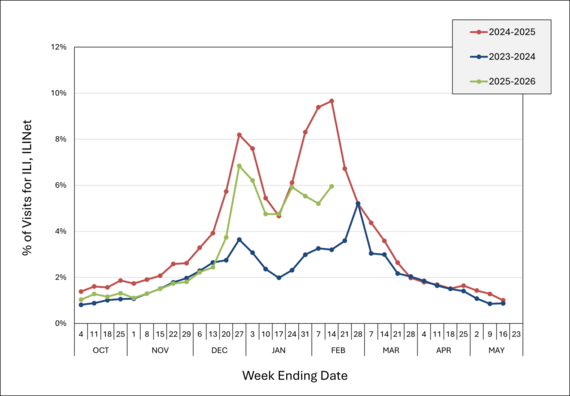 Figure 1. Percentage of Visits for ILI Reported by ILINet Sites, Kansas, October 2025 – Present
ILI activity is also monitored through syndromic surveillance, which represents 98% of all emergency department (ED) visits in Kansas. Data from the week ending Feb. 14, 2026, indicated that 7.7% of ED visits statewide were associated with ILI.
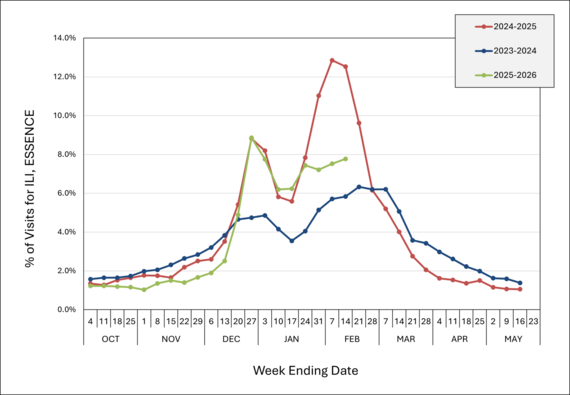 Figure 2. Percentage of ED Visits for ILI Reported to ESSENCE, Kansas, October 2025 – Present
Laboratory surveillance conducted by the Kansas Health and Environment Laboratories (KHEL) since the beginning of the respiratory season has detected influenza in 146 specimens. Of those specimens, 99.3% (145/146) were positive for influenza A virus and 1 specimen was positive for influenza B virus. Most influenza A detections (n=144, 99%) were identified as the influenza A(H3) subtype, with only 1 detection of influenza A(H1). During week ending Feb. 14, 2026, all 16 influenza detections at KHEL were influenza A(H3).
Wastewater surveillance from participating sites in three Kansas counties indicates that influenza A and B levels are currently low, albeit remain elevated compared to early season baselines. Influenza A concentration hit its peak in late December, coinciding with the highest percentages of visits detected in both ILINet and ED data. Influenza B concentration seems to be moderately increasing in February, with the highest concentration so far this season. Current wastewater data are available on KDHE’s Wastewater Surveillance Dashboard.
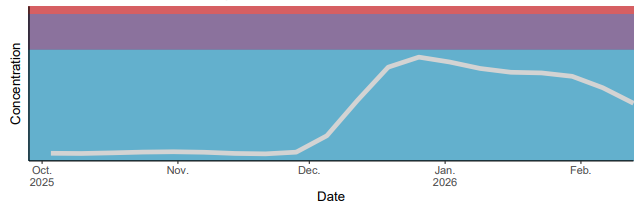 Figure 3. Influenza A Concentration in Wastewater, Kansas, September 26 – Present
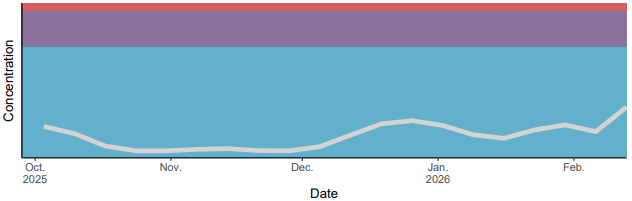 Figure 4. Influenza B Concentration in Wastewater, Kanas, September 26 – Present
A total of 90 influenza outbreaks have been reported during the 2025–2026 respiratory season so far. As of February 18, 2026, there were nine active influenza outbreaks. Outbreaks of influenza and other reportable diseases should be reported to the KDHE Epidemiology Hotline by telephone at (877) 427-7317 within four hours of suspicion.
Beginning this influenza season, KDHE began administering a voluntary weekly school absenteeism survey to understand absenteeism trends among Kansas schools. Currently, an average of 40 respondents report on approximately 28,000 students across a mixture of individual schools and school districts. Total school absenteeism in Kansas increased gradually in January and peaked during the week ending January 19, 2026. Although rates have since declined slightly, overall absenteeism remains above 6.5%. Absences attributed specifically to respiratory illness followed a similar pattern, peaking in late January. The highest percentage of respiratory-related absences was 2.6% during the week ending Jan. 30, 2026.
A newly identified subclade of influenza A (H3N2), known as subclade K, was first detected by the U.S. Centers for Disease Control and Prevention (CDC) through virus sequencing analysis in August 2025. Since then, subclade K viruses have increased in proportion among circulating strains. As of February 7, 2026, 92% of influenza A (H3N2) viruses genetically characterized by CDC belonged to subclade K. Additional information is available in CDC’s Weekly Influenza Surveillance Report
Influenza activity may continue to fluctuate throughout the remainder of the respiratory season. While influenza A(H3) remains the predominant virus circulating, influenza B detections have begun to pick up nationally, which is typical activity for later in the influenza season. Vaccination remains the best protection against severe illness. Updated surveillance data are available at KDHE’s Influenza Surveillance webpage.
Resources:
|