|
Thursday, December 9, 2021

|
|
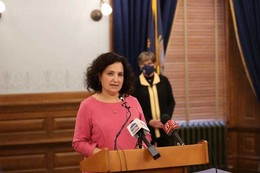 Dr. Ximena Garcia, Senior Advisor for COVID-19 Vaccine Equity and Acting State Health Officer (from Topeka Capital Journal)
|
|
“I am very hopeful that with the recent approval of the Pfizer vaccine for children 5-11 we continue to see an increase in the total Kansas population vaccinated. We also continue working to reach people of color and vulnerable populations with the vaccine."
- Dr. Ximena Garcia
|
|
|
As we reported last week, cases and hospitalizations continue to rise in Kansas and the surrounding region. Following the Thanksgiving holiday and the detection of the new Omicron variant, vaccinations are also trending upwards as more Kansans decide to get vaccinated or boosted. As we continue collecting information from scientists and researchers regarding the new Omicron variant, KDHE wants to reinforce the importance of what we know works to stop the spread of the virus: vaccinations and boosters, getting tested if you feel sick or show symptoms, masking indoors, and physically distancing as is possible. Please click here to track COVID-19 trends and here to find KDHE’s weekly summary of local vaccine and testing events.
|
|
|
The Omicron variant has now been detected in at least 19 U.S. states, but has still not been detected in Kansas despite a rise in cases driven by the Delta variant. With the winter season approaching, we have been preparing for potential new surges of the virus. This year, with over 55% of the total Kansas population fully vaccinated, we are better equipped to battle the virus than a year ago. We now have safe and effective vaccines and boosters available to anyone 5 and older, and we know that masking, testing and distancing are effective measure to contain the spread of the virus.
What we know about Omicron: While there is more to learn about Omicron, some preliminary studies and reports show that:
- The Omicron variant spreads more easily than the original COVID-19 virus and the Delta variant
- Getting a booster dose of Pfizer vaccine may provide significant protection against Omicron
- Current vaccines are expected to protect against severe illness, hospitalizations, and deaths due to infection with the Omicron
- Scientists are working to determine how well existing treatments for COVID-19 work on the Omicron variant
- More data is needed to understand the severity of infections caused by the Omicron variant
The white house winter plan: The White House outlined a plan last week to address possible COVID-19 winter surges from the Omicron and Delta variants that avoids a need for lockdowns or shutdowns. The federal government further increased focus on increasing access to boosters for all adults. In addition, they are increasing efforts to engage in outreach urging eligible individuals to receive the booster dose, pushing pediatric vaccinations to keep children safe and in school, expanding free at-home testing, and ensuring availability of treatment pills – once approved by the FDA - to prevent hospitalizations and deaths.
What this means: KDHE will continue sequencing positive COVID-19 tests to detect whether Omicron is in the State. Any change in current knowledge, and any new information or guidance, will be promptly communicated to the public. In the meantime, everyone who has not received a vaccine or who is eligible for a booster should do so. You can find more information on the Omicron variant on the KDHE press release here.
|
|
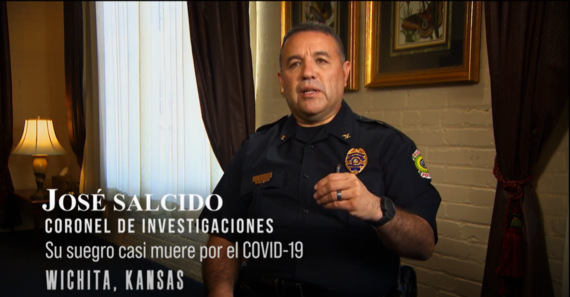 KDHE launched a new phase of the COVID-19 vaccine communication campaign focused on Hispanic/Latino Kansans. At least 61% of Hispanic/Latino Kansans 18 and older have received at least one dose of the COVID-19 vaccine, outpacing non-Hispanic/Latino vaccinations by about three percentage points. While this is an important accomplishment in our focus to provide equitable vaccination opportunities to all our communities, our priority remains to reach these still unvaccinated. We need to continue providing them with the most relevant and accurate information to feel empowered to make an educated decision regarding the COVID-19 vaccine and booster.
Why this matters: Back in June, KDHE and the Kansas Hispanic & Latino American Affairs Commission (KHLAAC) partnered to launch a unique campaign directed at the Hispanic/Latino “Kanseños”, who represent over 12% of the total Kansas population. In addition to a communication campaign, the effort also involved community engagement driven by KHLAAC and other local organizations, including vaccination events, vaccine canvassing, and outreach. Given the success of this first phase, a new phase of communications was recently launched to continue addressing hesitancy and drive higher vaccination rates in Kansas’ vulnerable communities.
A look at the numbers: A recent KDHE poll on unvaccinated Kansas showed that the unvaccinated Hispanic/Latino Kansas population is more likely to get vaccinated when compared to the white population. Results from the state-wide survey reported that 54% of unvaccinated Hispanic/Latino Kansans are likely or unsure about receiving the COVID-19 vaccine; this compares to only 29% of white respondents. Hispanic/Latino participants reported several drivers causing their hesitancy about the vaccine, such as uncertainty regarding possible fertility issues, perception that the development timeline was too short, and concerns on vaccine side effects and allergic reactions. The study also highlighted the need for more detailed information in Spanish to educate the community regarding the safety and efficacy of the vaccines.
What this means: The new campaign aims at building confidence in the vaccine by providing accurate information to our communities. Testimonials from Kansas physicians and members of the public are being broadcasted on Univision, Telemundo and Hispanic/Latino radio stations. Find below the list of newly released videos. You can also watch them on vacunatekansas.com.
- Brandan Kennedy, a pediatrician at Children’s Mercy Hospital in Kansas City
- Colonel Jose Salcido, of the Wichita Police Department
- Velia Miramontes, a COVID-19 survivor who lost her husband to the virus
|
|
|
The Kansas City Star
Vaccinations, masking, and testing remain our three best public health tools to keep schools safely open. Our best tool to avoid outbreaks in schools is to stop transmission before it happens, and the best way to do so while keeping schools open and safe is vaccinating everyone who is eligible, masking when indoors or in social distance is not possible, and testing regularly.
Why this matters: As our children returned to school this fall, our goal is to continue ensuring they can attend classes in person safely. To do so, we need to all work together to control outbreaks and avoid surges. For children, in person learning remains key for the development of social and emotional skills and has been seen to lead to better academic outcomes. Additionally, being in schools ensures access to critical school services and extracurricular activities not available during remote learning.
A look at the numbers: In Kansas, about 55% of Kansans ages 12-17 and 15% of ages 5-11 have received their first dose of the COVID-19 vaccines. While these numbers are increasing following the recent authorization of the pediatric vaccine, we need to continue urging parents to vaccinate their children while engaging in all the safety precautions we already know work. For parents who have questions, encourage them to talk to a trusted healthcare provider to make the right choice for them and their family. As reported by the Safer Classroom Workgroup, masking policies are correlated to active outbreaks. As of last week, Kansas school districts with mask requirements had 49 outbreak cases per 100,000 students while school districts with no mask policies had more than 7x (344) the number of outbreak cases per 100,000 students.
What this means: As Kansas experiences an uptick in COVID-19 cases, we remain committed to ensuring our children can remain safely in school. To do so, we urge all parents to vaccinate their kids. Vaccines for children 5 and older are widely available throughout Kansas. Do not hesitate to contact your pediatrician or primary care physician if you have any questions regarding the vaccine for your child or yourself.
After this week, the Safer Classroom Workgroup will be paused until further notice. While the group will not meet regularly for now, we encourage all our readers to keep engaging in conversations regarding the safety of our children, teachers, and school staff. With your help, we can continue spreading relevant information to our communities The KDHE K-12 COVID-19 Dashboard will continue to be a useful tool for parents, educators, health providers, and other child advocates to understand the state of COVID-19 in their school district.
|
|
Find the latest report from the Safer Classroom Workgroup here. |
|
|
Thank you for all you do to keep Kansas safe. For more information, check out the COVID-19 County Rankings, KS vaccine data dashboard, and Kansas’s FAQ link. Please share this information with your networks; and again, if I can be of service, please contact me (matthew.lara@ks.gov).
Ad Astra per Aspera,
Matt Lara
Communications Director at Kansas Department of Health and Environment
|
|
|
|
|