June 2026 Newsletter
Letter from the Health Officer
Dear Community Member,
Have you ever wondered how many people in Michigan have died from killer bee stings? As a child growing up in the 1980s, there were so many movies and even a few news broadcasts showing the horrors of the inevitable, unstoppable migration of these stinging swarms. My young friends and I were convinced that killer bees were going to be the end of us. Unlike many other sci-fi villains, killer bees—properly known as Africanized honeybees—do exist in nature and are a significant problem in other places with climates better suited to their biology. What we did not appreciate back then was that nature is far more complicated than horror movies. Another important lesson is that fear is not often helpful when it is disproportionate to risk. Despite the concerns of my youth, zero deaths have been caused by killer bees in Michigan.

I share this observation with you this month because it has similarities to some of the public health issues being discussed today. In last month’s newsletter, I wrote about the unfortunate hantavirus outbreak affecting passengers of an international cruise ship. Hantavirus illness is very serious for the very limited number of people impacted. It requires serious medical treatment and proper public health surveillance. However, it is highly unlikely to create significant problems for us in Michigan for several reasons. For that matter, cases of hantavirus illness are even rare in places where it is historically found. As expected, the cruise ship hantavirus outbreak is now well under control and has not caused any broader problem for global health.
In the month since, international headlines have focused on another scary sounding threat from an exotic location: Ebola in the Democratic Republic of the Congo (DRC) and Uganda. On the surface, Ebola virus seems to be another cast-perfect villain. Yes, Ebola is awful and the international community would be wise to assist wherever infectious disease is causing suffering. Unchecked disease, even isolated to remote places, is a threat to global health. However, Ebola is unlikely to spread very easily outside of the environment where it currently resides. It's nowhere near as contagious as many other pathogens and is generally well-contained in modern medical facilities. To be clear, it is possible for isolated cases to pop up in unexpected places. International travel and commerce have made the world a very small place. We take these possibilities seriously and, in partnership with federal and state agencies, communicate with travelers arriving from these areas and with providers to ensure that health is monitored and a plan is in place.
This is public health. It’s what we do.
Adam London, PhD, RS, DAAS
Administrative Health Officer
|
Ebola Update: What You Should Know
The public health community continues to monitor the current Ebola outbreaks affecting parts of the Democratic Republic of the Congo (DRC) and Uganda. While Ebola is a serious disease, there are currently no cases associated with these outbreaks in the United States, and the risk to the general public remains low.
Quick Facts About Ebola:

- Ebola spreads through direct contact with the blood or other body fluids of a person who is sick with Ebola.
- Ebola does not spread through the air like influenza or COVID-19.
- Because of how it spreads, Ebola is unlikely to spread through everyday contact in the community.
- Local health departments monitor travelers returning from countries with active Ebola outbreaks.
- Monitored travelers are typically asked to take their temperature daily and report any symptoms, such as fever, headache, muscle aches, vomiting, or diarrhea, to their local health department.
- Local health departments work closely with EMS, hospitals, healthcare providers, and state and federal partners to respond quickly if a traveler becomes symptomatic.
While we continue to monitor Ebola and remain prepared to respond if needed, most people are far more likely to encounter a tick or mosquito this summer. Don't forget to wear insect repellent and take simple steps to protect yourself from the diseases these pests carry.
|
Heat Safety: Recognizing and Responding to Heat Illness
As summer temperatures climb, it's important to know the signs of heat-related illness and act quickly. Heat exhaustion can cause heavy sweating, dizziness, nausea, and muscle cramps. If untreated, it can lead to heat stroke, a life-threatening condition marked by confusion, a rapid pulse, and a body temperature of 103°F or higher. If someone shows signs of heat stroke, call 911 right away and move them to a cooler place.
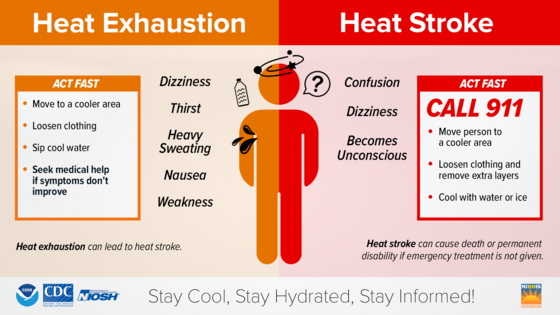 Extreme heat can become especially dangerous inside vehicles, where temperatures rise rapidly even on relatively mild days. Taking a few simple precautions can help prevent tragic outcomes.
Pediatric Vehicular Heat Stroke Prevention:
-
Children should never be left alone in a car, no matter the time of year. Vehicular heat stroke can occur when outside temperatures are as low as 60°F. Sunlight can cause the inside of a car to heat up very quickly.
-
More than 1,000 children have died inside hot vehicles since 1998. Some of these tragedies occurred when children accessed a parked car without supervision. Always lock parked cars to make sure children cannot get inside, even if you are not a caregiver.
- Everyone operates on autopilot once in a while. Caregivers should have a strategy to ensure that no one is ever left or forgotten in a hot car. Consider placing an important item you will need for the day in the back seat and asking your child's childcare provider to call if your child does not arrive as expected.
Let's all do our part to prevent heat-related illness by staying hydrated, avoiding strenuous activity during the hottest parts of the day, checking on vulnerable neighbors, and never leaving children or pets in parked cars.
Backyard Pool Safety: Simple Steps for a Safe Summer
As temperatures rise, we naturally spend more time outdoors and around water here in Michigan. Backyard pools are a great way to cool off in the summer, but they also require careful attention to protect family, friends, and neighbors.
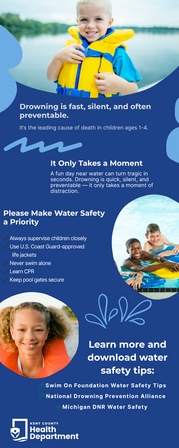
Safety Measures for Backyard Pools:
- Assign a "water watcher"—a focused, sober adult whose only job is active supervision with no distractions.
- Keep young children within arm’s reach when they are in or near the water.
- Install and maintain a 4-foot fence with self-closing, self-latching gates to prevent unsupervised access.
- Ensure swimmers have appropriate skills for the water conditions and use U.S. Coast Guard–approved life jackets for weaker swimmers.
- Learn CPR. Quick action saves lives in an emergency.
- Check and secure drain covers and teach children to stay away from drains and suction outlets.
- Maintain clear water so the bottom of the pool remains visible at all times.
- Handle pool chemicals safely by opening one container at a time, measuring carefully, using in well-ventilated areas, and following manufacturer instructions.
- Test pool water regularly to keep chlorine/bromine and pH within safe ranges.
- Keep anyone who is sick, especially with diarrhea, out of the water and encourage swimmers to shower before and after swimming.
A safe pool depends on multiple layers of protection: active supervision, physical barriers, swimming skills, safe chemical handling, and good hygiene. Working together helps keep our community safe and healthy all summer long.
|
Pop-Up Public Health: Where to Find Our Mobile Unit This Summer
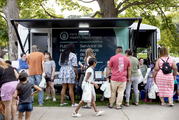
As summer kicks off, we’re hitting the road with a series of mobile unit events designed to meet residents right where they are as we bring health services and resources directly to the community. These outreach events are a great opportunity for us to connect, share information, and offer on-the-spot support.
Here is a look at where we'll be rolling to next:
-
Food Access with North Kent Connect’s Fresh Connect: Tuesday, June 16 from 11:30 a.m. - 1:30 p.m.
-
Justice 4 All Juneteenth Jam Vol. 6: Friday, June 19 from 4-8 p.m.
-
Grand Rapids Pride Festival: Saturday, June 20 and Sunday, June 21 from 12-8 p.m.
-
Food Access with North Kent Connect’s Fresh Connect: Tuesday, June 23 from 12-2 p.m.
-
Health and Unity in the Community: Friday, June 26 from 11 a.m. to 4 p.m.
-
Break Into Your Pride: Sunday, June 28 from 12-5 p.m.
-
West Michigan Whitecaps: Wednesday, July 1 from 5-7 p.m.
-
City of Kentwood 4th of July Celebration: Saturday, July 4 from 4-10 p.m.
-
Food Access with North Kent Connect’s Fresh Connect: Tuesday, July 7 from 11 a.m. - 1 p.m.
-
Storytime GR: Tuesday, July 7 from 6:30-8 p.m.
For more information about services available at these events, please email Melissa Bisel or call 616-632-7096.
|
Save the Dates: Two Community Fest Events This Summer
After a successful event last summer, we're excited to be on site offering information and resources on food safety, emergency preparedness, safe sleep, health education, mosquito and tick prevention, and more at two FREE Kent County Community Fests this year:

-
South Community Fest: Wednesday, July 29 from 4-7 p.m. at Brewer Park in Byron Center
-
North Community Fest: Thursday, August 13 from 4-7 p.m. at Kent County North Campus in Cedar Springs
These free, family-friendly events promise fun for all ages - so bring your friends and family to join the celebration!
Highlights include:
- Food trucks & free ice cream
- Kids’ activities: face painting, glitter tattoos, balloon animals
- Big trucks on display: fire engines, road equipment
- Meet 20+ County departments & access resources
- Sheriff’s K-9 demos & Mounted Unit meet-and-greets
Mark your calendars and don’t miss this opportunity to connect with services, resources, and community partners this summer!
|
Board of Commissioners Recognizes Men's Health Month
At their last meeting, our Board of Commissioners recognized June as Men’s Health Month - a time to raise awareness, encourage check-ups, and promote healthy habits that help men live their best, longest lives.

Men set a powerful example for their children, families, and friend groups. So this June, consider swapping sedentary routines for a walk in one of Kent County’s 43 parks, a game of catch, or a heart-to-heart about health care.
You don’t have to make big changes all at once. Even small steps can make a meaningful difference:
-
Get a Checkup: Think of it like a tune-up for your body. An annual visit to your doctor can help catch problems early—before they become serious.
-
Know Your Numbers: Keep tabs on your blood pressure, cholesterol, and blood sugar. These numbers can give you and your doctor a clear picture of your health.
-
Don’t Skip Screenings: Tests like prostate and colorectal cancer screenings can save lives. The earlier something is found, the easier it is to treat.
-
Move Your body: Aim for 150 minutes of moderate exercise a week — even brisk walking counts. It keeps your heart healthy, boosts your mood, and helps you stay energized.
-
Eat Smart: Focus on real foods like fruits, vegetables, whole grains, and lean proteins. Drink plenty of water and cut back on processed foods and sugary drinks.
-
Care for Your Mental Health: Stress, anxiety, and depression affect men too. Talking to a doctor or therapist is a sign of strength. Mental health is just as important as physical health. Text or call 988 if you or someone you know needs help.
-
Build Your Support System: Surround yourself with people who support and encourage healthy habits. Whether it’s a workout buddy or a friend to talk to, you’re not alone.
Let’s use this month to not only celebrate fathers on their special day, but to empower them to live longer, healthier lives for our families and for future generations.
|
People’s Champion Award: Suzanne VanderVeen Recognized for Excellence in Customer Service and Support
Each month, the previous recipient of the People’s Champion Award selects the next honoree — a tradition that allows us to recognize staff who consistently go above and beyond their everyday responsibilities.
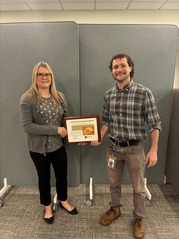
This month, we’re proud to recognize Suzanne VanderVeen for the essential role she plays as the first point of contact for our Environmental Health division and the steady, reliable support she provides to both the public and staff.
As a clerk, Suzanne is often the first face people see when entering the office. She handles a wide range of questions and situations with patience and professionalism, ensuring inquiries are directed appropriately so staff can focus on their work. Her colleagues describe her as friendly, patient, communicative, and sharp—someone who asks thoughtful questions to better understand processes beyond her role and continually seeks ways to improve how she supports both the team and the public.
Her reliability and attention to detail help Environmental Health function more effectively every day. Please join us in congratulating Suzanne on this well-deserved recognition!
|
Opportunities with Impact: Start a Career with Us and Make a Difference in Community Health

Are you passionate about helping others and making a meaningful impact in your community? Consider joining our growing team!
We’re currently hiring for the following full-time position within our Community Clinical Services Division:
Working at your local health department means serving your neighbors, strengthening community partnerships, and being part of a team dedicated to caring for those who need it most. Keep an eye on future openings—we hope you’ll consider applying!
|
All County Offices and Health Department Clinics Will Be Closed In Observance of Juneteenth

All Kent County offices and Health Department clinics will be closed on Friday, June 19, in observance of Juneteenth.
Juneteenth commemorates June 19, 1865, the day news of emancipation reached enslaved people in Galveston, Texas—more than two years after the Emancipation Proclamation was issued. The holiday marks the end of slavery in the United States and is a time to reflect on our nation’s history, celebrate freedom, and honor the contributions of African Americans.
Regular business hours will resume on Monday, June 22.
|
|