Last Call for Purchase of Development Rights Program Applications
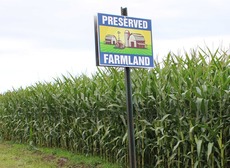
The Purchase of Development Rights (PDR) program is accepting applications until Wednesday, May 8, 2026. Through this voluntary program, Kent County helps agricultural property owners receive compensation in exchange for placing a permanent deed restriction on their land that limits future non-agricultural development. If you or someone you know owns farmland and wants to preserve it permanently, selling or donating the development rights may be a good option. The value is based on an independent third-party appraisal, and no landowner will ever be forced to participate.
Both the application and scoring criteria are available online. Call (616) 632-7593 or email Haley Stichman for more information.
|
Farming Forward 2026 Sets More Than Two Dozen on the Path to Better Farmland Protection
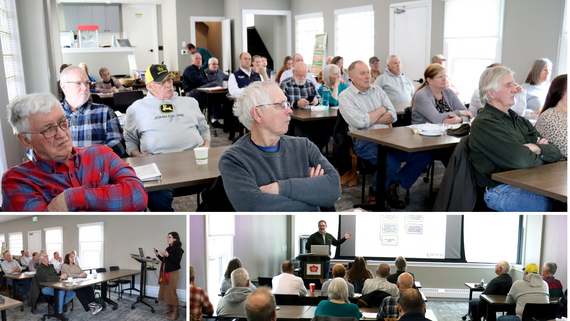 Around 30 farmers from Kent, Ottawa, and neighboring counties gathered at the historic King Milling Co. in Lowell on a blustery Tuesday morning for a Farming Forward workshop. The event, focused on land transfer and farmland protection, was hosted by the joint Kent-Ottawa Land Transfer Navigator Program, funded through a grant from American Farmland Trust (AFT) with support from the Natural Resources Conservation Service.
Participants received practical guidance on several key topics:
-
Succession planning insights: business structures, estate planning, and farm transitioning strategies
-
Land-linking through MIFarmLink: connecting retiring farmers with new and beginning producers
-
Agricultural easements: tools for protecting farmland for future generations
-
Mediation services: conflict‑resolution support through the Dispute Resolution Center of West Michigan
Together, these efforts provide direct assistance to farmers, ranchers, and landowners across the region. By strengthening succession planning and improving land access, the program aims to safeguard the future of farming in our communities.
We extend our sincere appreciation to King Milling Co. for generously hosting this year’s event, and our presenters including Varnum LLP Attorney Dean Reisner, Dispute Resolution Center of West Michigan executive director Christine Gilman, and MIFarmLink Region 6 representative Paul Gross for sharing their expertise.
Farm & Ranch Transition Support Grants Available
Farmers and ranchers navigating succession or land transfer can now apply for Farm & Ranch Transition Support Grants through American Farmland Trust’s Land Transfer Navigator program. These grants help offset costs related to transition planning - such as legal, financial, and mediation services - making it easier for producers to plan for the future and keep working lands in agriculture.
Eligibility Requirements:
- Applicants must work with a Land Transfer Navigator; include navigator organization’s name in the application
- Land involved must have a permanent agricultural conservation easement or be in the process of establishing one
- Applicants must be for-profit farms or ranches and able to demonstrate agricultural income - even via barter, exchange, or community-supported production
|
MDARD Grant Opportunities Now Open
The Michigan Department of Agriculture and Rural Development (MDARD) is offering two current grant opportunities designed to strengthen Michigan’s food systems and support farmers and food businesses across the state.
Value‑Added & Regional Food Systems Grants
Applications remain open through April 15, 2026, at 5 p.m. ET for MDARD’s Underserved, Value-Added, Regional Food Systems and Supply Chain Grants. This program provides up to $100,000 per project to support value‑added processing, grow regional food systems, improve supply chains, and expand access to healthy foods. A reduced match requirement is available for underserved applicants.
Organizations and businesses can review program details and submit proposals through the MiAgGrants system. For questions, please contact the Grants Program.
Farm to Family: Regenerative Agriculture Grant
MDARD has also launched a new funding opportunity through its Farm to Family Program to support farmers implementing regenerative agriculture practices. Grants of up to $50,000 can be used for on‑farm point‑of‑sale equipment, marketing materials, light processing tools, washing/packing infrastructure, and other eligible expenses.
Applications are due Friday, May 1 at 5 p.m. ET through the MiAgGrants portal. A virtual information session will be held Thursday, April 2 at 9:30 a.m. (details on the grant webpage). Questions can be directed to the Farm to Family team.
Are You Looking For Farmland - or - Do You Own Agricultural Land And Need To Plan For Its Future?
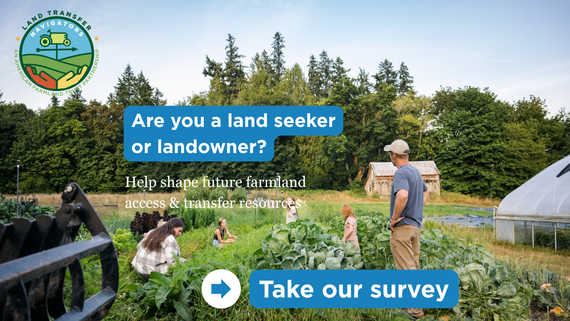 American Farmland Trust (AFT) is surveying land seekers and landowners to understand what support they need to access or transfer land. The survey should only take a couple of minutes to complete.The information gained from this survey will help AFT build strong programs to support farmers and ranchers.
Cultivating Opportunities: Michigan’s 2026 Agritourism Summit
 MSU Extension will host the 2026 Michigan Agritourism Summit, centered on this year’s theme: Cultivating Opportunities Through Collaboration, Innovation and Policy. The Summit will bring together farmers, entrepreneurs, municipal leaders, and rural advocates to explore emerging trends, share best practices, and build connections that strengthen Michigan’s rural economy and agritourism sector.
Whether you're looking to diversify your farm operation, support rural economic development, or stay ahead of evolving agritourism policies and market opportunities, this summit offers practical insights and connections to help you move forward.
Learn more and register today!
Please reach out to MSU Extension directly by contacting Jennifer Berkey with any questions.
Field Crops Virtual Breakfast Series
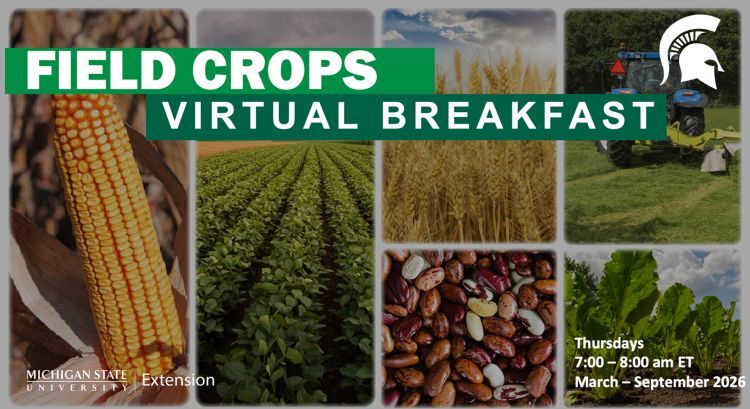 MSU Extension is once again offering a trusted resource to help our farming community prepare for the season ahead. The Field Crops Virtual Breakfast Series kicked off on March 26, but there’s still plenty of time to join - sessions continue every Thursday morning through September.
Each weekly meeting offers practical, timely guidance from MSU specialists on topics that matter most early in the season, including soil health, weed and pest management, planting considerations, and up‑to‑date weather forecasts. Designed to fit easily into a busy morning, the sessions provide quick, useful insights before the workday begins.
Each virtual session starts with a short 20‑minute presentation on the featured topic, followed by a Q&A that gives participants the chance to connect directly with MSU Extension specialists and educators.
To learn more, visit the MSU Extension website. You only need to register once to access the entire series. All past webinar recordings are also available online for anyone who wants to catch up on earlier sessions.
|