Letter from the Health Officer

Dear Community Member,
Last month, we celebrated the mothers in our lives—and rightfully so! Now, the calendar has flipped to June, and it’s Dad’s turn to be in the limelight. Because in addition to golf outings, fishing trips, and backyard barbecues, it’s important that we make space for something just as meaningful: men’s health.
Men’s health is a critical yet often neglected part of the public health conversation. Despite significant advances in healthcare, men tend to visit doctors less frequently than women and are more likely to engage in behaviors that increase the risk of chronic diseases. The result? Higher rates of heart disease, cancer, diabetes, and mental health challenges.
Cardiovascular disease remains the leading cause of death among men in the U.S., driven by poor diet, smoking, excessive alcohol use, and inactivity. Cancer follows closely behind and is gaining ground. In fact, both of my grandfathers died from cancer, and I truly believe earlier detection and treatment could have added years to their lives. That’s why regular checkups, screenings, and healthy habits are so critical—especially for men over 40, who should be discussing prostate health, in particular. Mental health is another serious concern, yet stigma often keeps men from seeking help, contributing to substance misuse and even suicide. Remember, you can always text or call 988, the Suicide & Crisis Lifeline, if you need help.
While these conversations aren’t always easy, they really do matter. Encouraging men to take charge of their health not only improves their quality of life—it also supports the well-being of the families and communities around them. Let's show our children that self-care is a strength—not a weakness.
Adam London, PhD, RS, DAAS
Administrative Health Officer
Pictured above is Adam London, Kent County Health Department Director.
|
Men's Health Month: Taking Charge of Your Well-Being
June is a month of celebration and reflection. As we honor the fathers, grandfathers, uncles, and father figures in our lives on Father’s Day, it’s also the perfect time to spotlight Men’s Health Month—a national observance aimed at raising awareness about the health challenges men face and encouraging early detection and treatment of disease among men and boys.
Making Health a Family Affair
Father’s Day can serve as a catalyst for healthy habits. Instead of traditional sedentary activities, consider spending time outdoors at one of Kent County's 43 parks—hiking, biking, or playing a game of catch. Use the day to have open conversations with the men in your life about health, aging, and self-care.
Kids often mirror the behavior of their parents. When fathers prioritize their health, they set a powerful example. It shows that strength isn’t just physical—it's also about resilience, self-awareness, and responsibility.

A Gift That Lasts a Lifetime
This Father’s Day, go beyond the traditional. Give the gift of time, attention, and health awareness. Whether it’s a conversation, a medical checkup, or a shared activity, these actions show love in its most meaningful form—through care.
|
Easy Ways to Start Improving Your Health
You don’t need to make big changes overnight. Small steps can make a big difference:
-
Get a Checkup: Think of it like a tune-up for your body. An annual visit to your doctor can help catch problems early—before they become serious.
-
Know Your Numbers: Keep tabs on your blood pressure, cholesterol, and blood sugar. These numbers can give you and your doctor a clear picture of your health.
-
Don’t Skip Screenings: Tests like prostate and colorectal cancer screenings can save lives. The earlier something is found, the easier it is to treat.
-
Move Your body: Aim for 150 minutes of moderate exercise a week — even brisk walking counts. It keeps your heart healthy, boosts your mood, and helps you stay energized.
-
Eat Smart: Focus on real foods like fruits, vegetables, whole grains, and lean proteins. Drink plenty of water and cut back on processed foods and sugary drinks.
-
Care for Your Mental Health: Stress, anxiety, and depression affect men too. Talking to a doctor or therapist is a sign of strength. Mental health is just as important as physical health.
-
Build Your Support System: Surround yourself with people who support and encourage healthy habits. Whether it’s a workout buddy or a friend to talk to, you’re not alone.
Let’s use this month to not only celebrate fathers but to empower them to live longer, healthier lives.
Pictured above is a man visiting the Kent County Health Department for an appointment.
Measles Case Confirmed in Allegan County: Possible Exposures in Kent County
The Allegan County Health Department has confirmed a case of measles and is working closely with both the Michigan Department of Health and Human Services (MDHHS) and our team to prevent further spread.
Individuals may have been exposed at the following Kent County locations, and should monitor for symptoms for 21 days—calling their healthcare provider before seeking in-person care:
-
Coachmen Strength & Conditioning in Byron Center on Monday, June 2 from 6:30 to 9:30 p.m.
-
University of Michigan Health West in Wyoming on Wednesday, June 4 from 2:18 to 5:02 a.m.
-
UM Health West Southwest Health Center on June 4 from 11:46 a.m. to 3:45 p.m.
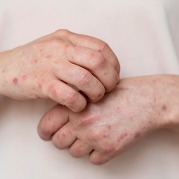
Measles spreads easily through the air when an infected person breaths, coughs, or sneezes. It can stay in the air for up to two hours after an infected person leaves, continuing to infect others. Symptoms may include:
- High fever (often spiking above 104°F)
- Cough
- Runny nose
- Red, watery eyes (conjunctivitis)
- Tiny white spots inside the mouth (Koplik spots), appearing 2–3 days after other symptoms
- A red, raised, blotchy rash that usually starts on the face and spreads to the trunk, arms, and legs 3–5 days after symptoms begin
The measles, mumps, and rubella (MMR) vaccine is highly effective in preventing measles—providing 93% protection with one dose and 97% with two. The Centers for Disease Control and Prevention (CDC) recommends:
-
Children receive the first dose of MMR at 12 through 15 months of age and the second dose at 4 through 6 years of age.
-
Adults born in 1957 or later who do not have evidence of immunity should receive at least one dose of MMR.
-
Certain adults, such as healthcare workers and international travelers, should receive two doses about a month apart.
-
International travelers six months of age and up should receive at least one dose of MMR.
If you'd like to schedule an appointment to receive the MMR vaccine, or if you have any questions or concerns, call us at 616-632-7200.
Pictured above is an example of what the measles rash looks like on a person's body.
|
Heat Safety: Recognizing and Responding to Heat Illness
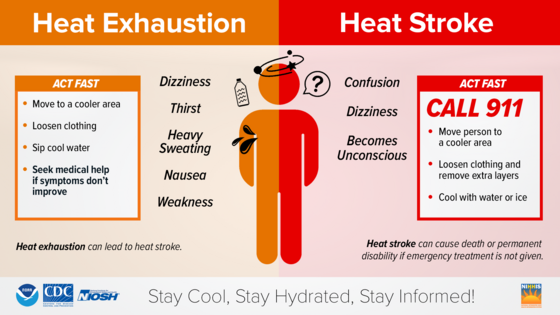 As summer temperatures climb, it's important to know the signs of heat-related illness—and act quickly. Heat exhaustion can cause heavy sweating, dizziness, nausea, and muscle cramps. If untreated, it can lead to heat stroke, a life-threatening condition marked by confusion, a rapid pulse, and a body temperature of 103°F or higher. If someone shows signs of heat stroke, call 911 right away and move them to a cooler place.
Let's all do our part to prevent heat illness by stay hydrating, avoiding strenuous activity during peak heat times, and never leaving people or pets in parked cars.
Summer Water Safety: What We're Watching and Why It Matters

Now that winter hibernation is behind us, there’s no better way to soak up Michigan summer than with a day at the pool or beach. All season long, our team is out inspecting licensed public pools and monitoring four local beaches for water quality to help keep your family safe in the water.
We're checking for harmful bacteria like Escherichia coli (E. coli), which can make both people and pets sick. If bacteria levels exceed state standards, we work with pool owners and our Parks Department to temporarily close the area until it's safe to swim again. Our goal is simple: to catch potential issues early so you can enjoy a safe and healthy summer—whether you're poolside or lakeside.
But safety isn’t just up to us. A few quick checks and habits can help make your summer water fun both safe and enjoyable:
|
-
Check for Secure Enclosures: Pools should be surrounded by a fence or other enclosure with self-closing, self-latching gates. This helps prevent unsupervised access—especially important when young children are around.
-
Avoid Cloudy or Discolored Water: Water clarity is a good indicator of chemical levels and care. If you can’t clearly see the bottom, don’t get in.
-
Shower Before and After Swimming: A quick rinse helps prevent the spread of germs and keeps the water cleaner for everyone.
-
Stay Hydrated: Swimming might feel refreshing, but it’s still a workout. Combine that with sun exposure, and it’s easy to get dehydrated. Drink water regularly and remind kids to take breaks, too.
-
Avoid Foam on Surface Water: Foam can form on any lake, river, or stream—and while it may look harmless, it can sometimes contain harmful chemicals like PFAS, along with bacteria or viruses. Learn more about the dangers of foam, what it looks like, and what to do if you or your pet comes in contact with it by visiting the Michigan Department of Health and Human Services (MDHHS) website.
No matter where you’re swimming this summer, a little caution goes a long way. Let’s keep the season safe, healthy, and fun—for all of us.
Pictured above is a Kent County Health Department employee testing a water sample from the Millennium Beach Splashpad.

Food Safety First: Enjoying Your Picnic in Peace This Summer
Nothing says summer like eating outdoors—but warm weather and food don’t always mix. Whether you're hosting a backyard barbecue or packing a picnic, it’s important to keep food safety top of mind.
The Michigan Department of Agriculture and Rural Development (MDARD) offers the following tips to help keep your meals safe, healthy, and fun:
-
Wash your hands: Always wash your hands with soap and water before handling food. If you don’t have water, use hand wipes or sanitizer. Dry hands with a clean paper towel.
-
Keep food at safe temperatures: Bacteria grow quickly between 40°F and 140°F, known as the “Danger Zone.” Keep cold foods cold, especially in hot weather. Use ice in your cooler and don’t leave food out too long. Store leftovers in the cooler quickly.
-
Use separate coolers: Keep drinks in one cooler and food in another. This way, the food stays colder because the drink cooler will be opened more often.
-
Keep raw meat separate: Don’t let raw meat touch ready-to-eat foods like salads or fruit. Meat juices can spread bacteria.
-
Cook meat properly: Use a meat thermometer to make sure meat is cooked to a safe temperature. Don’t just go by color or cooking time.
-
Clean surfaces and hands: Bring soapy wipes and use a table cover. Wipe down tables before and after your picnic — even if they look clean, they might not be.
A little planning goes a long way—with just a few simple precautions, you can enjoy every bite of summer without the risk of foodborne illness.
Food Access and Affordability: Connecting Residents to Resources
Access to Healthy Foods was identified as one of the priorities in the 2023 Kent County Community Health Needs Assessment (CHNA). In a survey conducted as part of the CHNA, one out of every five adults reported that they ran out of food and couldn’t buy more or couldn’t afford balanced meals in the past year. Input from community members indicated that food choice is limited due:
-
Cost: Residents reported purchasing less healthy food due to increasing prices of groceries or needing to meet other basic needs such as housing or childcare.
-
Location: Some communities have poor food environments, with easy access to food that is less nutritious and highly processed, and limited access to fresh food choices.
-
Transportation: Not having a personal vehicle or inadequate public transportation limits the ability to travel to areas with better food options or with healthy food that is less expensive.
Through grant funding related to our CHNA activities, we’ve been able to support local organizations working to address these barriers to healthy food access:
-
Community Food Club, located at 1100 Division Ave S in Grand Rapids, is a non-profit, member-based grocery store. Low-income members pay between $11 and $15 for a 30-day membership and are able to shop using points based on their household size. Most members receive nine to 11 days’ worth of foods during each membership period. Members can shop as often as they’d like and select foods that fit their needs.
-
Roosevelt Park Farmer’s Market, located at 1205 Cesar E. Chavez Ave. SW in Grand Rapids, provides a community gathering space for local farmers to sell affordable, local food to help advance health in the Roosevelt Park Neighborhood. The market is open Thursdays from 4:30-7:30 between June 26 and October 9.
-
Flat River Outreach Ministries, located at 11535 Fulton St. E in Lowell, serves neighbors in the Lowell Area School District who make less than 300% of the poverty level or have expressed need. The goal of their food pantry is for neighbors to access and eat more healthy, affordable food. Open from 2-4 p.m. on Tuesdays, 5-7 p.m. on Wednesdays, and 10 a.m. to Noon on Fridays, the pantry provides free rides for those facing transportation barriers.
By working together—with local partners and community voices—we can help create a Kent County where no one has to choose between a balanced meal and other basic needs.
Pop-Up Public Health: Where to Find Our Mobile Unit This Summer
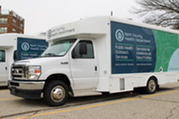
As summer kicks off, we’re hitting the road with a series of mobile unit events designed to meet residents right where they are as we bring health services and resources directly to the community. These outreach events are a great opportunity for us to connect, share information, and offer on-the-spot support—from testing for sexually transmitted infections to providing educational materials and more!
|
Here is a look at where we'll be rolling to next:
-
Grand Rapids Children's Museum Loving Day Celebration: June 14
-
West Michigan Whitecaps Game: June 18
-
World Refugee Day Block Party: June 20
-
Grand Rapids Pride Festival: June 21
-
GRAAHI Fit Jam at Calder Plaza: June 25 & July 9
-
Garfield Park Neighborhood Association's Art in the Park: June 27
-
Break into Your Pride: June 29
-
GRAAHI Fit Jam at Calder Plaza: July 9
For more information about services available at these events, please email Melissa Bisel or call 616-632-7096.
Pictured above is the Kent County Health Department's mobile unit.
Expanded WIC Eligibility: More Families May Now Qualify

Good news for growing families! As of June 1, the Women, Infants and Children (WIC) program has updated its income eligibility guidelines to reflect the latest federal poverty levels—potentially opening the door to more families who could benefit from these important services.
This update means more parents, caregivers and children may now qualify for WIC benefits, which include:
- Nutritious food for pregnant individuals, infants and young children
- Breastfeeding support and resources
- Health screenings and referrals to services
- All provided at no cost
If you’re already part of the WIC community, this is a great time to confirm your continued eligibility. And if you’ve never applied before, now’s the perfect time to check—our friendly team is here to assist. Just give us a call at 616-632-7200.
Pictured above is a young girl comforting her baby brother during an appointment at the Kent County Health Department.
|
Reminder: Temporary Relocation of Services Due to Renovations
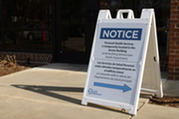
Please be aware that several services have been temporarily relocated within our existing facilities due to renovations occurring at our main clinic, located at 700 Fuller Ave. NE, Grand Rapids, MI 49503.
The renovation project, slated for completion by early 2026, aims to enhance patient confidentiality and expand service capacity by adding separate waiting rooms, exam rooms, and soundproofing.
|
The following services have moved to alternate clinic locations:
- Women, Infants & Children
- Immunizations
Alternate clinic locations include:
-
North Clinic: 4191 17 Mile Rd. NE, Cedar Springs, MI 49319
-
South Clinic: 4700 Kalamazoo Ave SE, Kentwood, MI 49508
-
Sheldon Clinic: 121 Franklin SE, Ste. 130, Grand Rapids, MI 49507
For more information or to schedule an appointment, please call us at 616-632-7200.
Pictured above is a closure sign at the Kent County Health Department.
Got Questions? We've Got Answers!

Are you a reporter or member of the media and see something you'd like to cover? Reach out to Christina Anthony, Marketing and Communications Manager, for quotes, interviews, background information, or anything else you may need to tell your story:
-
Phone – 724-691-5120
-
Email – christina.anthony@kentcountymi.gov
Have a story idea or partnership pitch? We love collaborating with those who share our passion for public health. Don’t hesitate to reach out—we’re always open to new ways to inform, connect, and serve Kent County.
|
Office Closures for Juneteenth and Independence Day
All Kent County offices and clinics will be closed on Thursday, June 19, in observance of Juneteenth. Regular operations will resume Friday, June 20. Offices and clinics will close again Friday, July 4, in recognition of Independence Day.
|