Letter from the Health Officer

Dear Community Member,
Mother’s Day may have passed, but our appreciation for mothers continues year-round. Here at the Kent County Health Department (KCHD), we recognize the vital role that mothers—and all caregivers—play in building healthy, thriving communities. The relationship between mothers and their children is, in my opinion, the most important for healthy communities and the foundation of Kent County’s future.
We also pause to honor the progress we’ve made in protecting our youngest residents. Just over a century ago, infant mortality was heartbreakingly common. In 1900, about 15% of newborns didn’t live to see their first birthday and 25% didn’t make it to age five. Poor sanitation, unsafe drinking water, lack of vaccines, and substandard housing all contributed.
We’ve come a long way since then. American society, empowered with an understanding of germ theory and a will for social reform, made powerful strides to bring those rates down and save lives. According to our most recent Fetal and Infant Mortality Review, Kent County’s current infant mortality rate is 6.5 per 1,000 live births. That means over 99% of babies in our county are reaching their first birthday.
Still, about 50 babies are lost each year—and each one is a tragedy. There is more work to do. We remain committed to supporting families through services, education, and advocacy. You can help, too, by encouraging and uplifting new and expecting moms, and by connecting them to the support we offer through many mother and baby programs including Nurse Family Partnership, Infant Safe Sleep, Children’s Special Health Care Services, Healing through Grief, and Medicaid Enrollment Assistance.
Let’s work together to celebrate as many happy Mother’s Days and birthdays as possible!
Adam London, PhD, RS, DAAS
Administrative Health Officer
Pictured above is Adam London, Kent County Health Department Director.
|
Behind the Smiles: Addressing Maternal Mental Health
May brings both Mother’s Day and Maternal Mental Health Awareness Month—reminding us that while motherhood is often celebrated as a joyful time, many parents quietly face emotional challenges before, during, and after childbirth. Up to one year postpartum, mothers (and fathers) may experience a wide range of mental health concerns that are too often overlooked.
Perinatal Mental Health (PMH) refers to conditions such as depression, anxiety, and psychosis that can arise during pregnancy or after birth. Symptoms may include sadness, difficulty concentrating, trouble bonding with the baby, and loss of joy in daily life. An estimated 1 in 5 women and 1 in 10 men experience PMH challenges, making them the most common complication of pregnancy and childbirth.
Some may turn to alcohol, cannabis, or tobacco to cope, which can intensify emotional distress and affect both parent and baby. In fact, studies show that 15–20% of those with PMH disorders also experience substance use issues—highlighting the need for more integrated, compassionate care.
That’s why recognizing PMH early and seeking help is so important. Be sure to speak with your primary care provider or a mental health professional trained in perinatal care. If you're in crisis, call or text 988 or text "nice" to 741741.
Mental health is health. Help is here. You're not alone.
Pictured above is a woman holding her baby while at an appointment.
|
Healing Through Grief: Support for Parents Experiencing Child Loss

Grieving the loss of a child is one of the most difficult experiences a parent can face. At the KCHD, we’re here to offer compassionate support through our Healing Through Grief program, led by Medical Social Worker Jazmine Marsh.
Jazmine brings experience in grief work and a belief that loss should be talked about—not hidden or avoided.
“I'm happy to support those families who think people have forgotten about them or are uncomfortable bringing their loss up in conversation because it lowers the mood,” Marsh said. “Even if you're not ready immediately after your loss, within a year, you can always reach out for support.”
The Healing Through Grief program offers three home visits, designed to meet parents where they are:
-
Visit 1: Story-sharing and understanding your experience
-
Visit 2: Personalized resource support
-
Visit 3: Follow-up and next steps for healing
Visits can take place wherever families feel most at ease, including in their home or even a community park. Learn more by emailing us or calling 616-632-7046 for more information.
Pictured above is Jazmine Marsh, a Medical Social Worker with the Kent County Health Department.
|
Full Circle: A Mother's Journey to Leading Children's Special Health Care Services
Public Health Program Supervisor, Brandi Berry, knows Children's Special Health Care Services (CSHCS) works—because it helped her family when they needed it most. As a mother of a child with a rare disorder, Berry was once a client of CSHCS. Her firsthand experience with the program's support inspired her to lead it, aiming to provide the same compassionate care to other families facing similar challenges.

The CSHCS program offers medical care and treatment assistance for children with chronic, severe, disabling health problems. It provides service coordination to meet the unique needs of each child and family. Eligibility is determined based on the child's diagnosis, severity, and treatment plan, rather than income. The program may assist with costs related to specialist visits, specialized equipment, medications, and travel expenses associated with treatment.
Berry's transition from a program beneficiary to its supervisor exemplifies the full-circle impact of CSHCS— highlighting its role in not only supporting families during challenging times, but also empowering individuals to give back to the community.
This is public health in action!
Pictured above is Brandi Berry, Kent County Health Department Program Supervisor, with her family.
|

Mental Health Fair: Culture, Care, and Community
In observance of Mental Health Awareness Month, A Glimpse of Africa (AGOA) is hosting its Annual Mental Health Fair focused on community connection, wellness, and culturally responsive care:
- Saturday, May 17 & Sunday, May 18
- 12–6 p.m. each day
- Whistlestop Park, Byron Center
This outdoor event will feature mental health professionals and culturally sensitive resources, blood pressure and stress screenings, financial and immigration services, peer support, food, music, and a youth soccer tournament—all designed to support mental wellness and celebrate community. Whether you're seeking support, looking to connect, or simply want to celebrate mental health in a welcoming space, all are welcome!
Let’s come together to uplift, connect, and care for one another.
Prevention in Action: Supporting Youth, Strengthening Futures
National Prevention Week (May 11-17) is a time for all of us to highlight the importance of prevention and the impact it has on our families and youth. Led by the Substance Abuse and Mental Health Services Administration (SAMHSA), the campaign shines a light on how communities across the country are working to support mental health and prevent substance use.

At the KCHD, we’re committed to preventing substance use and misuse and promoting positive mental health, especially among our youth. Through our free, school-based programs in elementary, middle, and high schools, our prevention educators help students build lifelong skills to navigate challenges and make healthy choices.
Our programs focus on:
- Strengthening decision-making skills
- Resisting peer pressure
- Building refusal skills
We also offer a vaping prevention curriculum, along with programming that helps students recognize the warning signs of suicide—in themselves or in their friends—and know how to seek help.
We believe prevention starts with connection, education, and support. By working together, we can create safe environments where our youth can thrive.
Pictured above is student artwork associated with school-based programming.
|
Warmer Days, Buzzier Nights: Stay Ahead of Mosquito Season
As the weather warms and people spend more time outdoors, the threat for mosquito bites and the diseases they can carry returns—sending our Mosquito Surveillance Team across the County to monitor risks to help keep residents safe.
Using a variety of trap types placed in multiple habitats, the team collects mosquito samples (called pools) and tests them for the presence of several viruses, including West Nile Virus (WNV), Jamestown Canyon Virus, St. Louis Encephalitis, La Crosse Virus, and Eastern Equine Encephalitis (EEE).
|

When viruses are detected, the data is shared with local municipalities to help guide targeted mosquito mitigation strategies and better protect residents.
Since there is no vaccine or specific treatment for West Nile Virus, the best defense is prevention. Protect yourself and your family by following these simple tips:
-
Use insect repellent with 10-35% DEET, and always follow label directions
-
Wear long sleeves and pants to limit skin exposure
-
Avoid outdoor activity during dawn and dusk, when mosquitoes are most active
-
Eliminate standing water around your home—refresh bird baths, wading pools, pet bowls, and empty small containers regularly
-
Keep screens and gutters in good repair to prevent mosquitoes from entering your home
For more information about mosquito prevention, please visit our website.
Pictured above are members of the Kent County Health Department's Mosquito Surveillance Team setting up a mosquito trap.
|
Measles Update: What’s New and What to Remember
As of May 8, 2025, the Centers for Disease Control and Prevention (CDC) has reported 1,001 confirmed cases of measles across more than 30 states—including nine in Michigan, with one of those cases identified right here in Kent County in early April.
Measles spreads easily through the air when an infected person breaths, coughs, or sneezes. It can stay in the air for up to two hours after an infected person leaves, continuing to infect others. Symptoms typically begin 7–14 days after exposure, though they can surface as late as 21 days after exposure, and may include:
- High fever (often spiking above 104°F)
- Cough
- Runny nose
- Red, watery eyes (conjunctivitis)
- Tiny white spots inside the mouth (Koplik spots), appearing 2–3 days after other symptoms
- A red, raised, blotchy rash that usually starts on the face and spreads to the trunk, arms, and legs 3–5 days after symptoms begin
Fortunately, the measles, mumps, and rubella (MMR) vaccine is highly effective in preventing measles—providing 93% protection with one dose and 97% with two. The CDC recommends:
-
Children receive the first dose of MMR at 12 through 15 months of age and the second dose at 4 through 6 years of age.
-
Adults born in 1957 or later who do not have evidence of immunity should receive at least one dose of MMR.
-
Certain adults, such as healthcare workers and international travelers, should receive two doses about a month apart.
-
International travelers six months of age and up should receive at least one dose of MMR.
If you'd like to schedule an appointment to receive the MMR vaccine, or if you have any questions or concerns, call us at 616-632-7200.
Free to All: Pop-Up Health Clinic in Big Rapids
Do you or someone you serve need access to free health care? The Remote Area Medical (RAM) Volunteer Corps is offering a pop-up clinic that will provide medical, dental, and vision services at no cost—no ID, insurance, or payment required. Prescription glasses can be made on-site, and dental services such as cleanings, fillings, and extractions will be available. Services are offered on a first-come, first-served basis, so early arrival is strongly encouraged.
-
Location: Ferris State University, Big Rapids
-
Dates: Saturday, May 31 – Sunday, June 1
-
Cost: Free – no ID or insurance needed
This is a valuable opportunity for residents in northern Kent County and surrounding areas who may face barriers to care. Please share with anyone who could benefit.
A Belated Thank You Note to Our Public Health Nurses
Although National Nurses Week (May 6-12) officially ended, the impact of our public health nurses continues every single day. These skilled professionals are essential to our mission, working on the front lines to protect and improve the health of everyone in Kent County.
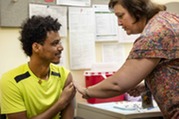
Public health nurses are the backbone of our local health system. They work tirelessly to prevent disease, promote wellness, and expand access to care. From administering vaccines and conducting health screenings to educating families and supporting those in crisis, they bring expertise and compassion to every interaction.
To our public health nurses: thank you for your dedication, your heart, and your unwavering service to this community.
Pictured above is a Kent County Health Department nurse administering an immunization.
|
Reminder: Temporary Relocation of Services Due to Renovations
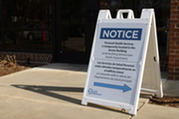
Please be aware that several services have been temporarily relocated within our existing facilities due to renovations occurring at our main clinic, located at 700 Fuller Ave. NE, Grand Rapids, MI 49503.
The renovation project, slated for completion by early 2026, aims to enhance patient confidentiality and expand service capacity by adding separate waiting rooms, exam rooms, and soundproofing.
|
The following services have moved to alternate clinic locations:
- Women, Infants & Children
- Immunizations
Alternate clinic locations include:
-
North Clinic: 4191 17 Mile Rd. NE, Cedar Springs, MI 49319
-
South Clinic: 4700 Kalamazoo Ave SE, Kentwood, MI 49508
-
Sheldon Clinic: 121 Franklin SE, Ste. 130, Grand Rapids, MI 49507
For more information or to schedule an appointment, please call us at 616-632-7200.
Pictured above is a closure sign at the Kent County Health Department.
Memorial Day Office Closure
All Kent County offices and clinics will be closed on Monday, May 26, in observance of Memorial Day. Regular operations will resume Tuesday, May 27.
|