Letter from the Health Officer

Dear Community Member,
The knowledge that many human illnesses are spread by microorganisms—known as germ theory—is still relatively new, emerging in the late 1800s. It was a highly controversial concept at the time, as many continued to embrace other beliefs about disease causation. Those were tough times in Kent County and elsewhere. The average life expectancy was just 48 years, largely due to the loss of children to infectious diseases, women to complications of childbirth, and workers to dangerous job conditions and other preventable causes.
It was during this time of shifting beliefs that the City of Grand Rapids hired its first public health officials. Their efforts centered on community sanitation, disease surveillance, health education, isolation and quarantine, and food and water safety—core functions that would later evolve into a more formalized public health system. The City of Grand Rapids Health Department eventually merged with Kent County to form the Kent County Health Department, and over the following decades, the public health workforce gained powerful new tools like vaccines, antibiotics, legislation, and perhaps most importantly, growing scientific knowledge.
Consider that in the year 1900, four of the top ten causes of death in the U.S. were infectious diseases: influenza and pneumonia (#1), tuberculosis (#2), diarrheal illnesses (#3), and diphtheria (#10). Since the advent of germ theory and the development of the modern public health system, life expectancy in the U.S. has increased by approximately 30 years, and pediatric mortality has become rare. In fact, COVID-19’s drop from the third leading cause of death in 2020 to tenth in just three years is yet another remarkable public health achievement.
As we recognize National Public Health Week, we celebrate the workforce that made these advancements possible. From here at the Kent County Health Department to our state, federal, and local partners, public health professionals work tirelessly to prevent suffering and keep small problems from turning into large ones. While this work often happens behind the scenes, it is essential to the well-being of our community and deserves our support—especially as the public health workforce continues to face immense strain from the past five years of crisis response, the resurgence of diseases like measles, the persistence of chronic conditions, and the emergence of new threats.
Adam London, PhD, RS, DAAS
Administrative Health Officer
Pictured above is Adam London, Kent County Health Department Director.
|
Reminder: Temporary Relocation of Services Due to Renovations
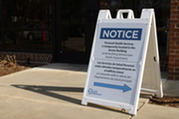
Please be aware that several services have been temporarily relocated within our existing facilities due to renovations occurring at our main clinic, located at 700 Fuller Ave. NE, Grand Rapids, MI 49503.
The renovation project, slated for completion by early 2026, aims to enhance patient confidentiality and expand service capacity by adding separate waiting rooms, exam rooms, and soundproofing.
|
The following services have moved to alternate clinic locations:
- Women, Infants & Children
- Immunizations
Alternate clinic locations include:
-
North Clinic: 4191 17 Mile Rd. NE, Cedar Springs, MI 49319
-
South Clinic: 4700 Kalamazoo Ave SE, Kentwood, MI 49508
-
Sheldon Clinic: 121 Franklin SE, Ste. 130, Grand Rapids, MI 49507
For more information or to schedule an appointment, please call us at 616-632-7200.
Kent County Confirms First Measles Case in a Decade Amid Rising Cases Across Michigan and the U.S.
We're reminding residents to stay alert and up to date on their measles, mumps, and rubella (MMR) vaccinations after confirmation of a measles case in Kent County on April 1. This marks the second confirmed case in Michigan this year, following a case in Oakland County on March 14. Macomb County reported a third case on April 4, and just today, health officials confirmed Michigan's fourth measles case in Montcalm County.
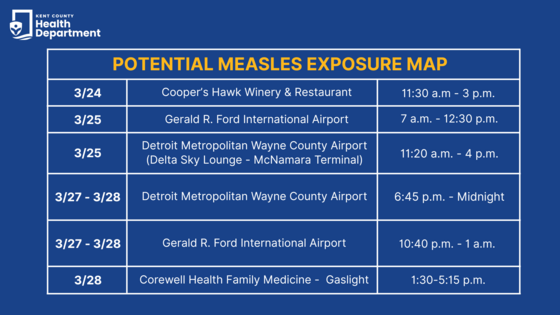
Measles spreads easily through the air when an infected person breaths, coughs, or sneezes. It can stay in the air for up to two hours after an infected person leaves, continuing to infect others. Symptoms typically begin 7–14 days after exposure, though they can surface as late as 21 days after exposure, and may include:
- High fever (often spiking above 104°F)
- Cough
- Runny nose
- Red, watery eyes (conjunctivitis)
- Tiny white spots inside the mouth (Koplik spots), appearing 2–3 days after other symptoms
- A red, raised, blotchy rash that usually starts on the face and spreads to the trunk, arms, and legs 3–5 days after symptoms begin
People who were at the above locations during the specified times should monitor for these symptoms for 21 days after exposure. Anyone experiencing symptoms is urged to call their healthcare provider before seeking in-person care to prevent further spread. The KCHD can be reached Monday through Friday from 8 a.m. to 5 p.m. at 616-632-7228. Individuals can call 2-1-1 for support during weekends and evenings.
As of April 3, 2025, a total of 607 measles cases have been confirmed in 22 jurisdictions across the United States. Six outbreaks—defined as three or more related cases—have been reported this year, with 93% of cases linked to these outbreaks.
Dr. Kristin Oldenberg Brings Two Decades of Healthcare Experience as New Medical Director
As we continue our mission to improve the health and well-being of our community, we’re excited to introduce Dr. Kristin Oldenburg, our new Medical Director. Dr. Oldenberg brings over 20 years of experience in obstetrics and gynecology (OB-GYN), with a strong focus on education and clinical care for vulnerable populations. She played an integral role as part of the OB Core Faculty at Corewell Health, providing essential care to those in need.

“We are thrilled to welcome Dr. Oldenberg to our leadership team,” said Dr. Adam London, Health Officer for the Kent County Health Department. “Her extensive medical expertise, combined with her deep commitment to community health, will be invaluable as we continue to address public health challenges and improve health outcomes across the county.”
|
Dr. Oldenberg first came to Grand Rapids to attend Calvin University, where she earned a bachelor’s degree in biology with a minor in biochemistry. She went on to earn her medical degree from the University of Michigan before returning to Grand Rapids to complete her OB-GYN residency.
Dr. Oldenberg and her husband called Kent County home ever since, where they’ve raised seven children, all of whom attended Grand Rapids Public Schools.
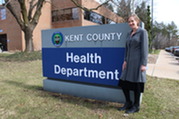
Pictured in the two images above is Dr. Kristin Oldenberg posing outside of the Kent County Health Department's main clinic.
|
Talk, Test, Treat: STI Awareness Week is April 13-19
Sexually transmitted infections (STIs) affect millions of people across the U.S. every year, despite being completely preventable through proper protection and routine testing. There are dozens of STIs, many of which have no symptoms or may only cause mild symptoms that go unnoticed.
One STI of growing concern is syphilis. Between 2014 and 2023, local cases of primary and secondary syphilis (meaning new or symptomatic infections) jumped from just 9 cases a year to 69. Statewide, the trend is also alarming—the percentage of syphilis cases in females has risen from 7% in 2014 to 21% in 2023, and appears to be holding steady.
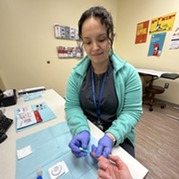
Left untreated, STIs like syphilis can lead to serious health complications—including infertility, pelvic inflammatory disease, and an increased risk of acquiring or transmitting human immunodeficiency virus (HIV). That's why it's important to get tested for STIs routinely if you're sexually active or share injection equipment.
In observance of STI Awareness Week, we're offering free and confidential walk-in STI testing at a couple different times and locations:
-
Tuesday, April 15 from 1-4 p.m. at the Sheldon Complex, located at 121 Martin Luther King Jr. St. SE Suite 130, Grand Rapids.
-
Wednesday, April 16 from 8 a.m. to 4:45 p.m. at the Annex Building, located behind our main clinic at 700 Fuller Ave NE, Grand Rapids.
Let’s fight the stigma, get tested, and work together to stop the spread of STIs in our community.
|
Ticks are Back: What You Need to Know to Stay Safe

As warmer weather arrives, so do ticks—and with them, the risk of diseases like Lyme Disease and Rocky Mountain Spotted Fever. That's why our team has been actively monitoring tick populations and their habitats in Kent County since 2019.
“Every spring and summer, our team conducts routine tick drags to monitor which species are active and what diseases they may be carrying,” said Sara Simmonds, Environmental Health Division Director at the Kent County Health Department. “This work is critical to understanding local health risks and helps us provide timely, targeted guidance to keep our community safe.”
|
Fortunately, there are simple steps everyone can take to protect themselves and their pets from tick bites, including:
-
Use insect repellent with at least 25% DEET
-
Wear light-colored clothing that covers exposed skin
-
Stay on clear paths when hiking or walking in nature, and avoid areas with dense vegetation
-
Do tick checks on your body and pets after being outdoors, focusing on spots where ticks like to hide (armpits, behind knees, groin, and scalp)
-
Shower after outdoor activities and tumble dry clothes on high heat for 10 minutes to kill any ticks
-
If you find a tick, remove it promptly using tweezers or a tick removal tool
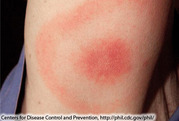
Ticks are most active from spring through fall, especially in grassy, wooded areas. While they’re often found outdoors, ticks can hitch a ride indoors on pets or clothing. The blacklegged tick, responsible for Lyme Disease, is one of the most common types in Michigan. Lyme Disease is treatable with antibiotics if caught early, so it’s important to be aware of symptoms like fatigue, headaches, and the distinctive "bull's-eye" or target lesion rash pictured to the left.
As tick populations rise with milder winters, ongoing surveillance and prevention methods are critical. By staying proactive and informed, we can protect the health of our community from tickborne diseases.
|
Spring into Safety: Smart Food Tips for Your Holiday Gatherings
Spring holidays are a wonderful time for family gatherings, but they also bring a few extra food safety concerns. We want to make sure everyone stays healthy while enjoying those delicious meals and treats!
Whether you're coloring eggs or preparing your Easter feast, remember these simple food safety tips:
- Wash your hands regularly when handling food – it's the best way to keep germs at bay.
- If you’re decorating eggs, be sure they’ve cooled completely before you start. And once you’re done, pop them in the fridge right away! Decorated eggs should be eaten within 7 days of preparation.
- For store-bought sides like mac and cheese or mashed potatoes, always follow the package instructions closely. Be sure the food reaches a safe temperature: things like commercially prepared sides should be heated to at least 135°F and stay at that temperature throughout the meal.
- For uncooked hams, make sure they reach 160°F, and poultry products should hit at least 165°F.

When serving, keep everything at 135°F or above. And if you have leftovers, remember to cool them quickly—from 135°F to 70°F within two hours, then from 70°F to 41°F within four hours. The best way to cool leftovers is to spread them in thin layers and leave them uncovered in the fridge or freezer. Leftovers in the fridge should be eaten within a week, and if frozen, within a few days of thawing.
Remember: If you’re not sure whether food stayed above 135°F throughout the meal, it’s better to toss it than risk foodborne illness. When in doubt, throw it out!
|
The Story Behind Earth Day 🌎 and Its Lasting Impact
Earth Day, celebrated on April 22, has roots that stretch back long before its official start in 1970. The environmental challenges that sparked its creation trace back to the early 20th century, as industrial growth in the U.S. brought economic progress, but also caused significant environmental problems. The rapid rise in automobile use and industrial expansion led to air pollution and smog, particularly in cities like Los Angeles. Long-term exposure to smog was linked to health issues such as bronchitis, asthma, and lung cancer.
A turning point occurred in 1948, when a toxic smog event in Donora, Pennsylvania killed 20 people and sickened thousands, proving air pollution was not just a city problem. The spread of radioactive dust from nuclear tests and water contamination, such as the Cuyahoga River fire in 1969, further exposed the dire need for environmental action. This outcry, along with Rachel Carson's Silent Spring—which raised awareness of pesticide dangers—helped spark the first Earth Day on April 22, 1970.
Over 20 million Americans participated, demanding cleaner air, water, and safer practices. This led to the creation of the Environmental Protection Agency (EPA) and landmark environmental laws, including:
- The Clean Air Act of 1970, which established air quality standards to reduce pollution and protect public health.
- The Clean Water Act of 1972, which regulated industrial waste to help keep water sources clean.
- The Safe Drinking Water Act of 1974, which set safety standards for public drinking water systems to ensure access to clean, safe water.
These laws led to major improvements in air and water quality, helping to protect both people and nature. As we celebrate Earth Day this year, we reflect on the progress made and continue to advocate for a sustainable, healthy future.
Together for a Safer Kent County: National Drug Take Back Day
On April 26, from 10 a.m. to 2 p.m., we are partnering with the Drug Enforcement Administration (DEA), Priority Health, and Corewell Health to host a National Drug Take Back Day. This event provides a safe, anonymous way for residents to drop off unwanted, unused, or expired prescription and over-the-counter medications. The goal is to reduce the presence of unused medications, especially opioids, in the community in an effort to lower opioid overdoses and deaths in Kent County. Proper disposal of these medications helps prevent misuse, accidental overdose, and protects our environment.

The opioid crisis was declared a National Public Health Emergency in 2017, and our Kent County Opioid Task Force (KCOTF) has been working tirelessly to reduce opioid-related deaths. As part of this effort, KCOTF is advocating for broader access to naloxone, also known as Narcan, a life-saving medication that reverses opioid overdoses. Narcan will be available for free at this event.
Community members are invited to drop off medications and pick up Narcan at the following locations on April 26:
-
Kent County Health Department, located at 700 Fuller Ave. NE, Grand Rapids
-
Priority Health, located at 3111 Leonard St. NE, Grand Rapids
-
Corewell Health – Cutlerville, located at 80 68th Street, Grand Rapids
By participating in National Drug Take Back Day on April 26, we can all play a part in reducing opioid overdoses, preventing misuse, and creating a safer, healthier Kent County for everyone.
|
Faceoff Against the Flu, RSV, and COVID-19

We’re proud to team up with the Grand Rapids Griffins to highlight the importance of protecting our community through routine immunizations against seasonal respiratory illnesses.
Just like in hockey, taking the right shot at the right time can change the game. Vaccines are a powerful way to defend yourself and those you love—keeping you healthy, on your feet, and out of the hospital.
Stay in the game. Take the shot. Protect your health today.
|
|