Letter from the Health Officer

Dear Community Member,
The origins of influenza in human populations remain somewhat murky. Like many other infectious diseases, the influenza virus likely had little interaction with humans before the advent of agriculture. However, as humans began domesticating animals and cultivating crops, they also inadvertently created ideal conditions for pathogens to thrive. Over time, these microorganisms adapted to infect humans, often with devastating consequences. Such spillover events have given rise to some of the world’s most infamous diseases, including influenza.
Influenza naturally circulates in wild birds, but when their infectious materials come into contact with domestic poultry, humans, or other susceptible animals, the virus can jump species. Of course, our ancestors—living long before the germ theory of disease—had no understanding of the true cause of these outbreaks. The term “influenza” was first coined in 14th-century Italy, based on the belief that the alignment of the stars was “influencing” the spread of illness.
Despite its historical significance and ongoing public health impact, many still underestimate influenza, often dismissing it as a minor inconvenience akin to the common cold. In reality, influenza is a serious illness, responsible for an estimated 12,000 to 52,000 deaths in the U.S. each year. Some seasons, such as the 1918 pandemic, have been far more severe.
The 2024/25 influenza season is proving to be particularly challenging. In January alone, Kent County reported 3,157 cases of influenza-like illness—nearly triple the median number of cases recorded over the previous five years. The State of Michigan is currently classified at a “very high” level of influenza activity, a concerning trend as influenza season can persist well into April. Equally worrisome is Michigan’s low influenza vaccination rate. Despite the vaccine’s strong safety record and its ability to reduce both infection risk and severity of symptoms, only about one-third of Michigan residents choose to get vaccinated.
There is still time to take action. Protect yourself, your loved ones, and our entire community by getting the influenza vaccine, especially ahead of any spring travel plans. If you have already been vaccinated—thank you! Your decision helps safeguard public health and reduces the strain on our healthcare system. Let’s work together to keep Kent County healthy.
Adam London, PhD, RS, DAAS
Administrative Health Officer
Pictured above is Adam London, Kent County Health Department Director.
|
 Temporary Relocation of Services Due to Renovations
Please be aware that several services have been temporarily relocated within our existing facilities due to renovations occurring at our main clinic, located at 700 Fuller Ave. NE, Grand Rapids, MI 49503.
The following services have moved to alternate clinic locations:
- Women, Infants & Children
- Immunizations
Alternate clinic locations include:
-
North Clinic: 4191 17 Mile Rd. NE, Cedar Springs, MI 49319
-
South Clinic: 4700 Kalamazoo Ave SE, Kentwood, MI 49508
-
Sheldon Clinic: 121 Franklin SE, Ste. 130, Grand Rapids, MI 49507
The renovation project, slated for completion by early 2026, aims to enhance patient confidentiality and expand service capacity by adding separate waiting rooms, exam rooms, and soundproofing.
For more information or to schedule an appointment, please call us at 616-632-7200.
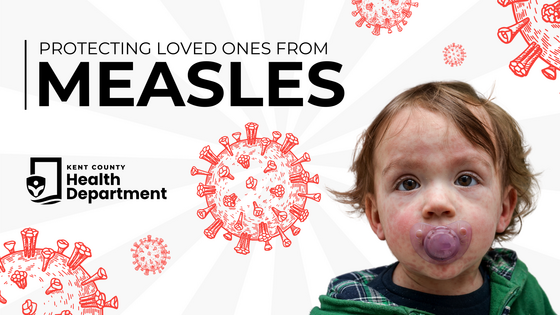 Measles and Kent County: History, Symptoms, and Prevention
Measles is one of the world's most contagious viral diseases. It can survive in the air for up to two hours after a sick person passes through, potentially infecting up to 90% of unvaccinated people nearby. It poses serious health risks, including high fever, pneumonia, and brain swelling—especially in young children and those with weakened immune systems.
While it's been more than a decade since we've seen measles in Kent County, Michigan's largest outbreak since 1999 occurred not too far away from here, in Oakland County when 40 cases were confirmed in 2019. That said, last year, 40% of measles cases across the country led to hospitalizations and more recently, measles outbreaks have been occurring across the U.S., making it even more important for everyone to both understand the risks and take preventive steps, especially before traveling.
The good news is just two doses of the measles, mumps, and rubella (MMR) vaccine are 97% effective in preventing measles. Symptoms of the virus usually appear about one to two weeks after exposure and can include a cough, runny nose, red, watery eyes, and a rash—often met with a high fever over 104°F.
The Centers for Diseases Control and Prevention (CDC) recommends:
- Children receive the first dose of MMR at 12 through 15 months of age and the second dose at 4 through 6 years of age.
- Adults born in 1957 or later who do not have evidence of immunity should receive at least one dose of MMR.
- Certain adults, such as healthcare workers and international travelers, should receive two doses about a month apart.
- International travelers six months of age and up should receive at least one dose of MMR.
In additional to vaccination, people should also:
-
Avoid contact with infected individuals. Stay away from people known to have measles.
-
Practice good hygiene. Wash your hands frequently with soap and water, and cover coughs and sneezes.
-
Stay home if you have symptoms. If you suspect measles, avoid work or school to prevent spreading the virus. Do not show up at a healthcare facility without calling first.
If you'd like to schedule an appointment to receive the MMR vaccine, or if you have any questions or concerns, call us at 616-632-7200. Together, we can keep measles out of Michigan!
Decades of Dedication: Celebrating Women's History Month by Honoring Our Own
March is Women’s History Month, and we couldn't think of a better way to celebrate than by highlighting two of our employees whose combined public health service totals nearly 90 years. Barb Hawkins-Palmer and Sue Sefton have dedicated their careers to improving the health and well-being of our community, each leaving a lasting impact in unique ways.
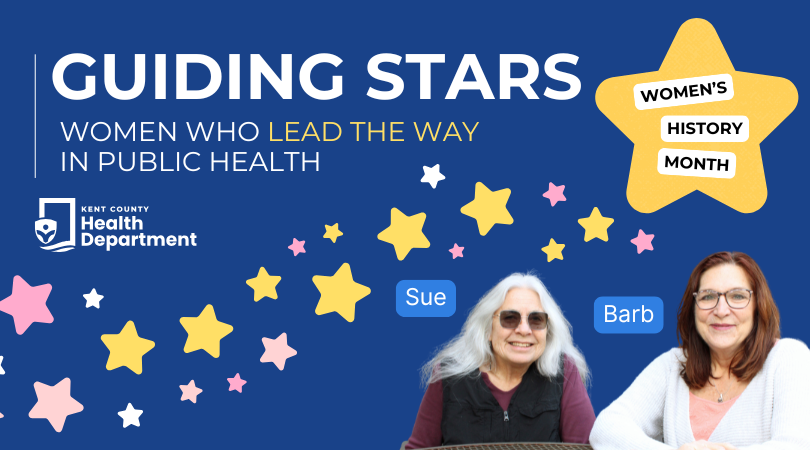 Barb Hawkins-Palmer: A Legacy of Collaboration and Community Health
Barb Hawkins-Palmer’s journey into public health began with an unexpected pivot. Initially set on becoming a nurse, she found her calling in health education instead, earning her degree from Central Michigan University. Despite early doubts about government work, she accepted a position at the Kent County Health Department (KCHD) in 1985, where she quickly discovered her passion for helping others live healthier lives.
Her early work in Worksite Wellness programs helped employees at local businesses quit smoking, manage stress, and embrace healthier lifestyles. As public health evolved, so did Barb’s role. She went on to lead Healthy Kent, overseeing initiatives that tackled pressing community health issues such as infant mortality, mental health, and chronic disease prevention. Today, she plays a key role in the Suicide Prevention Coalition and the Infant Health Implementation Team, supporting efforts in safe sleep, breastfeeding, and fatherhood engagement.
“Over the years, many people have expressed gratitude for the opportunity to collaborate, and it’s been a blessing to know that what we’re doing is truly making an impact,” she said.
For Barb, the most rewarding part of her career has been creating spaces where people from different sectors can come together to make a difference.
|
Sue Sefton: Five Decades of Public Health Nursing
Sue Sefton’s introduction to public health was just as unexpected. In 1974, she applied for a Monday-to-Friday nursing job, not knowing what it entailed—only to find herself immersed in the world of home visits and adolescent health clinics in Detroit. A group of seasoned nurses mentored and shaped her understanding of systemic barriers and the resilience of the communities they served.
In 1987, life brought Sue to Kent County, where she became a Public Health Nurse (PHN) here at the KCHD. At the time, PHNs were generalists, handling everything from infant health and communicable disease prevention to scoliosis screenings. However, the cocaine epidemic of the late 1980s shifted her focus. As referrals for infants exposed to cocaine surged, Sue became part of an early response team. This experience led her to community coalition work, where she found her true passion—addressing root causes rather than just responding to crises.
For Sue, the greatest challenge has been combating deeply entrenched societal issues like substance misuse, health disparities, and access to care. But she has also witnessed incredible resilience.
“You do the best you can,” she said. “Sometimes you win, sometimes you lose, and sometimes you are lifted by the incredible life force of the people you serve.”
Now, after 50 years in public health nursing, Sue continues to see multiple generations of families she once worked with. She remains deeply moved by the trust and openness of the people she serves, saying, “I still love the work. Public health chose me.”
Pictured in the two images above are Sue Sefton (left) and Barb Hawkins-Palmer (right) posing outside of the Kent County Health Department's main clinic.
|
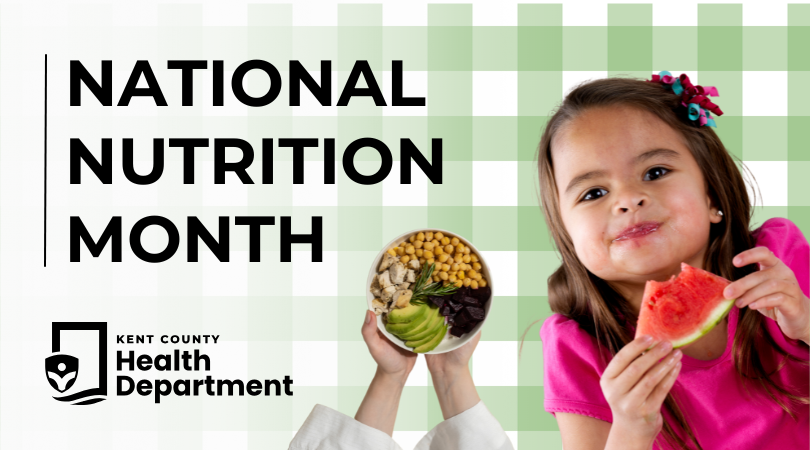 Fuel Your Body, One Bite at a Time: Celebrate National Nutrition Month
March is National Nutrition Month, a time to celebrate the power of healthy eating and how small changes can lead to big health benefits. Whether you’re looking to add more variety to your plate or build better eating habits, here are a few easy ways to get started:
-
Plan ahead. Prepping meals in advance makes healthy eating more convenient.
-
Eat mindfully. Pay attention to portion sizes and how food makes you feel.
-
Try something new. Taste a new fruit, vegetable, or nutritious recipe.
Speaking of nutritious recipes, why not celebrate with a few green-inspired dishes in honor of St. Patrick’s Day? Here are a few we recommend:
Small steps add up—let’s make March a month of delicious, healthy choices!
Attention Food Service Establishments: License Renewal Reminder
Our team sent out annual food license renewal notices on Monday, March 10. These should arrive in your mailbox or inbox soon.
To avoid late fees, please submit your renewal forms and payments by Wednesday, April 30. Timely renewal is essential for maintaining compliance with local regulations and ensuring uninterrupted business operations.
If you have any questions or need help, don’t hesitate to email us or call 616-632-6900.
Strengthening Kent County's Food System: A Plan for Resilience and Growth
Proper nutrition is essential for overall health, influencing everything from immune function to mental clarity and physical performance.
The Kent County Food Policy Council (FPC) strengthens the local food system by recognizing the need for thoughtful planning and engaging community members, organizations, businesses, and agencies to join in the process. The result? A Kent County Food System Plan that aligns policies, zoning, and incentives to support food system growth. The comprehensive plan, shaped by a 2023 food system assessment and community input, outlines strategies to improve food access, support local economies, reduce waste, and strengthen sector coordination.
This strategic approach lays the groundwork for a healthier, more sustainable future, where all residents benefit from a thriving local food system.
|
 Spring into Safety: Preparing for Severe Weather
Ah, spring! A time for birds chirping, water splashing—and thunder roaring. With the arrival of warmer weather often comes the return of storms, which can sometimes trigger damaging wind gusts, large hail, and even a tornado or two. Taking a few small preparedness steps now can go a long way in keeping you and your family safe from severe weather when it strikes.
Start by building an emergency kit with essentials such as:
- Water and non-perishable food (enough for three days and pets)
- Flashlights and extra batteries
- A first-aid kit and necessary medications
- Cell phone with chargers and a backup battery
- Multiple ways to receive alerts, such as a NOAA weather radio
It’s also important to understand the difference between a severe weather watch and a severe weather warning:
- A watch means conditions are favorable for severe weather—stay alert and be ready to take action.
- A warning means severe weather is happening or imminent—take cover immediately.
For those looking to deepen their understanding of severe weather, consider attending a free weather spotter training hosted by local emergency management and the National Weather Service on Thursday, March 20. Registration is required.
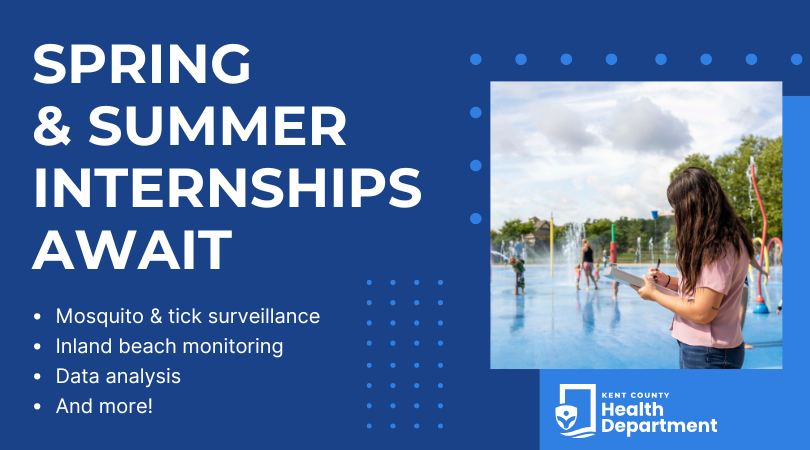 Intern Today, Impact Tomorrow: Public Health Internship Opportunities Available
Are you a student looking to gain real-world public health experience? We're now accepting applications for our spring and summer internship program, called the Kent County Academic Health Department (KCAHD).
Established in 2015, our internship program leverages partnerships with academic institutions to enhance public health education, training, research, and service. This collaboration benefits both students and the community, providing hands-on learning opportunities while expanding public health capacity in our area.
KCAHD internships are available three times a year, including:
-
Spring and Summer (May–August)
-
Fall (September–December)
-
Winter (January–April)
Our internship program is open to students currently enrolled in a college or university that allows them to receive credit. Opportunities may be in-person, virtual, or hybrid.
Be sure to apply by Friday, March 21 to be considered. We will conduct interviews between Monday, March 24 and Friday, April 11. If you have any questions, don't hesitate to email Janine O’Donnell.
|