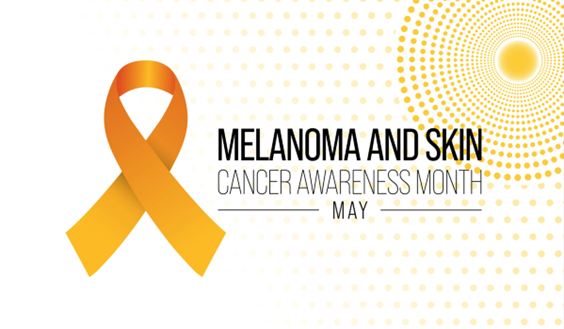
May is Melanoma and Skin Cancer Awareness Month
Temperatures are finally climbing, it’s staying light outside longer – perfect conditions for getting out of the house and into backyards, parks, pools and nature. While we love fun in the sun, we encourage all community members to be "Sun Safe" for Melanoma and Skin Cancer Awareness Month this May. Some things to keep in mind about sun safety, sun exposure and skin cancer prevention:
The sun emits harmful ultraviolet (UV) rays year-round. Even on cloudy days, up to 80% of the sun’s harmful UV rays can penetrate the clouds. The American Academy of Dermatology (AAD) recommends that everyone use sunscreen that includes broad-spectrum protection (protects against UVA and UVB rays), SPF 30 or higher, and water resistance.
Choosing a water-resistant, broad-spectrum sunscreen with SPF 30 or higher protects your skin from sunburn, early aging and skin cancer. However, sunscreen alone cannot fully protect you. In addition to wearing sunscreen dermatologists recommend you:
-
Seek shade. Exposure to ultraviolet rays is a risk factor for skin cancer, so staying out of the direct sun between peak hours (10 a.m. to 4 p.m.) is a way to reduce your risk of developing skin cancer.
-
Wear sun-protective clothing such as a lightweight and long-sleeved shirt, pants, a wide-brimmed hat, and sunglasses with UV protection, when possible. For more effective sun protection, select clothing with an ultraviolet protection factor (UPF) number on the label.
-
Avoid tanning beds. Ultraviolet light from the sun and tanning beds can cause skin cancer and wrinkling. If you want to look tan, you may wish to use a self-tanning product but continue to use sunscreen with it.
-
Use extra caution near water, snow and sand as they reflect the damaging rays of the sun, which can increase your chance of sunburn.
Hooray for May!
May is a month for raising awareness! Aside from being Melanoma and Skin Cancer Awareness Month (see above), May is also Women's Health Month, Better Sleep Month and Older Adults Month! To honor these awareness months, we're sharing information related to each topic.
Women's Health Month
Spotlight on perimenopause! Perimenopause, which is a transition into menopause, can start in the mid- to late-40s, and can last up to four years.
How can someone prepare for the changes of perimenopause and menopause? First, learn more about common symptoms. This tool can help you identify your symptoms and make a plan to cope with changes. Once you have your plan, talk to your health care provider about treatments and other strategies to manage symptoms.
Better Sleep Month
A good night’s rest can be elusive in our busy lives, but the benefits are far reaching. Beyond just a break from being on the go, sleep is a time when our bodies repair tissues and our brains process memories and flush out plaque. Remember S-L-E-E-P.
Schedule – Work to create a consistent sleep and wake-up time. This will support your body’s natural sleep rhythms.
Limit – Cut down or limit alcohol, caffeine, nicotine and eating heavy foods for about an before your bedtime.
Exercise – Add daily physical activity to your routine, even if it’s just a walk. Check out a local park or the CRC to get yourself moving!
Eliminate – Eliminate or shorten daytime naps to make sure you’re tired at bedtime
Preserve – Save the bedroom just for sleep, and limit eating, reading, watching TV or scrolling on your phone in bed. This helps your body and mind associate bed with strictly sleep. Keep your bedroom dark and cool, and create a peaceful place to rest.
Older Adults Month
This Older Americans Month, we remind you that older adults can suffer from opioid use disorder and accidental opioid overdose. While U.S. drug overdose deaths are declining overall, a recent study by the Centers for Disease Control (CDC) found that adults 65 and older had the lowest rate of decline compared to other age groups.
Thankfully, anyone can save a life with the extremely safe and easy-to-use nasal spray, Narcan, available for free at many locations across Oak Park. Please visit Oak Park’s Opioid Overdose Prevention Project to learn more about Narcan, where to find it for free and how to use it.
|